Max, Min and Meowzaki (2026): A Modest Drama That Finds Heart in a Pet Custody Dispute


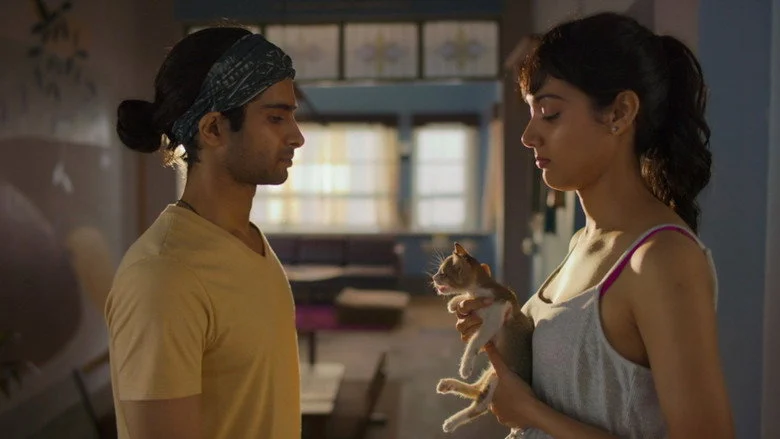
The film opens over a box of old photo albums, a spatula, and a hissing cat carrier. Max (Siddharth Menon) and Min (Medha Shankr) dissect their shared life with the cold precision of divorce lawyers, their voices brittle with old resentments. Meowzaki, a Persian with the patience of a saint, watches from her carrier as they negotiate her fate.
This opening scene sets the temperature for a drama that is deliberately small in scale but large in emotional consequence. Padmakumar Narasimhamurthy’s directorial risk here is betting everything on the quietness of its conflict, a sharp gamble that pays off more often than it falters.
Medha Shankr and the Fury of Unfinished Business
Min wields her grief like a weapon and a shield. Medha Shankr commands a terrific scene where she argues custody not with anger, but with a chilling, exhausted smile, a choice that reveals a woman tired of being the one who cares more.
Shankr’s performance never tips into melodrama. She gives Min a brittle, internalised rage, most potent in a silent sequence where she cleans the empty apartment, her face a blank slate that holds ten years of memory.
Siddharth Menon and the Grief He Cannot Name
Menon’s Max is the trickier role: a man deflecting pain through allergy jokes and logical arguments about who gets the espresso machine. He is convincing in the early scenes of shallow denial, but the performance finds its footing in Act 2.
When Max breaks down alone, clutching Meowzaki while remembering his mother’s final days from cancer, Menon allows the mask to crack. It is a credible, if occasionally underwritten, portrait of male grief that waits until no one is watching to show its face.
Direction Lives in the Gaps, Not the Peaks
Padmakumar Narasimhamurthy directs with a clear focus on everyday gestures, the way a hand hovers over a shared photo, the pause before a door closes. This approach avoids dramatic twists and trusts the audience to read between the lines.
The screenplay’s biggest flaw is its linear structure. The narrative proceeds through the breakup without introducing any real surprise or temporal layering, making the middle act feel stretched. A more inventive editing pattern might have tightened the emotional arc.
The Cat as Genre Core: A Drama on a Leash
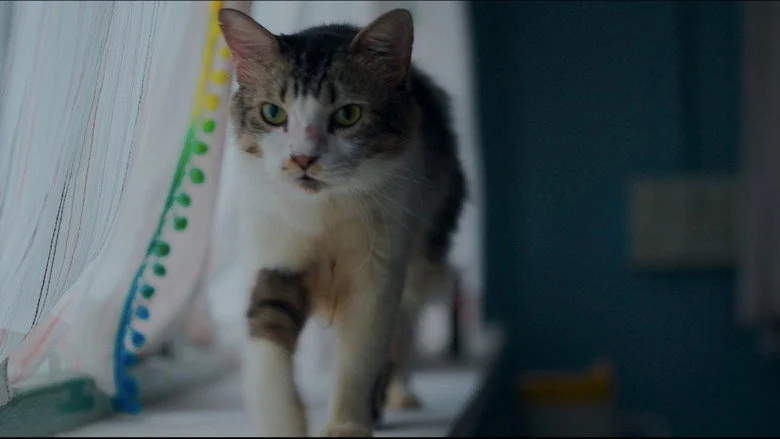
As a drama, the film stakes its emotional currency entirely on Meowzaki, the cat named after Hayao Miyazaki, as a living metaphor for unfinished love and shared history. This is a risky choice because a cat cannot emote on command.
The bonding scenes between Max and the cat are sweet, but they lack the sharpness of genuine catharsis. We are told about their connection to Miyazaki films as a backstory, but we rarely *feel* it in the moment.
However, the film earns its keeping in the small victories. A single shot of Max talking to Meowzaki in the dead of night, confessing his mother’s absence, lands with surprising weight. It is the kind of quiet, unhurried drama that rewards patience.
Nassar and Adil Hussain: The Fathers Who Know Too Much
Nassar brings a weary, dry wisdom as a father who has seen this story before. His one scene of advice to Max, about how breaking a home is sometimes the kindest thing, is delivered with a shrug that carries decades of lived experience.
Adil Hussain, in a brief appearance, plays a family friend who reminds Min that anger is a form of love. Hussain’s economy of expression is formidable; he can say more with a single nod than most actors can with a monologue. Mandira Bedi and Nafisa Ali fill their roles with professional ease, though their screen time is frustratingly limited. Gitanjali Rao, as a neighbour, adds a touch of eccentric warmth that the film needs more of.
Vidhatri Bandi appears as a younger friend who offers Min a blunt perspective. Her casting signals the film’s intent to balance older generational wisdom with a sharper, modern voice, even if the script doesn’t give her enough ground to explore it fully.
If this reflective, cat-infused drama intrigues you, browse our collection of Hindi Drama reviews for similar emotional journeys.
Where Is the Controversy? Replaced by Quiet Resonance
There are no political angles or backstage scandals to distract from the work here. The film’s biggest risk, and its quiet achievement, is how unapologetically domestic it remains.
The audience reception, from early festival screenings, suggests a divided room: those who will find this slice-of-life drama deeply moving, and those who will wish for a sharper directorial edge. I find myself leaning toward the former, but only barely.
Without box office data or a critical consensus yet, the film stands as a curiosity, a risk-led piece of indie filmmaking that prioritises feeling over flash. It is a film that will find its audience, but not a stadium-sized one.
Verdict: If you are looking for a quiet, honest film about the things we keep when a relationship ends, watch *Max, Min and Meowzaki* in a small setting, a streaming night or a festival screening. Skip it if you need plot momentum or loud emotional peaks. It earns its ending, but it makes you work for it.
For me, Max, Min and Meowzaki is a genuinely gentle 3-star drama that understands the shape of grief better than the shape of a screenplay.
Menon’s grief register in this film recalls India Story review’s quiet approach to internal conflict.
This feline custody drama shares its intimate observational tone with Tera Yaar verdict.