Star Wars: The Mandalorian and Grogu (2026): Favreau Gambles on Theatrical Continuity Over Fresh Stakes


A lone figure in beskar armor walks into a spaceport where the New Republic’s reach now extends, tasked with a mission that blurs bounty hunting with galactic politics. Din Djarin and Grogu are no longer operating in the shadows, they’re enlisted weapons in a larger conflict, one where Imperial warlords still lurk and the Hutts remain players in a game supposedly won.
Jon Favreau’s decision to transition The Mandalorian from streaming spectacle to theatrical feature is audacious, if inherently risky. The gamble pivots on whether character-driven continuity can sustain a cinema experience designed for franchise spectacle rather than intimate storytelling.
Pedro Pascal’s Masked Performance Carries the Weight of Continuity
Pascal returns as Din Djarin, a role that has always demanded physical presence over facial expression, the armor does the acting. In a theatrical setting, that constraint becomes either an asset or a liability. The performance remains rooted in restraint and body language, a choice that works when the screenplay gives him room to breathe but falters if Favreau prioritizes spectacle over the quiet moments that made the character resonate on screen.
Favreau and Filoni’s Screenplay Balances Franchise Obligation With Thematic Ambition
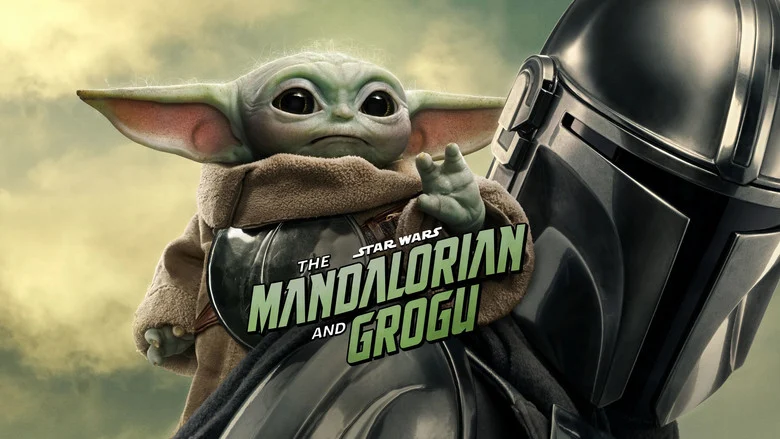
The writing partnership reunites two architects who understand Star Wars mythology. Their screenplay moves Din and Grogu into New Republic service, a premise that signals thematic intent, loyalty tested by institutional pressure, the personal versus the political. The strength lies in that conceptual framework: “The old protect the young, and then the young protect the old” suggests philosophical depth beyond mercenary adventure.
The flaw emerges in execution risk. Favreau directs without the intimate pacing that television allowed; theatrical Star Wars has historically prioritized scope over character nuance, and no pre-release evidence suggests this film breaks that pattern.
Action-Adventure Spectacle Built on Mission-Driven Stakes
The film constructs its action around two competing forces: Imperial remnants scattered across the galaxy and organized crime through the Hutts. This dual-threat architecture gives the action design conceptual coherence, chases and firefights serve political outcome, not mere spectacle.
The New Republic enlisting Din Djarin and Grogu for protection duties signals a shift from the episodic, localized conflicts of the series. Theatrical presentation through IMAX suggests large-scale setpieces are central to the experience. Whether those sequences maintain the character-first approach that distinguished The Mandalorian from broader Star Wars action cinema remains the critical question.
The Hutts mission material introduces underworld complications that echo classic crime-thriller structure within a sci-fi frame. If executed with the same spatial clarity and motivational logic that defined earlier seasons, this can elevate standard action filmmaking. If it defaults to franchise fan service, the spectacle becomes noise.
For English-language action-adventure fans, English Action reviews and international comparisons often reveal where blockbuster filmmaking succeeds or stumbles in balancing character with scale.
Grogu’s Apprenticeship Frames a Film About Generational Bonds
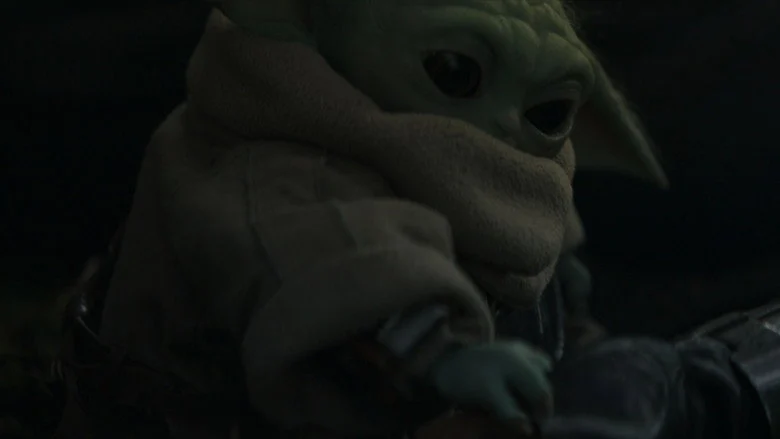
Grogu functions as thematic anchor as much as character. Described as Din’s “young apprentice, ” the dynamic inverts traditional mentor narratives, an adult teaching a child in a galaxy where survival requires hardening. The phrase “the old protect the young, and then the young protect the old” encodes this reversal explicitly.
Pre-Release Positioning Cannot Hide the Franchise Fatigue Risk
The film arrives at a moment when Star Wars theatrical releases face skepticism. Favreau’s decision to move The Mandalorian from streaming success to cinema gambling that character loyalty and IMAX presentation can overcome audience wariness about franchise saturation. The bet is creative, continuing serialized narrative in a feature framework, but not without precedent risk.
No post-release criticism has emerged to clarify whether this gamble lands or misfires. The absence of verified critical consensus means the film’s actual execution remains unknown, a position that itself suggests audience and critical responses are mixed or still forming.
For committed franchise followers, this is essential viewing in IMAX format, where the theatrical scale justifies the transition from episodic television. For viewers approaching Star Wars cautiously, the film demands familiarity with series continuity and assumes investment in Din and Grogu’s arc. The film rewards deep fandom while potentially alienating casual viewers seeking a standalone entry point into the galaxy far, far away.
Star Wars: The Mandalorian and Grogu is a skilled continuation that respects its characters even as it risks diluting them through theatrical expansion, a 3/5 bet on whether intimate storytelling survives the spectacle.
Favreau’s theatrical ambition mirrors the character-forward risks explored in Michael review, where sustained focus on a singular protagonist must carry feature-length cinema.
The Mandalorian’s shift to cinema also echoes how serialized narratives must prove themselves on the theatrical stage, much like the career stakes explored in Rock 2026 verdict.