Michael (2026): Jaafar Jackson Carries Performance Recreations Over Substantive Biography


Michael Jackson’s story unfolds through the eyes of his nephew Jaafar Jackson, who carries the film from Jackson 5 origins through the Bad era with an actor’s first-screen commitment to matching iconic stage moments. Antoine Fuqua’s direction privileges visual spectacle and chronological milestone-marking over the kind of interior psychological depth that might have justified examining the cost of early stardom on a child performer shaped by family pressure and perfectionist drive.
Jaafar Jackson’s Dual Performance Registers
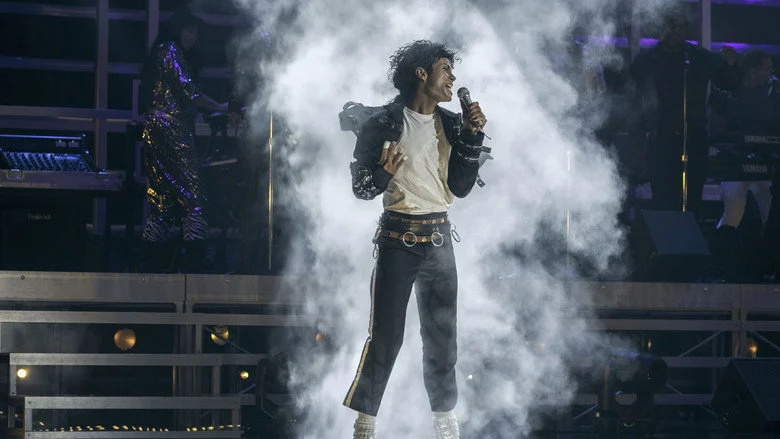
Jackson’s casting carries immediate weight, blood relation narrows the interpretive distance and stakes the film’s credibility on authentic imitation. His work in the Jackson 5 and early solo performance recreations anchors the film’s central appeal, translating archival choreography and vocal cadence into lived body language rather than mannered impersonation. The provided approach succeeds visually, yet reviewers noted his quieter off-stage moments lack the dramatic texture needed to sustain a character study between performances.
Fuqua’s Direction Favors Spectacle Over Character Archaeology
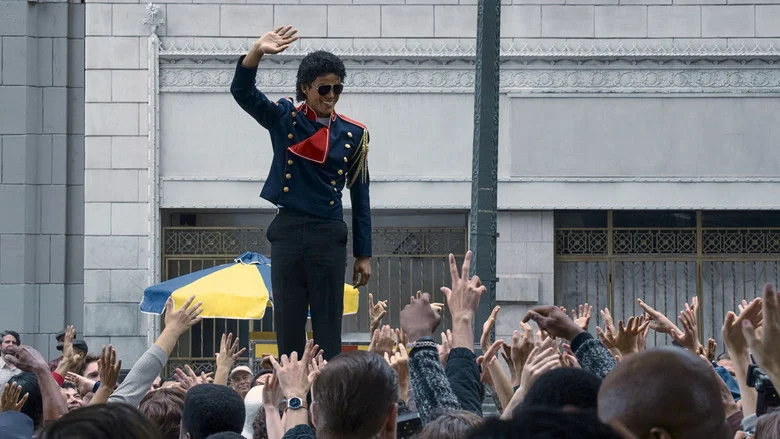
The director organizes the narrative around iconic public moments, a commercially sound biopic strategy that privileges visual recognition and staging precision over psychological excavation. His specific strength lies in structuring performance recreation as the film’s dramatic spine; its specific weakness surfaces in the gap between what we watch and what we understand about why Michael’s internal world fractured under that same public machinery. Plugged In noted the story lacked substantive depth, a constraint that feels less like screenplay limitation and more like directorial choice to keep the film moving through highlights rather than dwelling in cost.
Biography as Performance Chronology Rather Than Character Study
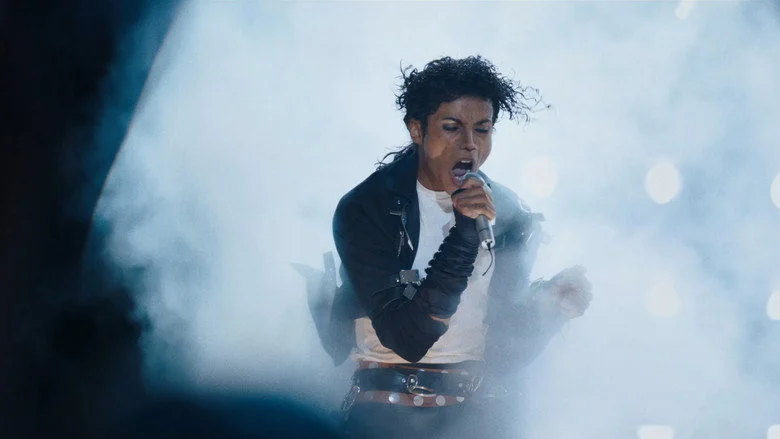
The film moves linearly from childhood discovery through Jackson 5 dominance into early solo stratospheric rise, treating each phase as a discrete performance milestone rather than a continuous psychological arc. Scenes depicting Michael’s relationship with Joe Jackson position the father-son dynamic as a pressure mechanism, fear and discipline shaping early discipline, not trauma exploring emotional consequence. This framework allows the film to sidestep deeper examination; it can acknowledge abuse without investigating its lasting architecture on identity.
Recreations of Jackson 5 stage work and early solo-era performances carry the visual and emotional weight reviewers singled out as the film’s primary asset. The staging and visual precision match archival footage closely enough to feel like animated memory rather than dramatic reconstruction, a technical accomplishment that satisfies surface appeal while ironically distancing us from the performer beneath the choreography. The approach works as music-biopic spectacle; it fails as biography.
Colman Domingo’s Joe Jackson functions as the familial antagonist, embodying parental pressure and perfectionist demand that shaped early discipline. His scenes create dramatic friction but resist deeper exploration, he remains a pressure source rather than a fully rendered character. Nia Long as Katherine Jackson occupies a parental support role within the Jackson family constellation, though the provided critical coverage offers limited scene-level observation of her specific performance contributions.
Miles Teller appears as John Branca, an industry-facing adult role that bridges Michael’s later professional landscape. His presence signals the film’s interest in business and contractual machinery alongside performance history, yet Deep Focus Review’s single-star assessment and broader critical consensus suggest his storyline fails to crystallize into dramatic purpose. His casting matters less than what his scenes accomplish, or fail to accomplish, in deepening our understanding of Michael as a negotiating force rather than a performing vessel.
One first-person critical observation: I found the film’s refusal to interrogate the psychological aftermath of child abuse particularly frustrating given its PG-13 constraints allow the content to linger without consequence, disturbing imagery without earned emotional investigation.
Scenes involving child abuse material drew strong critical objection, particularly from reviewers concerned about both thematic weight and family-audience appropriateness. The film includes these moments without the dramatic framework to absorb their impact, creating a tension between content advisory and narrative justification that reviewers flagged as unresolved.
The supporting ensemble, Laura Harrier, Jessica Sula, KeiLyn Durrel Jones, Larenz Tate, and Mike Myers, remain largely underdeveloped in available critical coverage, suggesting their roles function more as ensemble texture than dramatic catalysts. Their inclusion signals breadth of production scope rather than depth of character integration.
Whether this film works depends entirely on viewer expectation. If you come for performance recreation and visual homage to Michael Jackson’s iconic stage moments, the film delivers with polished staging and Jaafar Jackson’s committed imitation work. If you come for biography, for understanding how a child performer survived and was transformed by early fame, family expectation, and perfectionist drive, the film retreats into spectacle rather than excavation. The PG-13 rating and thematic constraints visible in how abuse material is handled without psychological follow-through suggest editorial caution that limits the entire enterprise.
More music biography and performance criticism can be found in our English Primary Biography reviews, where we regularly examine how music-driven narratives balance spectacle with character depth.
For audiences, the recommendation hinges on format and expectation. Watch on a large screen where the recreated performance moments land with maximum impact; skip if you expect substantive character study. The film succeeds as visual archive and casting novelty; it struggles as serious biography, never resolving the tension between what we admire about Michael Jackson and what we might understand about the cost of becoming him.
Michael remains a performance vehicle rather than a character study, prioritizing recreation over excavation, a choice that ultimately limits its reach beyond surface appeal and spectacle.
Those drawn to family-driven performance dynamics might explore Rock 2026 review elsewhere in our archive.
Colman Domingo’s approach to antagonist roles shares similar pressure-based family dynamics with Dose 2026 verdict across contemporary cinema.