Jailer 2 (2026): Rajinikanth Returns, But Nelson Dilipkumar’s Sequel Buries the Star Under Syndicate Bloat


Nelson Dilipkumar opens his sequel not with a bang but with a wake, Arjun’s absence still curdling the Pandian household milk. That grief is the film’s most honest special effect, and it lasts exactly as long as it takes for a Kalpak to knock on the door.
The Idol-Smuggling Plot Is a Chandelier Hanging Over a Food Fight
The central mechanism is admirably perverse: Tiger Muthuvel Pandian, retired jailer and professional grieving father, stumbles into an idol-smuggling syndicate while a separate revenge investigation led by Dileep closes in on him for Varman’s death. Two engines, one chassis. It should hum.
It doesn’t, because the film treats its own mystery like a houseguest it forgot was coming. Dileep’s inquiry, the most structurally interesting thread, a man hunting a killer who is also the movie’s hero, gets maybe three scenes of actual friction before the screenplay converts him into another body for the Kalpak family to threaten.
The Kalpak triad (Bodhi, Kantha, patriarch Kalpak) is the sequel’s real gamble: a familial antagonist structure rather than a single villain. In theory, that’s a richer pressure system. In practice, it means three people split the menace that one person should have owned. S. J. Suryah’s Bodhi gets the sharpest angles, a sneer that arrives a half-beat before his dialogue, a habit of standing just outside doorframes as if he’s auditioning for the room’s permission. But the film keeps cutting away to his relatives before he can finish a thought.

Rajinikanth’s Stillness Is the Only Thing the Camera Trusts
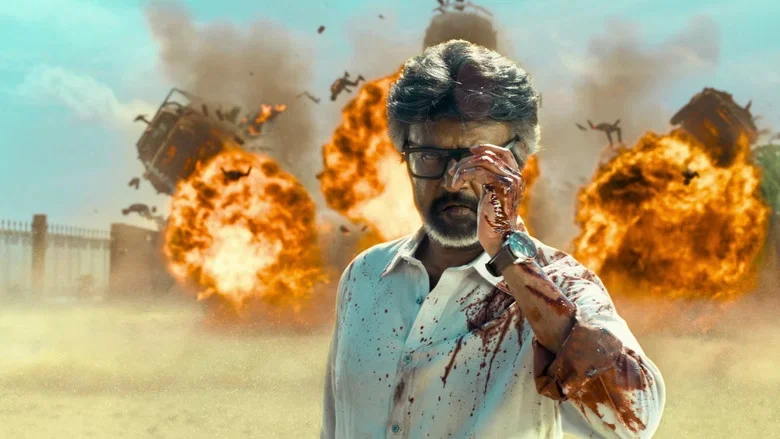
What the sequel does have, and what no amount of syndicate sprawl can dilute, is Rajinikanth’s physical discipline in the quiet beats. Watch him in the early domestic scenes: he doesn’t perform grief, he carries it in his shoulders, a slight forward slump he corrects the instant a family member enters the frame. That correction is the whole character.
When the violence returns, he plays it with a jailer’s economy. No wasted movement. A hand on a doorframe, a slow turn of the head before a strike. The film’s mass-action sequences are built around his restraint, not his fury, and that’s the smartest thing Nelson does here, he understands that an older star’s power is in what he withholds.
The supporting ensemble, by contrast, is largely decorative. Vidya Balan’s Kantha Kalpak is positioned as a criminal matriarch but given almost nothing to do except react to men. Mithun Chakraborty’s patriarch sits in rooms looking patriarchal. Sooraj Venjaramoodu’s Dileep has the film’s best non-Tiger arc on paper, but the screenplay abandons it the moment the family siege begins.
Ramya Krishnan and Yogi Babu appear, register, and vanish. That’s not a casting failure. It’s a structural one: the film has too many pieces and not enough board.

The Sequel Problem Nelson Refuses to Solve
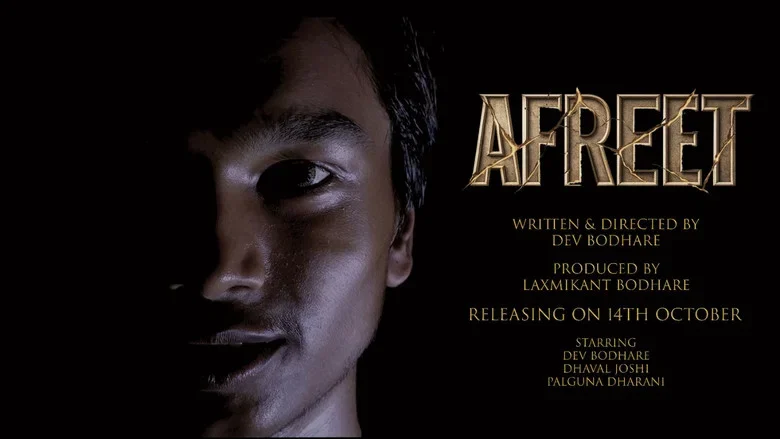
Here’s the uncomfortable comparison. In Afreet – A Never, the filmmaker understood that a contained runtime forces every scene to justify its existence. Jailer 2 runs two hours and forty-five minutes, and the extra forty minutes are almost entirely spent re-explaining what we already know about Tiger’s grief.
The film is terrified of its own audience forgetting the first movie. Every twenty minutes, someone recaps Arjun’s death. Every thirty, someone reminds us that Tiger used to be a jailer. It’s a sequel that doesn’t trust its predecessor’s residue to do the work.
Where the screenplay does push forward, the idol-smuggling mythology, the Kalpak hierarchy, the idea that Tiger’s past institutional violence created enemies he never counted, it’s genuinely interesting. But those ideas are introduced and then shelved in favor of another slow-motion walk toward camera.
The tonal balance is also shakier than the first film. Nelson’s humor here lands in the wrong pockets. A joke arrives during a hostage standoff, then the film expects us to feel dread thirty seconds later. The whiplash isn’t playful; it’s indecisive. Compare it to the cleaner genre discipline of something like Vibe, which at least knew what kind of movie it wanted to be in every scene.
And the performance foil matters. Mrunal Thakur’s work in Pooja Meri Jaan demonstrated how a single performer can hold a thriller’s emotional center even when the plot wobbles. Jailer 2 has Rajinikanth doing that job, but the film keeps handing the center to characters who can’t carry it.
The Action Is Loud, the Stakes Are Quiet
Technically, the film is competent without being distinctive. The camera stays wide during confrontations, letting Rajinikanth’s silhouette do the work, and the lighting leans into amber interiors and steel-blue exteriors to signal the domestic/criminal split. It’s functional grammar, not expressive cinema.
The background score is the bigger problem. It arrives too early in almost every scene, telling us how to feel before the performances have earned it. A great mass-entertainer score knows when to shut up. This one doesn’t.
Editing-wise, the first half moves with reasonable purpose, grief, investigation, revelation. The second half sags under the weight of its own confrontations. There are at least two sequences that could be cut entirely without losing a single plot point.
What saves the film from genuine mediocrity is Rajinikanth’s willingness to play old. He doesn’t pretend Tiger is thirty. He plays the fatigue, the caution, the way a man checks a room before entering it. That’s not star vanity. That’s craft.
What’s Actually at Stake for the Studio and the Star
The reported budget sits above ₹240 crore, and the pre-release projections ranged from ₹125 crore to ₹150 crore worldwide on opening day. Those are numbers that demand a franchise, not a film. The producers are betting that Tiger Muthuvel Pandian is a sustainable IP, not a one-off event.
That’s a dangerous bet in the current Tamil market. The remake-and-sequel pipeline has been showing fatigue for two years now, and audiences are increasingly allergic to films that feel like they exist to set up a third installment. Jailer 2 doesn’t quite do that, it resolves its central conflict, but it leaves enough threads dangling to signal the intention.
Rajinikanth’s theatrical leverage remains enormous. Advance bookings crossed ₹40 crore, and trade analysts were projecting worldwide numbers north of ₹350 crore if word of mouth held. But that “if” is doing a lot of work. The film’s opening will be massive. Its second weekend will tell the real story.
For the Tamil industry at large, Jailer 2 is a test case: can a star-driven sequel with a bloated runtime and an overstuffed antagonist structure still convert nostalgia into profit? The early answer is yes. The sustainable answer is less certain.
The Ending Doesn’t Earn Its Own Weight
Without spoiling the specifics, the climax resolves the Kalpak threat in a way that feels structurally correct but emotionally hollow. Tiger wins because the screenplay needs him to win, not because the film has built a confrontation that demands his victory.
The final scene gestures toward a larger criminal world, a bigger war, a longer franchise. But the gesture lands less as promise and more as threat, as if the film is warning us that this story will never actually end.
That’s the real problem with Jailer 2. It’s not a bad movie. It’s a movie that doesn’t know how to be a movie instead of a chapter. Nelson Dilipkumar has the star, the scale, and the mythology. What he doesn’t have is the discipline to let Tiger Muthuvel Pandian’s story breathe on its own.
Rajinikanth deserves a film that trusts him to carry the silence. This one keeps filling it with noise.
For a star whose entire late-career power lies in stillness, that’s the one thing the sequel can’t afford to waste.