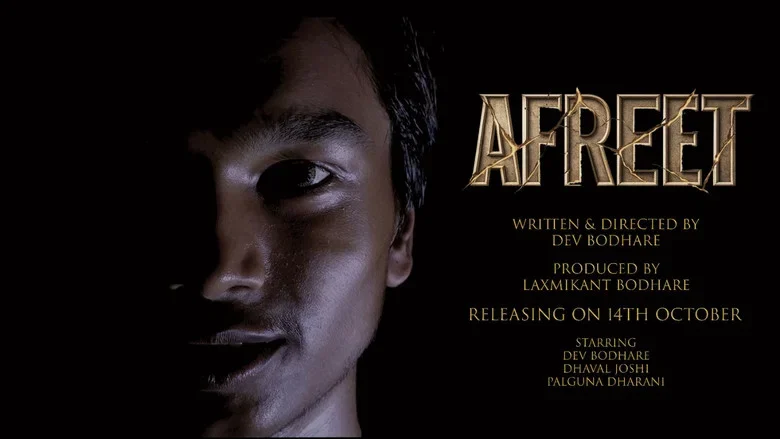
Afreet – A Never Ending Night (2026): A Never Ending Night (2026): Dev Bodhare’s 23-Minute Horror Comedy Runs Out of Night


A group of friends settle in for an ordinary evening, and a harmless dare cracks open something old and hungry. The night refuses to close, and Dev Bodhare’s twenty-three-minute indie wants us to feel every minute of that refusal.
The Challenge Is The Easy Part; The Consequences Are The Bluff
Bodhare, pulling double duty as director and principal performer, opens on the easiest horror-comedy currency there is: the social gathering before the mistake. The staging is deliberately mundane, faces lit for banter rather than dread, and the challenge arrives with the casualness of a party game.
That narrative economy is the film’s sharpest instinct. The trigger is a recognisable human action, not a haunted object dropped from the ceiling, and the release of the older, more dangerous presence lands with the clean logic of cause and effect.
Where the script starts bluffing is the moment the force becomes real. The premise insists every choice carries consequence, yet nothing on screen establishes what the rules actually are. Contemporary Hindi horror has been quietly rebuilding its grammar around precisely this kind of rule-tightening, as the genre’s recent output proves across contemporary hindi horrors.
A Three-Hander With No Third Face
Three friends is a lean, elegant horror chassis: one believer, one skeptic, one coward, and the friction writes itself. The film never assigns those seats.
Dhaval Joshi and Palguna Dharani register as warm screen presences, but the screenplay hands them interchangeable lines, so when the strange events begin blurring what is real, the audience has no emotional ledger to consult.
The peer comparison stings. Where Pooja Meri Jaan at least anchored its escalating unease in a single defining performance, this one spreads its short runtime thin across everyone and commits to no one.
Bodhare The Actor Is Let Down By Bodhare The Director
As a performer, Bodhare holds the group’s centre with a loose, unforced comic register; his timing in the early banter is the film’s most confident element. When fear should take over that same body, the direction gives him no progression to play.
His fear registers as the same volume as his jokes, one facial setting recycled through escalating supernatural pressure. The performance foil is instructive: the way Prem Keetanu let its lead modulate between dread and levity shows what this film leaves on the floor.
Darkness Without Texture, Silence Without Dread
The night-bound premise is a gift to any cinematographer: confinement, low light, faces half-swallowed by shadow. The execution treats darkness as an absence rather than a texture, flat and evenly underexposed, with no spatial logic to the rooms the friends move through.
Sound design leans on the same blunt instrument repeatedly, a sting arriving on cue rather than a creeping wrongness underneath the dialogue. The score never lets silence do the frightening, and silence is the cheapest scare this film never spends.
The genre sibling comparison is brutal. Alpha understood that horror escalates through committed physical staging; here, the escalation is asserted by dialogue rather than staged in space.
The Night Ends Because The Runtime Does
Twenty-three minutes is a promise of compression, and the film does move, but the ending arrives as a stopping point rather than a resolution. The “never-ending night” premise is abandoned the moment the credits need to roll.
No consequence lands, no character is marked by what they survived, and the supernatural force exits as anonymously as it entered. For a film built on consequence, that is the one rule it breaks most egregiously.
The compression is real, the friend-group premise is sound, and Bodhare’s comic instincts are genuine. What’s missing is the discipline to make fear cost something, and in a genre where atmosphere is everything, twenty-three minutes is long enough to prove you don’t have any.
Rating: 2 / 5