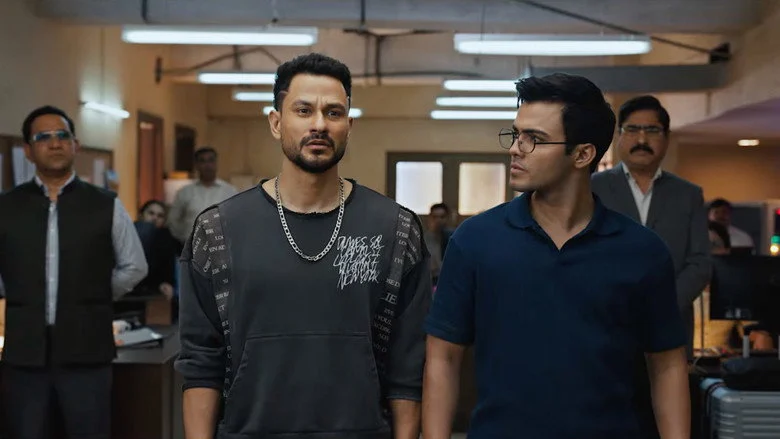

Prem Keetanu (2026): Veer Pahariya Headlines A Remake That Fights Its Own Footage


Somewhere in the middle of Prem Keetanu, a heartbreak track swells over a college corridor and the film briefly convinces you it has a pulse. That the pulse belongs to a marketing rollout rather than a screenplay is the problem Apoorv Singh Karki never solves across two hours and eighteen minutes.
The Hindi reworking of Premalu arrives with a trailer that sold youthful chaos efficiently, a UP-and-NCR friendship circle, a love triangle between Veer Pahariya, Aparshakti Khurana and Aafiya Sayed, and a soundtrack engineered to make you feel something before the story has earned it. The film itself is a different animal: a romance-comedy that keeps reaching for the emotional register of its own promotional material and coming back with air.
The Trailer Was The Movie
Watch the teaser material again and you can see the whole architecture: a group of underachieving friends, a campus backdrop, banter traded like currency, and a romantic collision staged for maximum relatability. What the trailer understood, and what the feature consistently fumbles, is rhythm. The comedic beats in the marketing cut arrive on the cut, punchy and uncluttered. In the film, those same exchanges are stretched across blocking that doesn’t know when to leave a room. Karki, whose Aspirants and Sirf Ek Banda Kaafi Hai showed a genuine instinct for pressure and consequence, directs this material as though the lightness itself were the achievement. It isn’t. Lightness needs precision, and precision is the first casualty here.
The love-triangle staging is the clearest evidence. Pahariya’s central character is positioned as the mischievous engine of the group, the one who instigates, the one who suffers, and the trailer frames that dual function cleanly. On screen, the comic-to-vulnerable transition is announced rather than dramatised. He gets a heartbreak number; he gets a song to cry through; he does not, in the available footage, get a scene where the collapse happens in silence. That’s a directorial choice, and it’s the wrong one.
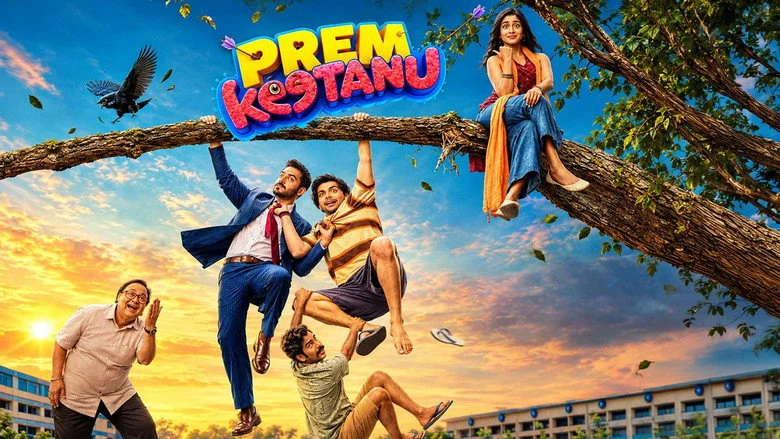
Aafiya Sayed And Aparshakti Khurana Do The Heavy Lifting
The film’s most functional element is its second lead. Aparshakti Khurana, placed inside the friendship-romance conflict rather than outside it as comic relief, brings an ease the material doesn’t always deserve. His scenes with Aafiya Sayed, who anchors the romantic dynamic with a steadiness the script underuses, carry the only real friction in the middle stretch. Sayed in particular is asked to hold the emotional centre of a triangle, and she does it largely through reaction work that the edit keeps cutting away from. You can feel a better film in the takes they didn’t use.
Rakesh Bedi and Nikhil Vijay round out the ensemble with the kind of professional competence that stabilises a shaky structure without ever being given a scene to own. That’s a writing problem, not a performance one. Deepak Kingrani’s screenplay, with Girish A.D. credited on one listing, reflecting the remake’s tangled authorship, treats its supporting players as furniture in a house it’s still trying to build.
For a sense of how a different ensemble handles tonal whiplash, our review desk’s take on Vibe review is instructive: that film’s problems are structural too, but its performers at least get room to fail interestingly.
The Remake Question Won’t Sit Down
You cannot review Prem Keetanu without addressing the backlash, and the backlash is not irrational. Premalu fans objected to the casting and to the very premise of a Hindi transplant, and the film does nothing to answer them. The UP/NCR relocation, which should have been the remake’s strongest argument, a genuine cultural re-grounding, is used as wallpaper. The setting is named; it is never felt. The humour doesn’t shift register between Kerala and the Hindi belt; it just gets dubbed. That’s a missed opportunity of the most avoidable kind, and it explains why the online reaction curdled before release.
There’s a version of this film that argues for its own existence. This isn’t it. It’s a faithful transcription with a better soundtrack.
On the subject of films that know exactly who they’re for and refuse to apologise, our coverage of Hanuman Ansh verdict is a useful counterpoint, conviction, even misplaced, reads on screen.
What Actually Works
The music. Full stop. “Tujhse Bichad Ke” and “Ishq Ka Ghulam” are deployed with real confidence, and the heartbreak rollout was the smartest campaign decision the film made. Arjun Kukreti’s photography gives the campus sequences a warm, unforced texture that the editing then squanders by refusing to hold a shot past the point of recognition. The film is at its best in the twenty minutes where the songs are doing the emotional work the dialogue can’t. That’s a compliment and an indictment in the same breath.
What’s missing is consequence. A college romance can be slight and still land, but it has to commit to a point of view about its own characters. Prem Keetanu likes its leads, and liking is not the same as understanding. The central conflict, a group of friends balancing love, self-worth and ambition, is stated in the synopsis and never dramatised with any specificity. Nobody’s ambition has a shape. Nobody’s heartbreak has a cost. The film ends, presumably, because the runtime does.
Verdict
2.5 out of 5. A watchable, well-scored romance-comedy that mistakes atmosphere for story and marketing momentum for dramatic structure. Veer Pahariya is a viable leading presence in need of a director who’ll let him be still; Aparshakti Khurana and Aafiya Sayed are the reasons to stay. Apoorv Singh Karki has made two genuinely tense, character-driven projects, this one suggests he hasn’t yet found the vocabulary for lightness.
Watch it if you want a low-stakes theatrical romance with a genuinely strong soundtrack and no interest in being challenged.
Skip it if you’ve seen Premalu, or if you want the film the trailer promised.
For more of our reviews and box-office analysis, keep an eye on Hindi Romance reviews.