
Party Animals (2026): Viraj Ghelani Can’t Rescue a Farce That Runs on Fumes


The school public-address system crackles, a boy hijacks it to confess love on behalf of his best friend, and the entire student body erupts. It is the one moment in Party Animals where the chaos feels earned.
Everything after it is a two-hour-and-thirteen-minute attempt to recapture that spark by throwing a nightclub, a mansion, a double-decker bus, and a runaway horse at the wall.
The Childhood Prologue Is the Only Scene With a Pulse
Ravi Chhabria opens on a friendship forged in mischief. Mann Patel, played by Viraj Ghelani, commandeers the PA system so Armaan Khanna can declare his love for Simran to the whole school.
It is efficient, funny, and specific. The scene establishes Mann as the impulsive fixer and Armaan as the passive beneficiary, a dynamic the film will spend its remaining runtime trying to complicate.
Adulthood arrives with a sharper contrast. Armaan is prepped for a hero launch in his wealthy father’s film while Mann manages the family farsaan shop, a gap in social standing the screenplay never digs into with any real bite.
Instead, Mann organizes a party for Mumbai’s fashionable set, and the film shifts into a gear it cannot sustain.
A Chain-Reaction Farce That Forgets to Build the Chain
The central mechanism is escalation. Every attempt by the friends to repair one public embarrassment generates a larger one, moving from nightclub to mansion to open party bus to jail cell.
On paper, that is a sound comedic engine. In execution, the causality frays, and each mishap begins to feel less like a consequence and more like a scheduling decision.
The film has been marketed as a friendship comedy, and that framing is not dishonest. What it obscures is how little the friendship is actually tested by the escalating incidents.
The romantic complications involving Simran, played by Jaanya Joshi, supply nominal stakes, but the screenplay treats her as a trigger rather than a character with her own comic or emotional interiority.
Where the film does earn some goodwill is in its spatial ambition. The progression from a controlled party environment to street-level disorder to police custody has a clear visual logic, even when the writing lags behind it.
Ghelani Carries the Comedy, Tanwar Carries the Poster
Ghelani is the film’s most reliable asset. He plays Mann with a hustler’s energy, his comic timing built on the gap between his character’s modest reality and his aspirational self-image.
The performance has a physical looseness that suits the material, particularly in the party sequences where his character’s attempts to project social mastery keep collapsing into visible panic.
Arjun Tanwar, as Armaan, is handed the less rewarding half of the dynamic. His character is reactive by design, and the screenplay gives him little to do beyond looking concerned while Ghelani does the comic lifting.
The contrast between Ghelani’s improvisational energy and Tanwar’s more conventional leading-man register is stark, and not always in the film’s favor.
Among the supporting ensemble, Kamlesh Sawant and Manoj Joshi appear in roles that carry the weight of authority figures without much scene-level definition, their presence felt more as institutional texture than as dramatic opposition.
An A Certificate, a Long Night, and a Director Without a Brake
Chhabria’s direction shows a clear instinct for spatial escalation. The movement between venues has a visual rhythm, and the film’s nightlife setting is rendered with enough specificity to feel lived-in rather than generic.
What it lacks is control. The comic set pieces are staged with an eye toward incident density rather than rhythm, and the film’s editing does not consistently find the right beat between laughs.
The second half, in particular, stretches the escalation past its natural limit. By the time the runaway horse enters the frame, the film has already spent its comic capital on earlier, louder disruptions.
The A certificate signals an adult-oriented comedy, and the nightlife setting supports that classification. But the film’s tonal register is broader than its certification suggests, veering between raunchy party humor and sentimental friendship beats without a clear through-line.
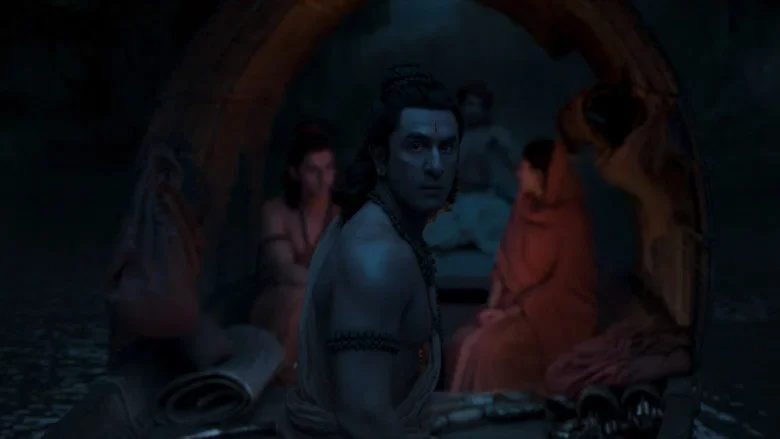
This is the same problem that undermined the mythic ambitions of Ramayana, where spectacle outpaced narrative discipline. Here, the spectacle is smaller but the imbalance is similar.
The Comparison Trap: What This Film Could Have Learned
The one-night comedy is a difficult form. It requires a tight causal chain, characters whose decisions compound rather than repeat, and a rhythm that builds rather than cycles.
Party Animals has the first two in theory but struggles with the third. The film’s comic mechanism is established early and then reused, so that later incidents carry diminishing returns.
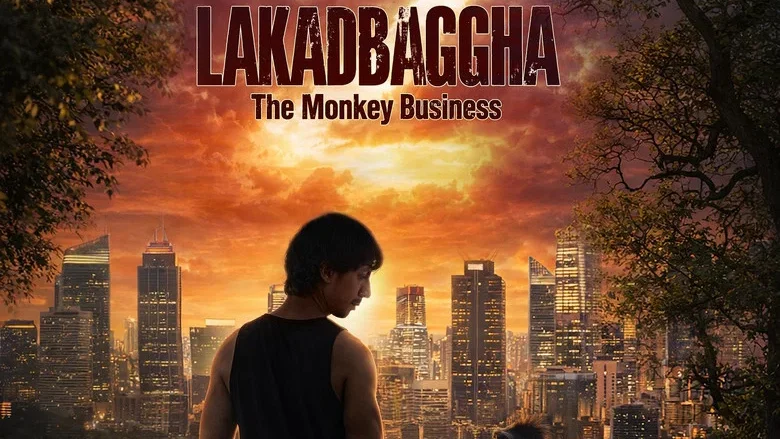
The tonal inconsistency echoes the problems that plagued Lakadbaggha 2, another recent release that struggled to balance its genre ambitions with its execution.
What Party Animals does better is its emotional foundation. The childhood prologue gives the friendship a concrete origin, which is more than many comedies of this type bother to establish.
But foundation is not structure. The film builds a two-story house on a one-room frame, and the result is a comedy that feels both overstuffed and underdeveloped.
The romantic subplot with Simran is a case in point. It is introduced with enough weight to suggest it matters, then largely abandoned in favor of party logistics and police chases.
There is a version of this film where the friendship is genuinely tested by the night’s events, where the escalation forces Mann and Armaan to confront the gap between their childhood bond and their adult realities.
That version is not on screen. What is on screen is a comedy that mistakes volume for energy and incident for plot.
Yoodlee Films and the Economics of the Mid-Budget Hindi Comedy
Yoodlee Films, a Saregama company, has built a reputation for backing mid-budget content with recognizable faces and modest theatrical ambitions. Party Animals fits that slate.
The film’s commercial prospects are difficult to assess without verified box-office data, but the critical reception has been harsh. The consensus across trade reviews has been that the comedy fails to find its groove.
For Yoodlee, the calculation is likely about ancillary value. A film like this can recoup through digital rights and satellite deals even if its theatrical run is limited, with audiences tracking post-theatrical OTT availability on portals like hdhub4u pro monitoring confirmed digital premiere windows across streaming platforms.
Ghelani’s digital audience may provide a modest opening bump, but the film’s A certificate and nightlife setting limit its family-viewing potential. This is not a film built for the mass-market multiplex crowd.
The broader trend is worth noting. The mid-budget Hindi comedy has become an increasingly difficult proposition in the current exhibition market, where spectacle-driven releases dominate screens and smaller films struggle for breathing room.
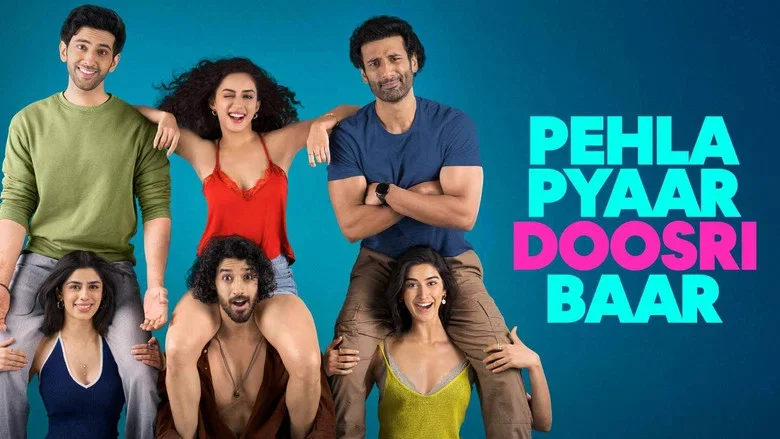
This patient, character-driven approach to comedy deserves a place in the theatrical ecosystem, even when the execution falters. The appetite for contemporary Hindi comedy remains strong, as the continued interest in films like Pehla Pyaar Doosri Baar suggests.
But appetite is not the same as achievement. Party Animals wants to be a chaotic night-out comedy with a friendship at its center, and it has the ingredients for that film.
What it lacks is the discipline to let those ingredients cook. The result is a film that feels simultaneously overworked and undercooked, a comedy that keeps throwing punches without landing them.
The final image of the friends, whatever their fate, carries a faint echo of the childhood prologue. There is a bond there worth caring about. The film just never figures out how to make us feel it.
In a theatrical landscape where the mid-budget comedy is fighting for survival, Party Animals is a reminder that chaos is not a substitute for craft. The party is loud. The hangover is longer.