The India Story (2026): Craft-led corporate drama that prioritises purpose over polish


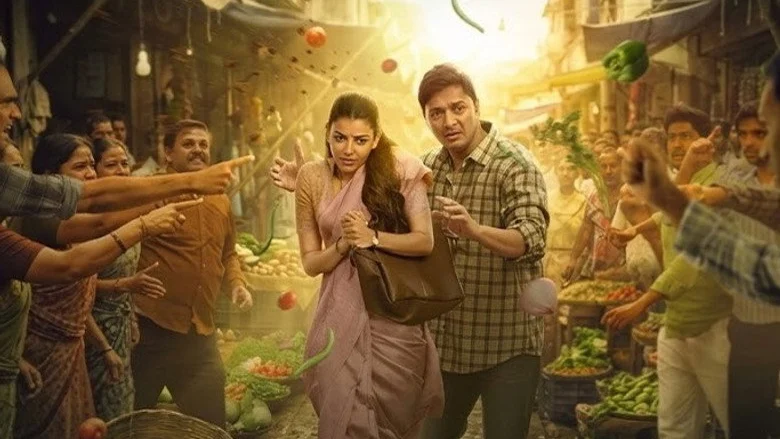
The film opens not with a bang but with a courtroom full of farmers, their hands stained with the very chemicals that have poisoned their land. Kajal Aggarwal walks in with the kind of weary determination that tells you this is a woman who has seen the documents, knows the truth, and has already decided the cost. She plays her role as a crusader against a pesticide empire with a tightly-wound intensity that never quite releases. Her performance is all clenched jaw and measured rage, which works for a character built on moral certainty but leaves little room for the messiness that makes whistleblowers human. One wishes the script allowed her one moment of doubt, a crack in the armour to make the crusade feel earned rather than pre-ordained.
Shreyas Talpade and the lost anchor of the common man
Shreyas Talpade brings a grounded everyman quality that should, on paper, be the emotional spine of this story. He plays a farmer caught in the crossfire of corporate negligence, and his physicality, stooped shoulders, calloused hands, eyes that have stopped expecting justice, is a craft choice worth applauding. Yet the screenplay uses him more as a symbol than a person. He appears, suffers, and disappears, leaving Aggarwal’s character to carry the narrative weight alone. His casting signals a desire for authenticity, but the material never gives him the scene that could have turned a type into a tragedy.
Chetan DK’s direction: brave hand, unsteady script
Chetan DK clearly wants The India Story to function as a document of outrage. The decision to ground the drama in pesticide-company scandals gives the film a social relevance that feels urgent rather than opportunistic. “Slow Poison in Progress” is the kind of tagline that lingers because it names something real. But the direction struggles with pacing, the first half drowns in exposition, explaining the scandal rather than letting it breathe through action. The screenplay lacks a single defining setpiece that could have turned information into emotion. It is a film that knows what it wants to say but has not yet learned how to say it cinematically.
Genre-core execution: a drama that preaches more than it dramatises
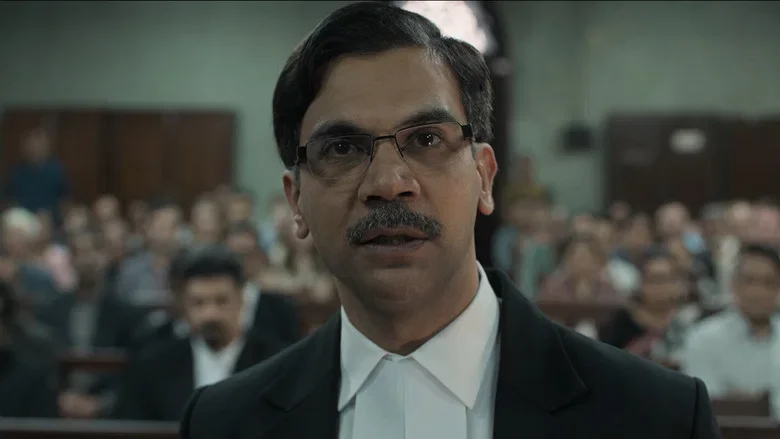
As an issue-driven drama, The India Story commits fully to its premise. The corporate-scandal framework is built with enough detail to satisfy anyone familiar with real-world pesticide litigation. The director resists the temptation to turn the story into a thriller, which is intellectually honest but dramatically restrictive. There are no chases, no last-minute saves, just paperwork, testimonies, and the slow grind of the legal system. The film trusts that the truth of the subject will be enough to hold an audience. That trust is noble but misplaced.
The crime-drama undertones never fully surface. Where a film like Court or Jolly LLB found dramatic tension in the courtroom, this one flattens conflict into monologue. The few moments where the film threatens to become a proper procedural, investigators tracing a supply chain, a whistleblower’s narrow escape, are either glossed over or resolved off-screen. “Truth Revealed” as a dialogue line captures the film’s approach: it announces its revelations rather than earning them through craft. For a drama about poison, the storytelling lacks sting.
The primary genre demands emotional turning points, and the film never delivers one that lands. Aggarwal’s character has a scene where she confronts a boardroom of executives, the camera stays on her face, waiting for a speech. The speech comes, the executives look uncomfortable, and then the scene cuts. There is no aftermath, no cost. A drama that refuses to let its protagonist pay a price for the truth is a drama that has not finished its work. The film is structurally complete but emotionally incomplete.
Supporting cast: the faces that deserved more frames
The supporting cast is thin on the page but the performers who appear leave a mark. A brief appearance by a local journalist, played by an actor whose name the press notes do not confirm, has a single monologue about covering pesticide deaths for a decade without anyone reading her articles. It is the kind of quiet observation that could have anchored an entire subplot. Another farmer character, present only in the first fifteen minutes, delivers a line about how the soil “cries at night” that cuts deeper than any of the film’s formal arguments. These performances hint at a richer, more textured film that exists somewhere in the editing room but never made it to the theatre. Their casting signals a director attuned to real people, even if the final script chose symbols over souls.
The absence of a named antagonist is a structural problem. Without a face for the corruption, no slick CEO, no complicit regulator, the drama has no one to argue with. The film mistakes a system for a villain, and the result is a conflict that feels abstract even when the details are precise. The supporting actors are left to fill a vacuum that only a well-drawn antagonist could occupy.
Audience reception: a film for the informed, not the entertained
The India Story knows its audience. This is a film for viewers who arrive already angry about corporate impunity and want their anger validated. It will frustrate anyone seeking a conventional commercial drama with emotional payoffs. The film does not attempt to be light or entertaining, and it does not pretend to be anything other than a case for the prosecution. That honesty commands respect but also limits reach. It is a film that will be admired more than loved.
For cinephiles interested in how Indian mainstream cinema handles social-issue storytelling, this is a useful case study in both ambition and limitation. The craft is competent, editing does not falter, the cinematography is functional, the background score stays out of the way, but it never elevates the material. This is functional filmmaking in service of a necessary conversation.
Browse more Hindi drama reviews from our archive.
The India Story is a film to watch for its intent, not its execution, a sincere but incomplete drama that tells a vital story without quite finding a cinematic voice for it. See it if the subject matters to you. Skip it if you need the craft to match the cause. The best format to watch this is a quiet afternoon screening where you can sit with its implications afterward.
The India Story earns a careful, respectful 2.5 out of 5, a film that means well but does not do well enough.
For a film that balances social relevance with tighter storytelling, consider the director’s work on Tera Yaar review.