Baby Do Die Do (2026): A deaf-mute assassin thriller that dares but falters


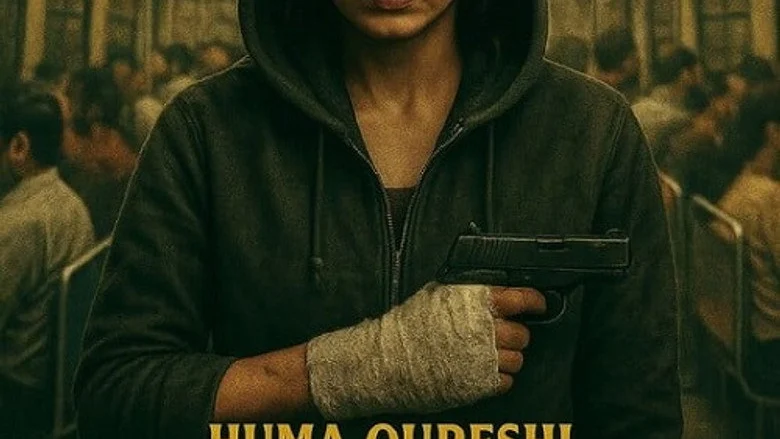
Baby, a deaf-mute assassin, crouches in a Mumbai alley as her dead sister’s voice whispers through her mind, a spectral GPS steering her toward bloodshed. Nachiket Samant’s debut is a gamble that banks entirely on a gimmick and a lead who can sell silence.
Huma Qureshi conveys more with her eyes than most do with dialogue
Qureshi’s portrayal of Baby is the film’s single, shimmering asset. She communicates trauma, calculation, and even dark humour through restrained micro-expressions and deliberate body language.
The scene where Baby first hears her sister’s voice, a moment that could have tipped into melodrama, lands with eerie conviction because Qureshi treats it as a practical, almost mechanical necessity. She never begs for our sympathy.
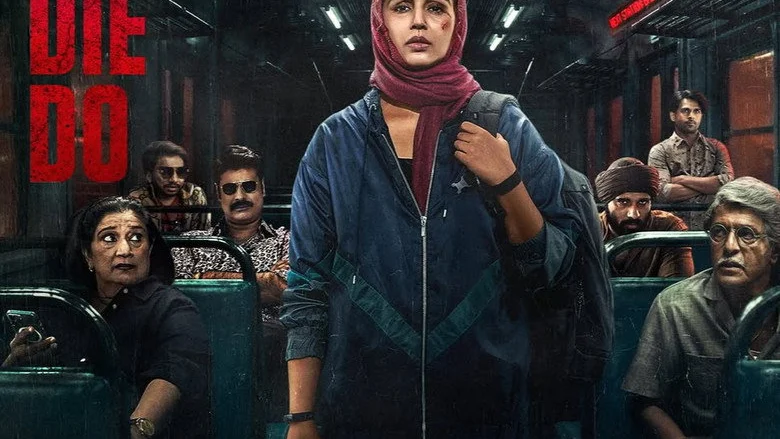
Nachiket Samant’s direction nails mood but loses the thread
Samant frames Mumbai’s underbelly with a grimy, neo-noir precision that feels lived-in. The cinematography turns narrow chawls and rain-slicked streets into character spaces.
But his screenplay, built on a linear structure, stalls in the second half. The antagonist remains a shadow without a face or motive, which saps the climactic confrontation of stakes. The third-act resolution arrives as a shrug, not a revelation.
The thriller craft works in fits and starts
Samant stages the Mumbai-underbelly hunt sequence with competent spatial clarity, Baby’s deafness becomes a tactical tool rather than a handicap. She reads vibrations in window panes and watches reflections in puddles. It is the film’s most inventive stretch.
Yet the thriller mechanics break down whenever plot convenience replaces logic. The sister’s voice, intriguingly introduced, devolves into vague exposition. By the second hour, you feel the film running on fumes.
The climax, while well-shot, suffers from the same vagueness. Baby’s final confrontation demands a concrete enemy, but the script gives her a philosophical fog. I wished the film trusted its lead enough to let her take down a real villain.
Sikandar Kher and Chunky Pandey add texture but not depth
Sikandar Kher brings his signature grittiness to an underworld enforcer role, though the character is under-written. His physicality compensates for lines he is not given.
Chunky Pandey, cast against his comic-persona grain, appears in two scenes and registers through silence, a welcome surprise. Seema Pahwa has little to do, but her casting suggests a backstory the film never bothers to explore.
The controversy gap forces the film to rely on audience goodwill
No political or censorship baggage surrounds Baby Do Die Do. That absence leaves the film exposed to its own flaws, positive word of mouth has centred on Qureshi’s performance, while complaints about a vague antagonist and second-half slackness repeat across early audience reactions.
For a more complete picture of what Hindi cinema is attempting at the margins, browse through these Hindi Crime reviews.
The verdict: A performance in search of a script
Baby Do Die Do is a film you watch for Huma Qureshi and forgive for everything else. It is not a breakthrough, it is a rehearsal for one. Skip the theatrical experience and catch it on streaming, where its modest ambitions feel less glaring.
Baby Do Die Do lands near a 2.5 out of 5, a risk that earns respect but not a repeat-viewing recommendation.
Those drawn to Samant’s mood-first storytelling should also try the similarly atmospheric Alpha review.
Qureshi’s action-hero turn invites comparison with Alia Bhatt’s Alpha verdict.