Nanhey Dil (2026): Suniel Shetty Anchors A Sincere But Familiar Classroom Fable


The lunchbox does all the heavy lifting in Swarup Raj Medara’s debut, and the film knows it. A dhobi’s son walks into a marble-floored elite school, and the only bridge across the class chasm turns out to be tiffin.
A Laundryman’s Son And The School That Wasn’t Built For Him
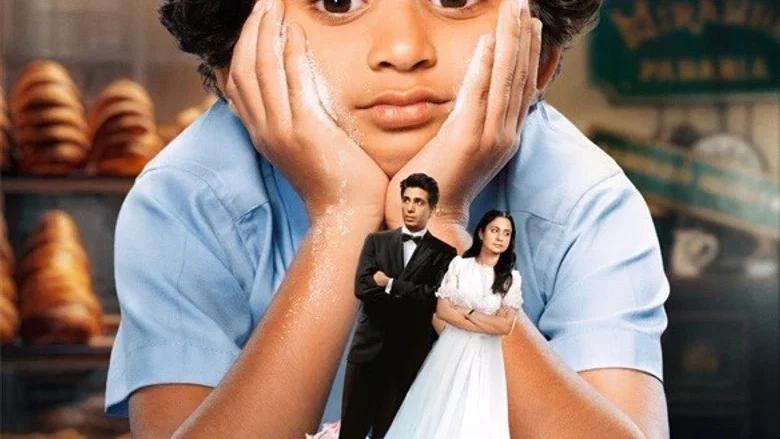
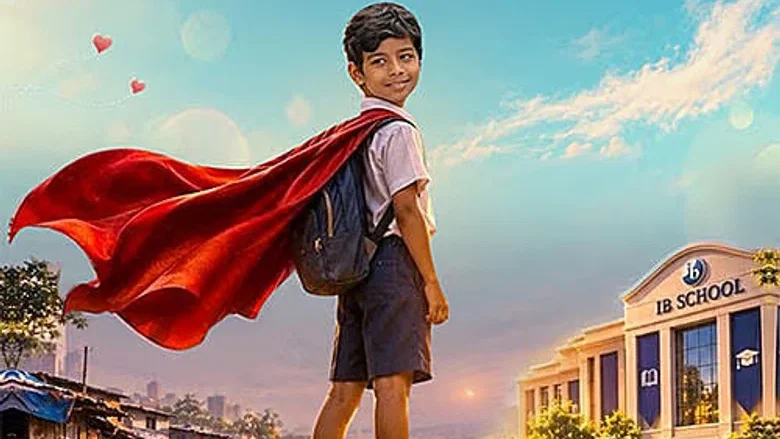
Raghu (Sarvesh Adawade) lives in a Mumbai chawl where his father irons strangers’ shirts for a living. Anthony (Suniel Shetty), the principal of a prestigious institution, spots the boy’s academic spark and hands him a seat among children who arrive in chauffeured sedans.
Medara wastes no time on preamble. Within the first act, the boy is standing in a corridor polished to a mirror shine, clutching a bag that suddenly feels like evidence against him.
The film’s dramatic engine is not a villain but architecture, gates, uniforms, surnames, the way a canteen table can be a border wall. That is a genuinely interesting choice for a family drama, even if the execution keeps reaching for the gentlest possible version of it.
When The Only Weapon Is A Steel Tiffin Box
The middle stretch finds Raghu shrinking into corners, and then something quietly radical happens. He starts sharing his mother’s home-cooked food with six classmates who initially regard him as a curiosity.
This is the film’s sharpest narrative instinct: class reconciliation rendered as a physical, edible act rather than a speech. A child passing a chapati across a desk says more than any adult lecture on equality ever could.
It also recalls the tonal patience of other contemporary Hindi dramas that trust small gestures over grand declarations, a lineage this film clearly aspires to join.
Whether it earns that company is another matter. The sharing sequence is warm and legible, but Medara stages it so softly that the sting of the initial rejection, the real meat of the premise, gets sanded away too quickly.
Suniel Shetty Restrains Himself, And That Is The Point
Shetty’s Anthony is a study in adult understatement. He doesn’t deliver motivational monologues; he watches from doorways, hands folded, letting a boy find his own footing.
It is a deliberately small turn, and it works precisely because Shetty resists the actorly urge to make the mentor the hero. The restrained authority he carries here has echoes of his grounded work in Welcome to the Jungle, where presence mattered more than volume.
Young Adawade, meanwhile, plays Raghu with a visible stiffness in his shoulders and a habit of looking at the floor mid-sentence. The performance is endearing for what it withholds, the boy is never reduced to a symbol of poverty.
The six classmates, by contrast, function largely as a chorus. They shift from wariness to warmth without much individual texture, and the screenplay never gives any one of them a distinct emotional stake.
A Screenplay That Trusts the Formula More Than Its Own Instincts
Medara’s structural choices are linear and safe: background, admission, alienation, food, friendship, resolution. There is no antagonist, no institutional pushback beyond a vague chill of snobbery.
That absence is both the film’s integrity and its limitation. Without a real opposing force, a hostile teacher, a classmate’s disapproving parent, a rule designed to exclude, the conflict loses friction.
The third act, in particular, arrives without escalation. The film resolves through acceptance, which is thematically sound but dramatically inert, as if the screenplay feared that any sharper conflict would betray its own gentleness.
Compare it to the far more textured treatment of abandonment and social neglect in Pyre, and the gap becomes clear. That film trusted silence and discomfort; this one reaches for reassurance at every turn.
Warm Light, Soft Edges, And A Camera That Never Pushes
The visual grammar leans on contrast: cramped chawl interiors against wide, airy school hallways. It is effective shorthand, though the camera rarely interrogates the space, it observes politely and moves on.
Pacing is gentle to a fault. At just over an hour and forty minutes, the film still feels padded in the middle, where classroom scenes repeat the same emotional beat without deepening it.
The music, too, works overtime to tell us how to feel, swelling at moments that the staging had already earned on its own. A little more silence would have served the material better.
Still, there is a coherent craft intelligence at work here, one that understands how to externalize an internal wound through objects and spaces rather than dialogue.
The Modest Economics Of A Small, Sincere Family Film
Nanhey Dil arrives without the muscle of a major studio rollout, and that shapes its commercial reality as much as its artistic one. This is a film built for word-of-mouth in tier-two markets, not opening-weekend spectacle.
Shetty’s presence provides the marquee name, but his box-office leverage here is tested in a role that asks for quiet authority rather than action-hero charisma. Whether audiences follow him into a child-led drama is the real question.
The broader ecosystem of contemporary Hindi dramas has shown that small, heartfelt films can find their audience, but usually when they offer something formally distinctive. This one offers sincerity, which is not quite the same currency.
Its theatrical life will likely be short, with a streaming afterlife far more generous than its opening weekend.
A Film That Believes Kindness Is Enough, And Almost Is
What lingers is not the resolution but the image of a boy offering food he was once ashamed of. In that small gesture, Medara locates something true about how children dismantle the prejudices adults build.
The film’s failure is not cruelty but caution. It wants so badly to be wholesome that it forgets a story about exclusion needs to let us feel the exclusion, not just the healing.
Nanhey Dil is a decent film with a good heart and a soft spine. It will move parents and children alike, and it will be forgotten by the time the next school drama arrives, which is a gentler fate than many films get, but not the one this premise deserved.