Raamaayan: Rise of a Legend (2026): Nitesh Tiwari’s Mythic Gamble Is All Spectacle, No Closure


Nitesh Tiwari opens on a cosmic ledger: Brahma, Vishnu, Shiva holding a universe in balance, and a Lanka burning under Deva boots. What follows is a ₹4, 000-crore act of faith in the two-part model, and the first film never quite decides whether that is a promise or a threat.
Ravana Gets A Grievance, And Yash Gets The Film
The boldest structural decision here is refusing to open on Ayodhya. Tiwari and his writers invert the epic’s gravitational pull, starting with an Asura clan in chains and a brother who prays for the power to break them.
Yash plays that prayer like a man negotiating with a creditor rather than a god. His voice sits low and unhurried in the early Lanka sequences, and when the conquests begin, the register barely rises, which is precisely the point.
The transformation is tracked through posture, not dialogue. He stands straighter as the cities fall, and his hands stop moving. It is a performance built on the slow death of a grievance into an appetite.
What the film gains in ideological texture it partly squanders by making Ravana the most legible figure on screen. The Devas are administered as an institution rather than dramatised as characters, and that imbalance quietly tilts the moral architecture.
Ranbir Kapoor Plays Duty As A Form Of Stillness
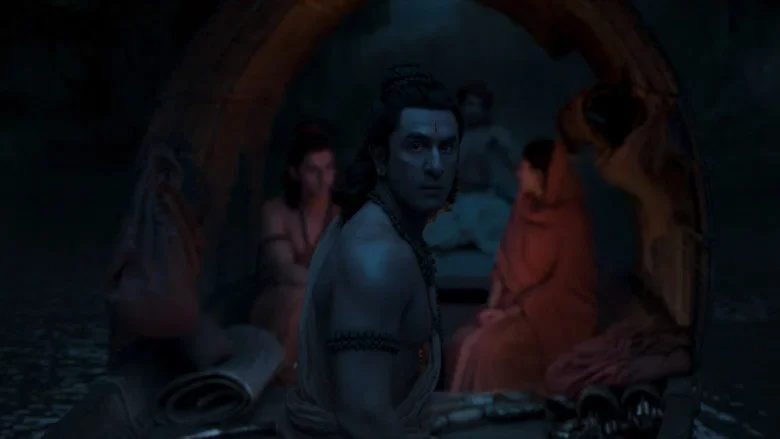
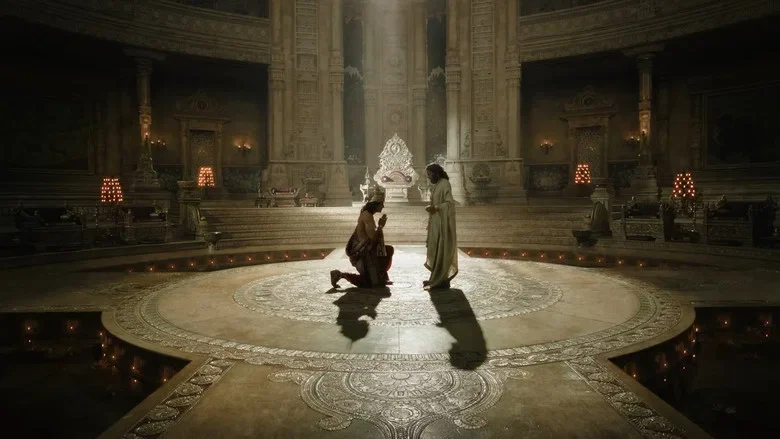
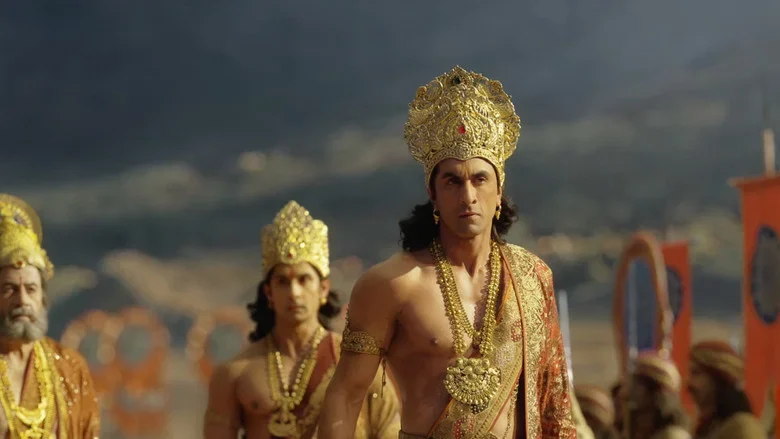
Kapoor’s Rama is introduced as the least interesting prince in the room, and the film treats that as a virtue. Where the Ravana track is all forward motion, the Ayodhya track is all restraint, a young man who answers every provocation with a lowered gaze.
It is an intelligent counterweight, though the screenplay gives Kapoor fewer rooms to work in. His best moments arrive in the margins of royal protocol: a hand held a beat too long at a doorway, a refusal to raise his voice when the court expects it.
The marriage sequence with Sai Pallavi is where the film briefly finds a pulse that isn’t mythological or political. Pallavi plays Sita with a watchfulness that reads as intelligence rather than demureness, and the two actors share a physical ease that the larger set pieces keep interrupting.
Then the exile arrives, and the film changes temperature. Palace intrigue gives way to open country, and the camera finally stops arranging people into tableaux and starts following them.
The Two-Part Trap: A Legend That Refuses To Land
Here is where the enterprise gets uncomfortable. The international title drops the explicit “Part 1” designation, which means paying audiences walk in expecting a complete myth and walk out holding an intermission.
The first half carries an exposition burden that would buckle a lesser production: cosmic order, Asura politics, Vishnu’s descent, Ayodhya’s succession, a wedding, and an exile, all before the interval.
Tiwari manages the traffic, but the density flattens the middle stretch into a sequence of necessary arrivals. Characters enter, establish their function, and yield the frame, a rhythm closer to a prestige television pilot than a standalone feature.
That structural choice is the film’s largest liability, and it is not a small one. A mythological epic earns its final image; this one spends three hours arranging the board and then declines to move a piece.
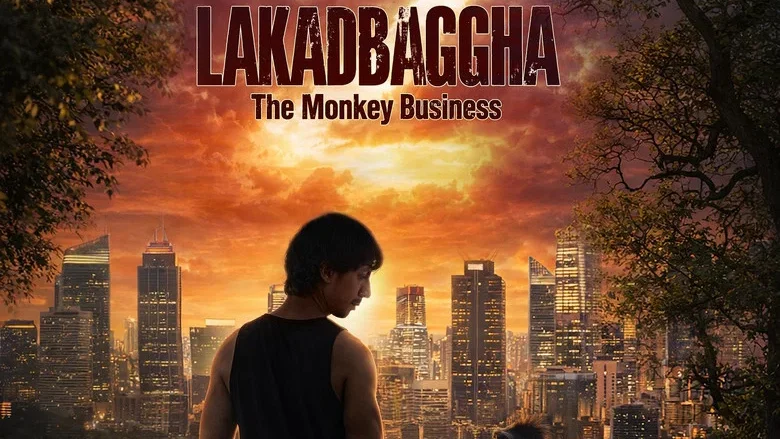
The comparison with the director’s own instincts is instructive. Just as Tiwari prioritised raw psychological friction over decorative staging in Lakadbaggha 2‘s contemporary genre arena, the discipline here is real but the payoff is deferred by design.
Zimmer, Rahman, And The Problem Of Scoring A Deity
The score, credited to Hans Zimmer and A.R. Rahman, is the film’s most confident technical element and its most aggressive. It does not accompany scenes so much as pre-empt them, swelling before the image has earned the swell.
When the film trusts silence, a corridor before a decree, a forest at dusk, the tension sharpens considerably. Those quiet passages suggest a version of this material that breathes rather than announces.
The visual-effects work is genuinely international in scale, and the Lanka interiors carry a weight that most Indian fantasy has not attempted. But the digital environments keep the actors at a remove; the texture of skin against stone is rarely permitted.
The tonal register Yash sustains here has a clear lineage in his filmography. The same brooding physical authority that powered his gangster epic in Toxic is refined and cooled here, stripped of swagger and replaced with political patience.
Where The Supporting Court Fails To Register
The Ayodhya ensemble is populated with capable performers given almost nothing to do. Lara Dutta’s Kaikeyi and Sheeba Chaddha’s Manthara move through the palace intrigue as functional agents, but the screenplay never grants them a scene that belongs to them.
Sunny Deol’s Hanuman is positioned as a major asset and then deployed sparingly, which may be a second-instalment calculation rather than a first-instalment choice. Either way, the audience feels the withholding.
Sai Pallavi remains the exception, and her work is the film’s emotional anchor. She plays Sita’s resolve as a private decision rather than a public performance, and the exile sequences are stronger for it.
The film’s relationship to its own mythology is oddly cautious. It wants the devotional reverence of a classical retelling and the franchise momentum of a global fantasy property, and those two ambitions keep pulling the same scenes in opposite directions.
Contemporary Hindi fantasy has been testing exactly this fault line, the pull between folk intimacy and spectacle economics, and the results have been uneven. The tension is visible in Nayyi Navelli‘s refusal to pick a lane, and it is visible here too, at a far higher price point.
The Balance Sheet: Prime Focus, DNEG, And A ₹4, 000-Crore Bet
Prime Focus Studios, DNEG, and Yash’s Monster Mind Creations are not simply financing a film; they are underwriting a proof of concept. The reported combined budget for the two-part project sits near ₹4, 000 crore, and the first instalment must now carry the promotional weight of a franchise it hasn’t finished building.
For DNEG, the stakes are reputational as much as financial. This is the shop’s most visible argument that Indian mythological IP can be rendered at international fidelity, and the company’s credibility in that market rests on how the second film lands.
Yash’s position is the most interesting variable. He is simultaneously the film’s most praised element and a co-producer with capital exposure, which means his box-office leverage is being tested in a language market where his Kannada fanbase is only part of the equation.
The wider exhibition picture matters here. A Diwali-period release across five languages plus an English dub is designed to convert a devotional audience into a global one, and that conversion is far from guaranteed, the mythological epic remains a genre that rewards familiarity over novelty.
This is the commercial logic reshaping contemporary hindi fantasys at the highest budget tier: build the universe first, monetise the loyalty later, and hope the audience returns for the second chapter out of obligation rather than appetite.
The Verdict: A Prologue Sold As An Epic
Ramayana: Rise of a Legend is a serious, handsome, occasionally arresting piece of filmmaking that mistakes preparation for arrival. Yash has built a Ravana of genuine ideological weight, and Kapoor and Pallavi have found a quiet domestic register the film rarely lets them sustain.
What it has not found is an ending. The final image gestures at a war it has spent three hours promising, and the audience is left holding a ticket stub and an IOU.
Tiwari is a director who has previously understood that scale means nothing without a face to anchor it. Here the faces are there, and they are good, they are simply waiting for a film that lets them finish the sentence.
The legend rises. Whether it lands is a question the second instalment will have to answer, and that is an extraordinary thing to ask of a paying audience on opening night.