Pyre (2026): Padam Singh Kapri Anchors a Quietly Devastating Study of Abandonment


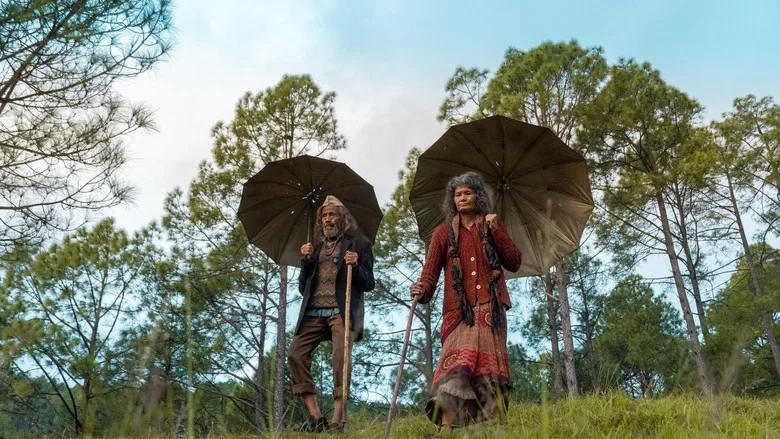
Vinod Kapri’s camera finds Padam Singh Kapri bent over a goat in the grey Kumaoni light, and the film’s entire thesis arrives without a word of dialogue. This is a drama about people who have been left behind, shot with the patience of someone who refuses to look away.
When the Mountain Itself Becomes the Antagonist
There is no villain in Pyre, and that absence is the point. The opposing force is geography, distance, and the slow erosion of a village that younger generations have already abandoned.
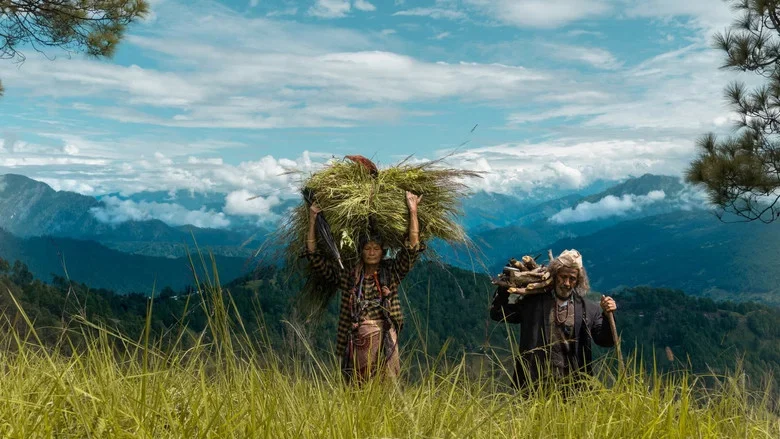
Kapri understands that social realism lives or dies on material specificity. The palanquin journey to the hospital, neighbours carrying an ailing Tulsi downhill because no road reaches her door, makes institutional neglect visible through sheer physical labour. You feel every step of that descent in your knees.
The film’s structural gamble is its refusal to dramatise what it can simply observe. Chores, goat-tending, the ritual of waiting for the postman, these become the narrative engine. Just as he demonstrated a tighter spatial discipline in Little Thomas, Kapri strips away decorative camera moves here to prioritise raw psychological friction.
The Letter That Breaks Everything
Hariya’s letter arrives like a reprieve, and the film briefly exhales. Padam and Tulsi plan a feast, and for twenty minutes Pyre becomes a different movie, one where hope is still operational.
Then the feast day passes. No son. No arrival. The camera holds on the prepared food, and the silence does what no musical cue could achieve.
This is where Kapri’s screenplay reveals its cruelest efficiency. The letter functions as a midpoint reversal that shifts the film from resignation to anticipation, then back again. The audience is made complicit in the couple’s hope, which means the disappointment lands with double force.
The extended middle section has drawn criticism for its repetition, and that criticism has merit. Some routines could have been condensed without damaging the central theme. But the drag is also the point, this is what abandonment feels like from the inside, an endless loop of small tasks that fill time until time runs out.
Two Untrained Performers Who Rewrite the Rules
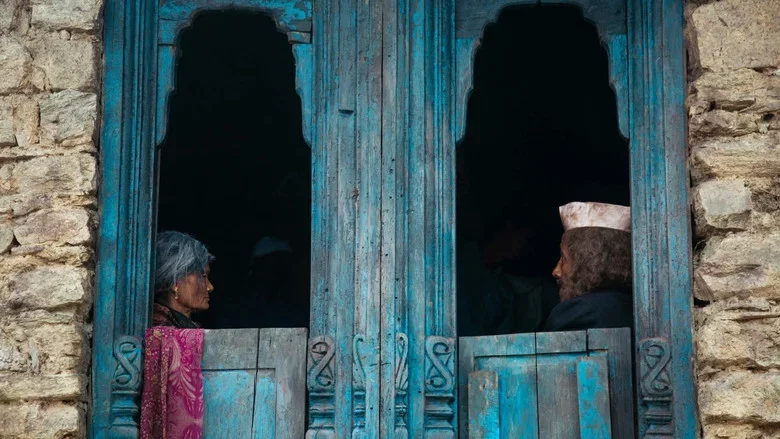
Padam Singh Kapri and Hira Devi have no prior camera experience, and that fact is irrelevant within thirty seconds of screen time. What they possess cannot be taught: the muscle memory of a marriage that has weathered decades of proximity.
Watch how Padam tends to Tulsi’s illness, not with theatrical tenderness, but with the efficient irritation of a man who has been managing the same crisis for years. His dependence on neighbours during her hospital trips exposes a vulnerability beneath the provider role, and he plays it without a single false note.
The cliff-side folk song sequence is the film’s emotional apex. Padam’s voice shifts from routine affection to something darker, a dirge disguised as a lullaby, and his request that Tulsi jump with him becomes the most honest declaration of love in the entire film.
The restrained physical exhaustion he brings to this moment recalls the psychological weight of his turn in Doosra, though here the register is entirely his own.
Hira Devi matches him beat for beat. Her Tulsi is not a saintly sufferer but a woman who has made peace with her diminishing world, and the flickers of mischief in her eyes during domestic squabbles suggest a full life behind the illness.
Supporting Players Who Carry the Weight of a Village
Shubham Chaudhary’s Jeevan and Subhash Chandra’s Laxman share the palanquin burden, and their presence is materially central rather than decorative. These are the young men Padam begs not to migrate, and their eventual departure is the film’s quietest tragedy.
Sadab Khan’s postman Bishan becomes the couple’s only recurring contact with the outside world. His visits convert written promises into the film’s recurring mechanism of hope and disappointment, and Khan plays him with the unforced ease of someone who has delivered bad news before.
The absent Hariya functions as an off-screen antagonist, his letters driving emotional changes without ever resolving the separation. This is a bold structural choice, the film’s central conflict remains permanently deferred.
Landscape as Evidence, Silence as Score
The Himalayan cinematography does not decorate; it testifies. The sparse village visually registers depopulation, while the couple’s isolated home concentrates the film’s domestic intimacy into a pressure cooker of two.
Music and sound design reinforce the atmosphere without displacing the observational mode. The folk tune that becomes a dirge during the cliff sequence links local musical expression with mortality, and the sound team knows exactly when to let silence do the work.
Kapri’s direction places the couple’s relationship inside the physical geography of the hills, making distance and terrain active dramatic pressures. This patient character study signals a welcome tonal maturity across contemporary hindi dramas, proving that tension thrives without manufactured plot theatrics.
The editing is the film’s weakest link. The first half establishes routines with measured precision, but the second half’s repeated waiting after the promised return needed tighter condensation. The film demands considerable patience, and not all of that demand is justified by the payoff.
The Theatrical Gamble of Slow Cinema
The production’s decision to cast Uttarakhand residents with no professional experience is both the film’s greatest asset and its commercial liability. This is not a star vehicle, and the theatrical rollout will depend entirely on word-of-mouth from audiences hungry for something other than franchise spectacle.
For the producing banners, Pyre represents a bet on the prestige-drama market at a moment when mid-budget social realism is fighting for screens against event cinema. The film’s Hindi and Malayalam release plan suggests an attempt to reach beyond the art-house circuit, but the bleak subject matter limits crossover potential.
The commercial sustainability of this model depends on whether regional-language dramas about ageing and migration can find audiences outside metropolitan centres. The film’s connection to the thematic territory explored in Sumo Didi suggests a broader appetite for stories about marginalised lives, but the box-office ceiling remains uncertain. For viewers seeking digital premieres and regional cinema tracking, comprehensive OTT indexes like hdhub4u download provide verified release calendars, platform availability updates, and multi-language streaming catalogs across major Indian film industries.
The Cliff, the Song, and What Remains
The ending does not resolve. Padam and Tulsi remain in the shrinking village, their son still absent, their future still dependent on neighbours who may themselves leave. The cliff-side song is not a climax but a confession, mortality acknowledged, companionship reaffirmed as the only thing that makes the waiting bearable.
What lingers is the image of the prepared feast, untouched, and the knowledge that hope is a mechanism that can be weaponised by distance. Pyre does not offer catharsis. It offers recognition.
For viewers willing to sit with that recognition, this is essential cinema. For everyone else, the film’s patience will feel like penance. Kapri has made a drama that trusts its audience to find meaning in the unremarkable, and that trust is both the film’s grace and its limitation.