Little Thomas (2026): Kaushal Oza’s Goa-Set Family Comedy Aims for Wonder and Settles for Whimsy


Kaushal Oza opens on a seven-year-old boy counting the siblings he doesn’t have, and the image should sting more than it does. What follows is a gentle Fontainhas childhood that mistakes softness for depth.
A Child’s Logic Applied to an Adult’s Marriage
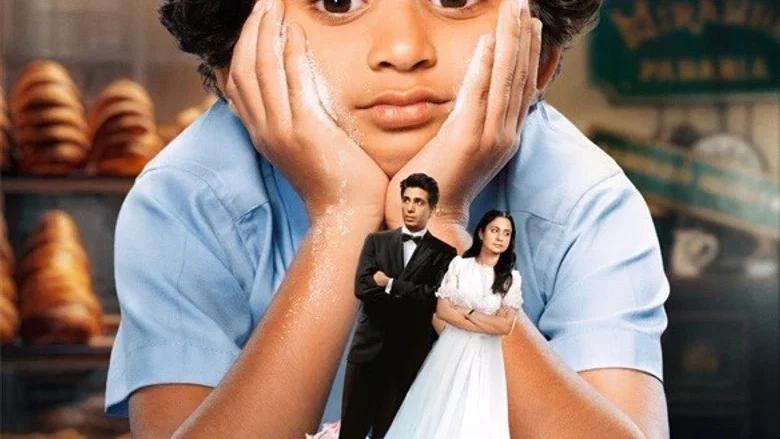
Thomas Miranda (Hridansh Parekh) lives in early-1990s Goa, an only child ringed by friends who have brothers and sisters. He watches his parents quarrel over money and chores, and draws the only conclusion available to him: a sibling would fix everything.
The film’s engine is his conviction that his mother and father must kiss before a baby arrives. That premise is a genuine comic idea, and Oza commits to it with the patience of someone who trusts a single joke to carry two hours. While regional cinema lovers following indie and mainstream festival circuits through portals like HDHub4u Pro often seek fast-paced drama, this family comedy deliberately moves at an unhurried nostalgic pace.
For a stretch, it works. Thomas treats romance as a logistical puzzle, and the gap between his literal reading of adulthood and his parents’ exhausted reality produces real friction.
When One Objective Is the Whole Screenplay
Then the repetition sets in. Thomas scheming to get Jessie and Desmond into the same room becomes the film’s only gear, and it shifts without escalation.
The adult conflict is deliberately kept at the edge of the frame, which is defensible as a point of view and ruinous as a structure. We never learn enough about what is actually breaking between these two people, so Thomas’s mission has nothing to push against.
The middle hour keeps restating the premise rather than complicating it. A single-track plot can hold if the track curves; this one runs remarkably straight.
Where the screenplay does earn its keep is in refusing to make the parents villains. Their distance is financial, not cruel, and that restraint gives the comedy a melancholy floor.
Rasika Dugal’s Exhaustion Holds the Frame
Rasika Dugal plays Jessie as a woman performing competence, her piano-teacher warmth thinning into a flat, dutiful register whenever money comes up. Watch her hands when Thomas proposes one of his schemes; she keeps playing, and the refusal to stop is the performance.
Gulshan Devaiah’s Desmond carries the baker’s early hours in his shoulders. His scenes with Dugal are staged at close distance and low volume, two people arguing in the same room without ever quite meeting each other’s eyes.
Hridansh Parekh anchors the film with an unmannered sincerity. His Thomas misunderstands everything and never smirks about it, which keeps the comedy clean and the eventual disillusionment honest.
If the boy’s turn from certainty to comprehension lands, it is because Parekh plays the wish, not the lesson. The film around him is often too eager to underline what he cannot see.
A Period Setting That Does Real Work
The 1990s choice is the smartest decision in the film. Without a phone to answer the question, Thomas has to build his own theory of where babies come from, and the era gives that ignorance a plausible shape.
Oza shoots Fontainhas in unhurried, sun-bleached frames, letting doorways and verandahs do the blocking. The camera stays at a child’s height more often than not, which turns ordinary domestic arguments into looming adult weather.
The pacing, though, is where the direction betrays the material. Scenes are allowed to sit past their point of discovery, and the second half loses the comic snap of the first.
The film’s gentleness is not the problem; its unwillingness to vary the rhythm of that gentleness is. A family comedy this quiet still needs a pulse.
The Narrow Lane Between Charm and Stagnation
Comparisons to other small-scale Hindi releases this season are instructive. The structural discipline visible in Doosra shows what a lean premise can do when it keeps re-aiming itself.
Similarly, the pressure-cooker economy of Dhood (Sandstorm) demonstrates how confinement can generate escalation rather than repetition.
And the romantic-comedy mechanics that Pehla Pyaar Doosri Baar strains against suggest that audiences will forgive familiarity if the rhythm keeps changing.
Little Thomas has a better idea than any of them and a thinner set of variations on it. That is the frustrating trade.
Four Banners, One Very Small Bet
Luminoso Pictures, Civic Studios, Good Bad Films and Flip Films have pooled resources behind a film with almost no commercial ceiling. This is a prestige-adjacent, festival-shaped proposition released into a market that rewards scale.
Opening visibility has been thin, and the theatrical window looks unlikely to recoup anything meaningful. For the producers, the value is probably in the library and the streaming afterlife, not the box office.
For Devaiah and Dugal, the film is a credibility line rather than a commercial one. Both remain far more bankable in the streaming space than in a single-screen family release.
The broader lesson for contemporary Hindi family films is uncomfortable: a gentle premise still needs an escalator, or the audience simply stops climbing.
The Ending Chooses Wonder Over Reckoning
Thomas arrives at the understanding that a kiss cannot manufacture a happier household, and the film lets him keep his capacity for wonder anyway. That is a choice, and a soft one.
It also reveals what Little Thomas is unwilling to do: let the child’s disillusionment cost him anything. The parents’ money problems do not resolve; they simply recede behind his smile.
That final image is warm and slightly evasive, a film hugging its own protagonist rather than testing him. Oza has made something sincere, specific and beautifully located, and he has made it too safe.
Little Thomas believes in the healing power of a child’s wish. It never quite risks finding out what happens when the wish is denied.