Doosra (2026): Plabita Borthakur’s Cricket-Led Identity Drama Swings Big and Misses the Stumps


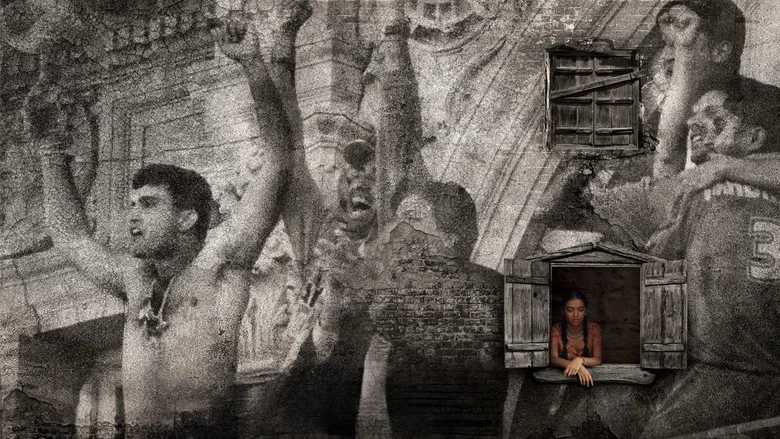
Abhinay Deo opens on a Lord’s balcony and a shirt pulled over a captain’s head. Seventy-eight minutes later, a girl in a Rajasthani courtyard is supposed to have absorbed that gesture into her spine.
When A National Gesture Does The Work Of A Screenplay
The premise is genuinely seductive: a young woman’s private rebellion mapped onto Sourav Ganguly’s 2002 shirt-wave, a public act of defiance that gives her a vocabulary for refusing imposed respectability.
But a metaphor is not a scene. The film keeps cutting to the television, and every time it does, it borrows emotional capital it has not earned in the household.
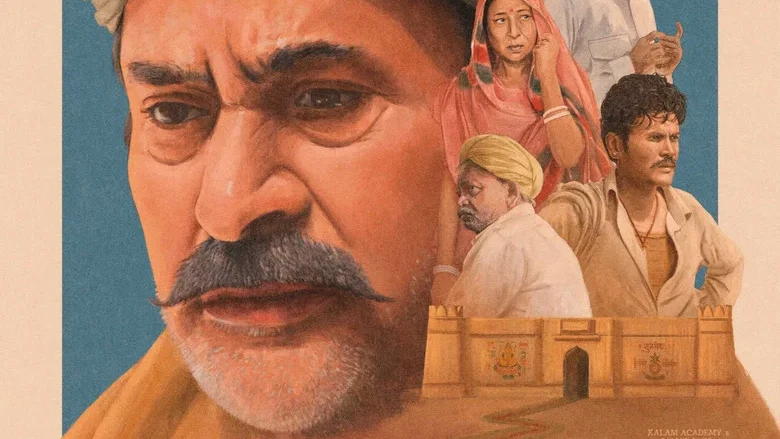
Deo’s formal ambition deserves credit. Just as he anchored Dhood (Sandstorm) in a pressure-cooker geography of heat and silence, here he treats the domestic interior as a surveillance chamber, all narrow doorways and adult eyes.
Tara Is A Room, Not Yet A Person
Plabita Borthakur plays Tara as a girl who has learned to occupy the smallest possible footprint in her own home. Her performance lives in the body: the half-turn away from her father’s gaze, the hand that stops mid-reach for the remote.
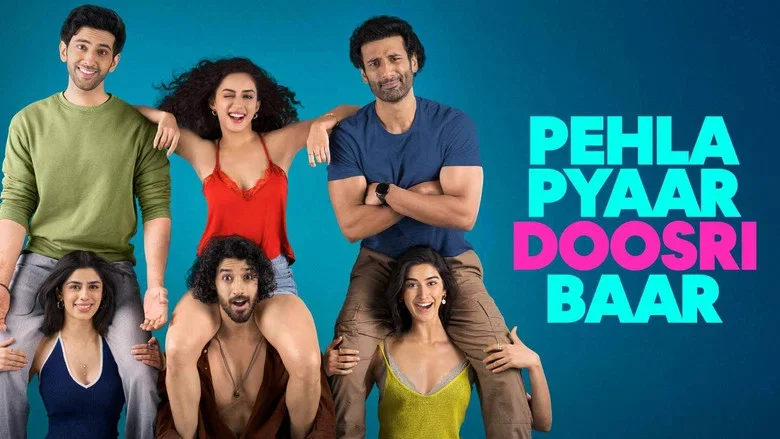
That restraint is the film’s best asset and its most underused one. Her turn here carries the same watchful, withheld quality she brought to the romantic negotiations of Pehla Pyaar Doosri Baar, but stripped of any comic safety net.
What she is given to do with it is thinner than she is. The script keeps her reacting to a screen rather than arguing with a person.
The Father As Furniture, The Brother As Absence
Ankur Vikal’s patriarch is the film’s most coherent creation precisely because he never raises his voice. Authority sits in him as routine: the way he occupies the doorway, the way a question about her whereabouts is phrased as a statement of ownership.
But the confrontations never arrive. We get the pressure, repeatedly, and almost none of the release that would make Tara’s final assertion feel like a victory rather than a scheduling decision.
Samidha Guru’s mother is the film’s sharpest generational instrument, a woman whose compliance is played as strategy rather than weakness, and the brief scenes between mother and daughter carry more charge than any cricket montage.
The brother, meanwhile, exists to demonstrate that the household’s rules are applied unevenly. He does that, and little else; the gendered privilege is asserted rather than dramatised.
Seventy-Eight Minutes Is Discipline, Not Depth
The compressed runtime is a genuine formal choice, and it keeps the film from bloating into a conventional sports biopic. It also means the 1990s montage has to do the work of a childhood.
Liberalisation, depleted national finances, political churn and cricket all arrive in a rush, establishing context efficiently while denying us the accumulation of domestic detail that would make Tara’s household feel lived-in rather than diagrammed.
The second half tilts further toward the historical material, and the balance tips with it. Reviewers who found the cricket nostalgia overwhelming were not wrong; they were describing a structural problem, not a taste preference.
The screenplay, credited to Agnello Dias with Matt Graham and Zak Shaikh, is linear in Tara’s chronology and hybrid in presentation, and the hybridity is where the seams show. Ram Sampath’s score works hard to bind period texture to emotional awakening, but music cannot supply the confrontation the script withholds.
The cinematography understands the film’s central contrast: the enclosed Rajasthani interior against the expansive public spectacle of Lord’s, with television as the bridge between them. It is a clean visual idea, executed without fuss.
An Interesting Experiment Is Still An Experiment
There is a version of this film, forty minutes longer, where Tara’s sexuality and identity are confronted in rooms with people in them. That version does not exist, and the one we have keeps gesturing toward it.
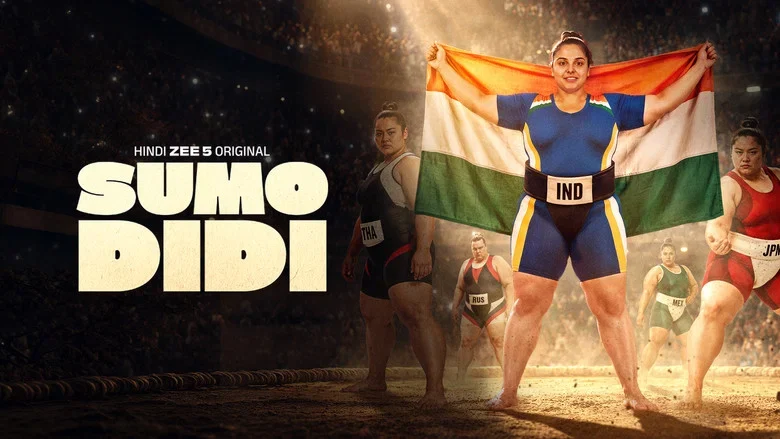
The thematic ambition is real. The film resists the kinetic sensationalism that overtook Sumo Didi, opting instead for quiet accumulation, but where that film was underdeveloped in its sports arc, this one is underdeveloped in its human one.
What survives is the central image: a girl watching a man refuse to be respectable, and deciding, silently, that she might too. It is a beautiful idea for a film. It is not yet the film.
The Balance Sheet: Small Film, Narrow Window, Real Risk
The producing team of Masha and Rohan Sajdeh, with Neeta Shah co-producing, has backed a deliberately uncommercial object: a sub-eighty-minute docu-fiction hybrid with no star engine and no conventional match narrative.
For a theatrical release arriving on 23 October 2026, that is a bet on cricket nostalgia as a marketing hook and urban multiplex curiosity as an audience base. Both are finite resources.
The regional remake pipeline and the cricket-nostalgia franchise model have trained audiences to expect victory, montage and catharsis. This film offers a metaphor instead, and metaphor does not fill seats on a Friday.
Deo’s commercial leverage rests on a filmography that includes Delhi Belly, an outlier hit built on ensemble comedy and provocation. Nothing in this project replicates that engine, which makes its theatrical ceiling a matter of prestige positioning rather than box-office arithmetic.
Within the broader landscape of contemporary hindi dramas, the film’s real value may be as a calling card for Borthakur and as proof that Deo will take formal risks. Neither of those pays for a print run.
The Uncomfortable Resolution
The ending refuses the sports-film payoff and hands the climax to the household instead, which is the correct instinct. The problem is that the household has not been given enough screen time to make the release land.
What the film finally argues is that freedom is contagious across a television screen, that a public refusal can teach a private one. It is a lovely proposition, and the film states it more often than it proves it.
Doosra is a seventy-eight-minute argument with one great image and several unwritten scenes. Borthakur’s face makes you believe the girl. The screenplay never lets you meet her.