Drishyam: The Conclusion (2026): A Final Reckoning That Trusts Its Franchise Muscle


The cat-and-mouse game between Vijay Salgaonkar and IG Meera Deshmukh is back, and the stakes feel heavier this time, the investigation has reopened, forcing the family man to once again outwit the system. This is a franchise finale built on the promise of closure, and Abhishek Pathak knows exactly which buttons to press to keep the audience leaning forward.
Ajay Devgn’s Vijay Walks a Familiar Tightrope, Yet Still Commands
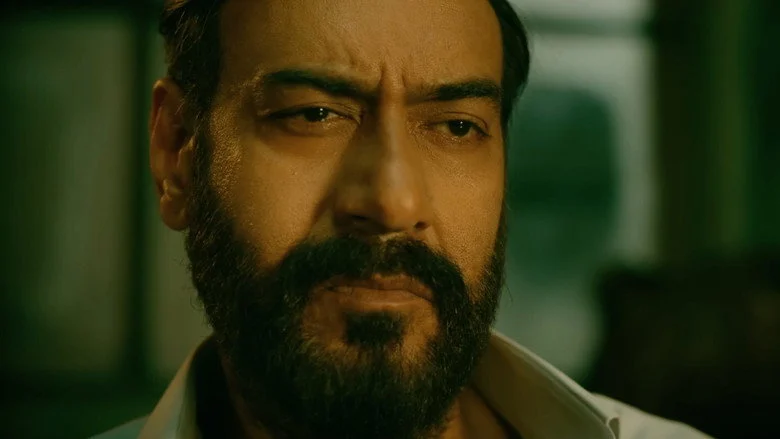
Devgn re-enters the role with the quiet, coiled restraint that has defined Vijay across two films. He doesn’t need to raise his voice; the tension lives in his pauses, in the way he calculates a lie before it leaves his lips.
The performance is less about new notes and more about the weight of accumulated history. That familiarity is a double-edged sword, it serves the drama, but one wonders if Pathak pushes him into any genuinely new emotional territory.
Tabu’s Meera Returns as the Franchise’s Sharpest Counterweight
Tabu’s IG Meera Deshmukh is the motor of this thriller’s engine. Her presence signals that the film’s moral conflict, family protection versus legal accountability, remains its beating heart.
She plays the role with a sharp, almost surgical precision that makes every confrontation between her and Vijay a study in controlled aggression. Even without scene-level details, her casting alone elevates the material, giving the investigation a formidable human face.
The Genre Core: A Thriller Built on Concealment and Counter-Investigation
The official synopsis confirms the central mechanics: the investigation reopens, and Vijay must rely on his pre-planned web of alibis to stay ahead. This is reveal-driven storytelling, where every piece of information is a potential trap.
Pathak’s direction leans on the franchise’s established grammar, the slow drip of clues, the silent standoffs, the procedural beats that make the audience feel like co-investigators. The tension here is intellectual rather than visceral, a game of chess played with lives.
The mystery genre demands that the audience never feel smarter than the protagonist, and the film’s structure seems designed to keep us guessing until the final act. For those who loved the puzzle-box nature of the previous installments, this promises to be a satisfying final round.
Shriya Saran and Rajat Kapoor Ground the Family Drama
Saran’s Nandini Salgaonkar returns as the moral anchor of the household, the character who carries the emotional cost of Vijay’s deceptions. Her dynamic with Devgn is crucial to the film’s family-drama core, providing the human stakes beneath the procedural surface.
Rajat Kapoor’s Mahesh Deshmukh, the grieving father, is the other side of that coin. His presence ensures the film never lets the audience forget the tragedy at the center of the franchise, a reminder that Vijay’s victories are built on someone else’s loss.
The addition of Jaideep Ahlawat and Prakash Raj in unspecified new roles is a smart play by the casting team. Both actors bring a natural gravitas that signals new threats, and their very presence suggests the film has fresh cards to play in its final hand.
A Franchise Finale That Banks on Audience Loyalty
There are no verified controversies surrounding the production, which is telling, this is a film designed to be a crowd-pleaser rather than a provocation. The target audience is clear: franchise loyalists and thriller enthusiasts who want a conclusive end to the Salgaonkar saga.
The risk, of course, is that familiarity breeds complacency. Without the element of surprise that defined the first film, this conclusion must work harder to justify its existence. For those who have followed Vijay’s journey, the promise of a definitive ending is likely enough to pull them into theatres.
As a critic, I find myself in a peculiar spot, judging a film that trades heavily on its past successes while offering little verified detail about its new moves. The franchise’s reputation does some heavy lifting, but the real test will be whether Pathak can deliver a finale that feels earned rather than merely expected.
For more on the thriller genre, browse Hindi Thriller reviews.
If you are a fan of Ajay Devgn’s measured performances, you might want to check out how Arshad Warsi handles a dual role in Jeevan Bheema review, a film that carries a familiar conceit with mixed results.
Drishyam: The Conclusion is a must-watch for franchise loyalists who need closure, but casual viewers may find themselves waiting for a spark that never quite catches. The best way to experience this is in a regular theatrical format, where the collective tension of the audience amplifies the suspense. It is a competent, workmanlike thriller that trusts its formula, but that trust is not always rewarded with invention. Drishyam: The Conclusion earns a 3 out of 5, a satisfying but safe end to a saga that once felt more daring.
For those who prefer their dramas with a sharper investigative edge, Babita Singh verdict offers a different kind of truth-seeking narrative.