
Haiwaan (2026): Saif Ali Khan Deserves a Sharper Thriller


A blind caretaker hears a man’s footsteps behind him, counts them, and names the threat before it reaches him. Haiwaan turns that trick into its whole engine, and for one hour it purrs, until the plot starts shouting over it.
Saif Ali Khan Builds a Blind Man Out of Sound and Scent
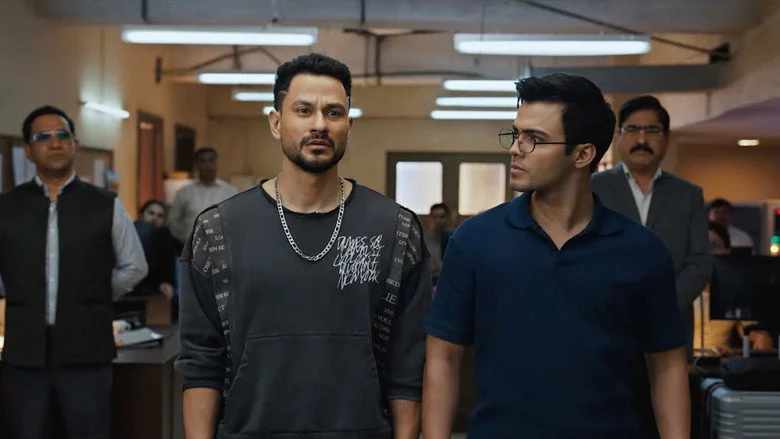
Saif Ali Khan’s Shyam Rane reads the world through texture, a stranger’s cologne, a hinge’s squeak, a shift in breathing. His sensory recognition beats are the film’s cleanest work, and the passages showing a blind man negotiating daily life carry unforced weight. The screenplay, sadly, gives him almost nothing to do once the chase starts.
His physical grammar is considered rather than showy. Where another actor might play blindness as frailty, Khan plays it as calibration, head tilted, fingers reading a room before he commits to a movement. It is a performance built from small corrections, and it is why the first hour holds.
Priyadarshan Sets Up a Thriller and Then Loses His Nerve
“A passable crime-thriller” was Deccan Herald’s verdict, and the first hour suggests a better one was within reach. I found its restraint more interesting than what Priyadarshan does after the interval, when the film slides into a comic police procedural with slack pacing. The Indian Express settled on “more uff than ole ole” and 2/5.
Priyadarshan and his writers follow Oppam’s outline faithfully, which is both the film’s safety net and its ceiling. The plotting stays linear and clean, but the original’s tension gets diluted by gags that belong to a different movie entirely.

A Murder, a Secret, and Senses Doing the Detective Work
Genre craft here rests on one sturdy idea: the blind witness hears what the police miss. The judge’s murder is staged with genuine curiosity, and Shyam’s sound-and-scent deductions give the mystery a physical logic instead of a lucky one. That is a real thriller principle, executed with patience.
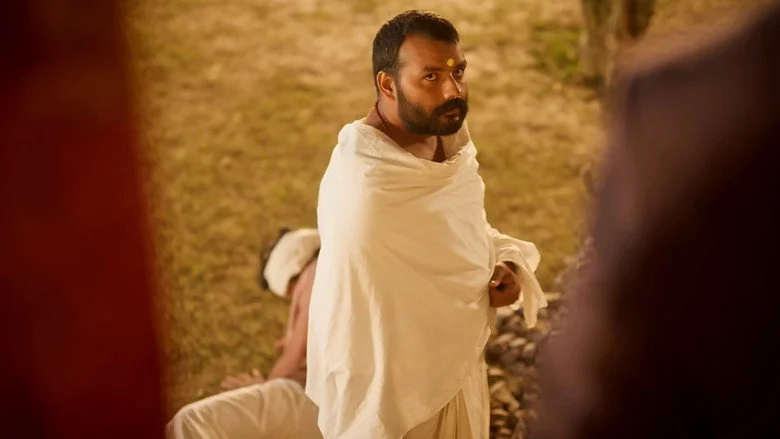
Where the thriller thins is Parshuram. Akshay Kumar’s ex-convict is written as a looming threat but barely speaks, so the pursuit carries no personality or menace. Black-and-white villainy only works when the villain is allowed to perform, and here he is not.
The final confrontation should be the payoff, and Saif plays it with conviction. It arrives after an hour of tonal drift, though. Suspense built across ninety minutes cannot survive seventy minutes of noise.
Boman Irani Anchors the Frame While the Subplots Sag
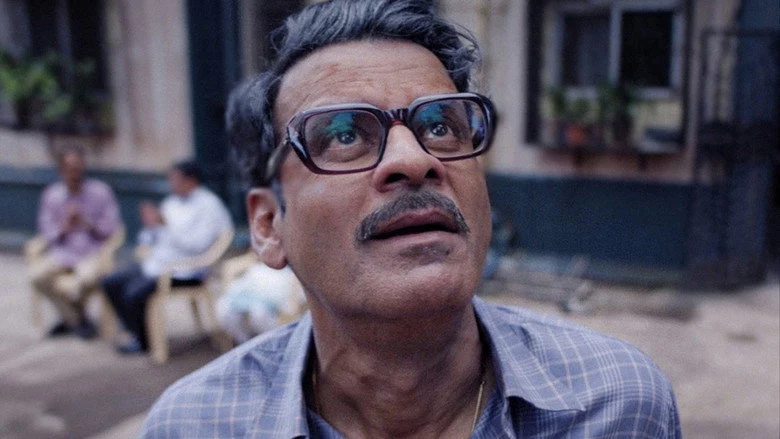
Boman Irani gives Judge Pradhan a quiet authority that steadies every scene he enters. His shared secret with Shyam is the one relationship the film fully earns, which makes the character’s early exit a structural loss.
Shriya Pilgaonkar’s Naina and Saiyami Kher’s Inspector Varsha Joshi are both stranded in subplots that never touch the central crime. Neither gets a scene that explains why she matters, and the leads’ chemistry stays flat throughout.
Rajpal Yadav’s Chandu is drafted for comic relief that refuses to land, while Sharib Hashmi’s Senior Inspector Ashok Shinde never gets a defining moment. Casting two reliable performers this way signals a film unsure what to do with its own margins.
Manoj Joshi’s Pandurang and Asrani’s Hussein round out an ensemble that never quite settles into a rhythm. Both are competent presences serving roles the screenplay treats as furniture.
Mohanlal’s cameo in the closing stretch is the most generous gesture the film makes. It also reminds you, briefly, what a commanding presence looks like in this kind of thriller, and how little of that Haiwaan has elsewhere.
Hindi crime thrillers live and die on exactly this kind of interior logic, and our Hindi Thriller reviews keep track of which ones get it right.
No Scandal Here, Just an Audience That Stayed Away
Haiwaan carries no political baggage, only a CBFC order that trimmed a visual, replaced a derogatory sentence, and altered some words. The sharper verdict came from ticket counters, not censors.
India Today reported ₹3 crore net on opening day in India and ₹4.60 crore worldwide, against a budget estimated between ₹100 crore and ₹130 crore. IMDb sits at 4.8 from 10, 172 votes, and viewers echo the critics: the villain underwhelms and the subplots pile up.
The praise that exists is specific, Saif’s sensory scenes, the faithfulness to Oppam, and patches of sharp editing. Everything else reads like a fan base defending a film it wanted to be better.
Go for Saif Ali Khan’s opening hour and Boman Irani’s steadying presence, and watch it in a regular theatre or wait for streaming, nothing here needs a premium screen. Skip it if you are paying for a villain worth fearing, because Haiwaan keeps its antagonist at arm’s length for too long. Anyone fond of Oppam will recognise the skeleton and miss the pulse.
Transition review drive The Transition too, right down to the way both films lose grip on tension they had already earned.
Haiwaan (2026) is a 2 out of 5 thriller, Saif Ali Khan deserves sharper material.
Gandhari verdict is the same one Gandhari runs on, and the same problem follows: a strong performer carrying an uneven script.