Vibe (2026): Kunal Kemmu’s Spy Caper Runs on Fumes and Bromance


Somewhere in the second hour of Vibe, a house party detonates into a spy mission, and you can practically hear the gears of Kunal Kemmu’s screenplay grinding against each other. The film wants to be a buddy comedy, a national security thriller, and a Preity Zinta action showcase all at once. It succeeds at exactly one of those things, and it isn’t the one involving intelligence agencies.
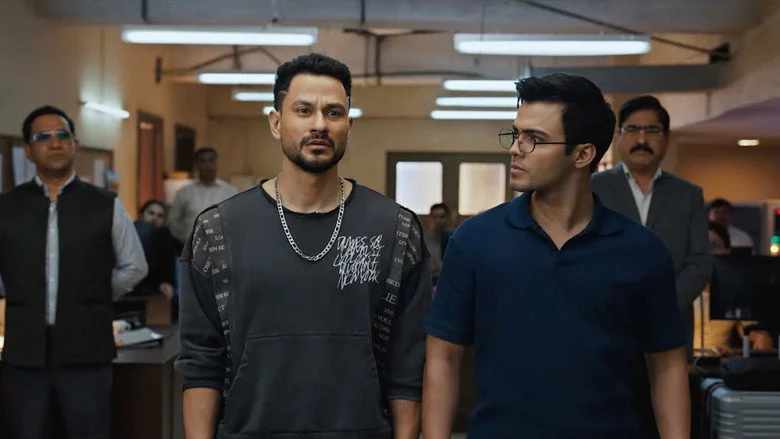
Kemmu, who last directed the genuinely delightful Madgaon Express, returns with a bigger canvas, a bigger budget, and a curious case of sequelitis to his own creative instincts. Vibe opens with real promise: Hardik (Kemmu), fresh out of rehab and drifting through life with the commitment of a man who has never met a consequence, stumbles into employment at his best friend Bugs’ software company. Sparsh Shrivastava’s Bugs is the film’s secret weapon, a by-the-book developer whose protective instincts toward Hardik suggest years of cleaning up messes not his own. Their dynamic crackles with the easy rhythm of friendships forged in shared failure.
The Bromance That Carries the Weight
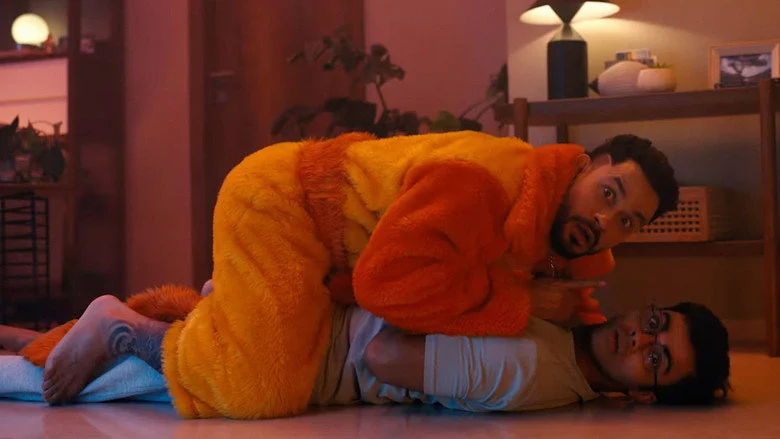
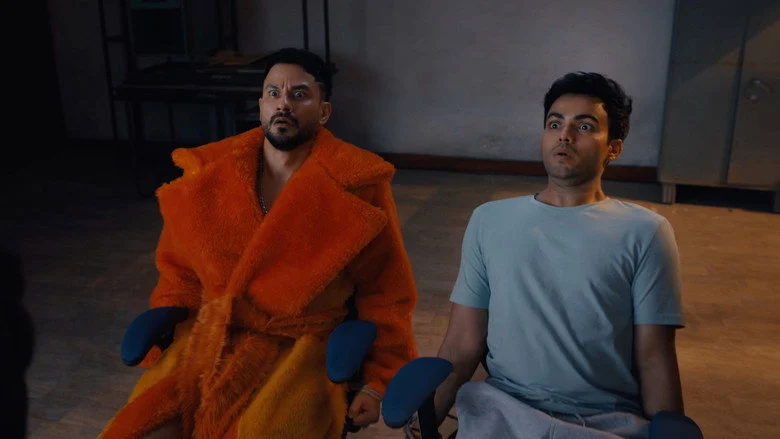
The film’s most praised sequences, and rightly so, are the quiet, silly moments between Kemmu and Shrivastava. A running gag involving Hardik’s complete inability to read a room lands repeatedly because Shrivastava’s Bugs reacts with the exhausted precision of a man who has rehearsed this disappointment. In one standout sequence, Bugs attempts to coach Hardik through a professional interaction while Hardik becomes distracted by Vanshika Dhir’s Kareena, and the scene works because the camera holds on Shrivastava’s face as it cycles through embarrassment, resignation, and finally, affection. It’s a small masterclass in reactive comedy.
Dhir, making her debut as the romantic interest, brings a breezy charm to what could have been a thankless role. She and Kemmu share an easy chemistry, though the screenplay doesn’t give her nearly enough to do once the espionage plot kicks in. She becomes a plot device rather than a character, which feels like a waste of promising screen presence.
Preity Zinta Deserves Better
Preity Zinta’s Madam H arrives with the commanding authority of someone who has done this before, because she has. Her action sequences have a physicality that suggests genuine preparation, and there’s a moment where she dispatches an assailant with a efficiency that briefly makes you wish the film were about her instead. But Madam H is underwritten, her motivations sketched in the broadest possible strokes. The film treats her as a plot-delivery mechanism rather than a character with her own stakes in the mission.
This is a recurring problem. Yashpal Sharma’s Rawal and Dinesh Lal Yadav’s Bansi exist to fill narrative functions, the skeptical superior, the comic relief with a gun, without ever becoming people. Even Sharmila Tagore’s Home Minister, a casting coup on paper, amounts to little more than a series of concerned expressions in a situation room.
When the Spy Games Begin, the Fun Ends
The transition from rom-com to espionage thriller is where Vibe loses its footing. The first act, with its office politics and awkward romantic overtures, moves with a frothy energy that suggests Kemmu knows exactly what he’s doing. The second act, once the national security crisis takes over, feels like a different film entirely, one that’s been assembled from spare parts of better spy comedies.
The espionage sections lose steam because they’re neither tense enough to work as thriller nor absurd enough to work as parody. A sequence involving surveillance equipment and a hotel corridor attempts to generate suspense but instead generates indifference. The stakes are theoretically enormous, a terrorist threat to India, but the film never makes us feel the weight of them. Compare this to the genuine tension Kemmu managed in Madgaon Express, where the stakes were smaller but the execution was tighter.
The CBFC’s A certificate, complete with anti-drug disclaimer and a muted expletive, suggests the film is aiming for a certain edginess. But the edginess feels performative rather than organic. The humour that lands is the humour that comes from character, Hardik’s obliviousness, Bugs’ exasperation, not from the scatological or the profane.
The Craft Behind the Chaos
Kemmu’s direction shows a genuine affinity for comedic timing. He understands when to hold a shot and when to cut, and he gives his actors room to breathe. The bromance sequences are staged with an intimacy that feels earned, suggesting Kemmu the director trusts Kemmu the actor to carry the emotional weight.
Amit Trivedi’s music, while not reaching the heights of his best work, serves the film’s needs. The background score knows when to push and when to recede, though it can’t compensate for the screenplay’s structural issues.
What’s missing is the discipline that made Madgaon Express such a pleasure. That film knew exactly what it was, a madcap comedy with a simple premise, and executed it with precision. Vibe reaches for something more ambitious but doesn’t have the narrative architecture to support its aspirations. It’s a film that wants to be Rush Hour meets Raazi but ends up somewhere in the middle, satisfying neither impulse.
What Works, What Doesn’t
The film’s defenders will point to its unapologetically desi vibe, and they’re not wrong. When the comedy fires, and it does, intermittently, there’s a joy to the proceedings that’s hard to resist. The IndiaForums review captured this when it called the film “campy, chaotic, funny and unapologetically desi.” That’s accurate as far as it goes, but camp and chaos require control to work. Without it, they become noise.
Rediff’s assessment that the film “never finds the same comic zing” as Kemmu’s previous work feels harsh but fair. The zing is there in flashes, a well-timed reaction shot, a perfectly deployed callback, but it’s not sustained. For every sequence that lands, there’s another that thuds.
For audiences seeking a breezy, low-stakes comedy with genuine chemistry between its leads, Vibe offers enough to justify a theatrical viewing. For those hoping for the next Madgaon Express, the wait continues.
For another perspective on recent Hindi releases that prioritize character over spectacle, see our analysis of Last Man verdict, which similarly struggles with tonal consistency across its runtime.
The Verdict
Vibe is a frustrating film because its best elements, the bromance, the comedic timing, the commitment of its cast, suggest a much better movie hiding within. Kemmu has proven he can direct comedy with verve and precision. Here, he’s overextended himself, trying to juggle too many tones and too many genres without the structural rigor to make it work.
The film will find its audience among those who value chemistry and chaos over coherence. Mass audiences seeking pure entertainment will find enough to enjoy, particularly in the first half. But viewers expecting the sharp wit and tight construction of Kemmu’s previous work should temper their expectations. This is a film that runs on fumes and bromance, and while the bromance is genuine, the fumes run out before the credits roll.
Rating: 2.5/5
Who should watch: Fans of Kemmu’s comedic sensibilities, audiences who prioritize chemistry over plot, those seeking a low-commitment theatrical experience.
Who should skip: Viewers expecting a coherent spy thriller, those who found Madgaon Express‘s tight construction appealing, anyone hoping for Preity Zinta’s return to form to be properly utilized.
For more of our coverage on films that blend genres with varying degrees of success, explore Hindi Thriller reviews.