Category: Romance

  • Max, Min and Meowzaki (2026): A Modest Drama That Finds Heart in a Pet Custody Dispute

    Max, Min and Meowzaki (2026): A Modest Drama That Finds Heart in a Pet Custody Dispute

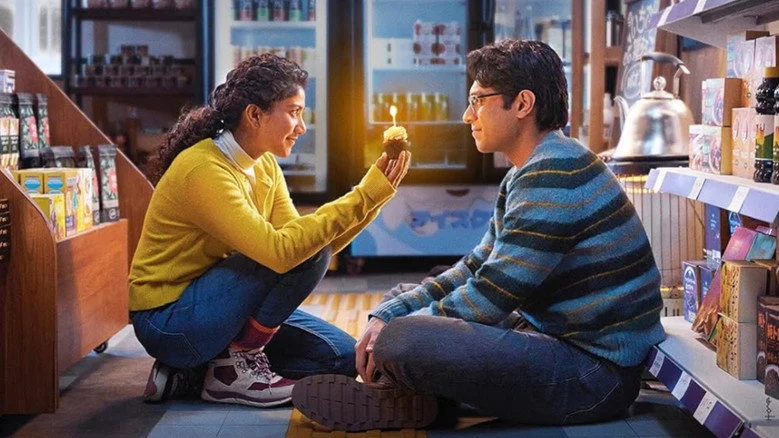
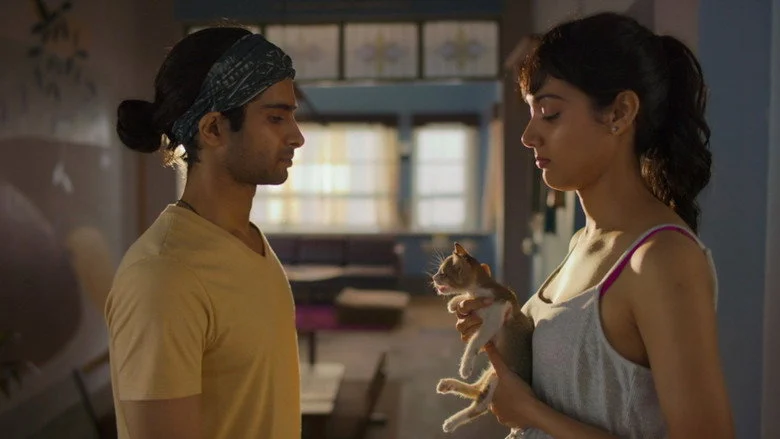
    The film opens over a box of old photo albums, a spatula, and a hissing cat carrier. Max (Siddharth Menon) and Min (Medha Shankr) dissect their shared life with the cold precision of divorce lawyers, their voices brittle with old resentments. Meowzaki, a Persian with the patience of a saint, watches from her carrier as they negotiate her fate.

    This opening scene sets the temperature for a drama that is deliberately small in scale but large in emotional consequence. Padmakumar Narasimhamurthy’s directorial risk here is betting everything on the quietness of its conflict, a sharp gamble that pays off more often than it falters.
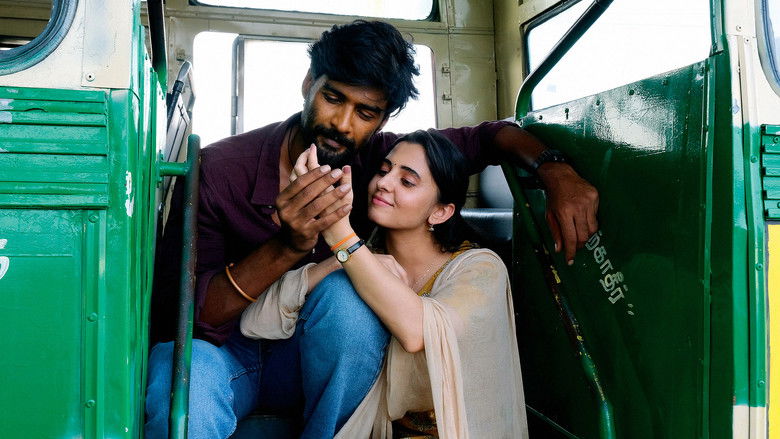
    Max, Min and Meowzaki (2026) review image

    Medha Shankr and the Fury of Unfinished Business

    Min wields her grief like a weapon and a shield. Medha Shankr commands a terrific scene where she argues custody not with anger, but with a chilling, exhausted smile, a choice that reveals a woman tired of being the one who cares more.

    Shankr’s performance never tips into melodrama. She gives Min a brittle, internalised rage, most potent in a silent sequence where she cleans the empty apartment, her face a blank slate that holds ten years of memory.
    Max, Min and Meowzaki - Siddharth Menon and the Grief He Cannot Name

    Siddharth Menon and the Grief He Cannot Name

    Menon’s Max is the trickier role: a man deflecting pain through allergy jokes and logical arguments about who gets the espresso machine. He is convincing in the early scenes of shallow denial, but the performance finds its footing in Act 2.

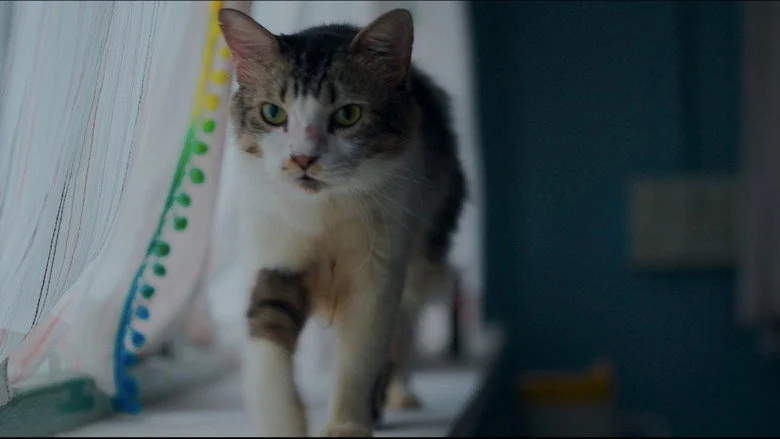
    When Max breaks down alone, clutching Meowzaki while remembering his mother’s final days from cancer, Menon allows the mask to crack. It is a credible, if occasionally underwritten, portrait of male grief that waits until no one is watching to show its face.

    Direction Lives in the Gaps, Not the Peaks

    Padmakumar Narasimhamurthy directs with a clear focus on everyday gestures, the way a hand hovers over a shared photo, the pause before a door closes. This approach avoids dramatic twists and trusts the audience to read between the lines.

    The screenplay’s biggest flaw is its linear structure. The narrative proceeds through the breakup without introducing any real surprise or temporal layering, making the middle act feel stretched. A more inventive editing pattern might have tightened the emotional arc.

    The Cat as Genre Core: A Drama on a Leash

    As a drama, the film stakes its emotional currency entirely on Meowzaki, the cat named after Hayao Miyazaki, as a living metaphor for unfinished love and shared history. This is a risky choice because a cat cannot emote on command.

    The bonding scenes between Max and the cat are sweet, but they lack the sharpness of genuine catharsis. We are told about their connection to Miyazaki films as a backstory, but we rarely *feel* it in the moment.

    However, the film earns its keeping in the small victories. A single shot of Max talking to Meowzaki in the dead of night, confessing his mother’s absence, lands with surprising weight. It is the kind of quiet, unhurried drama that rewards patience.

    Nassar and Adil Hussain: The Fathers Who Know Too Much

    Nassar brings a weary, dry wisdom as a father who has seen this story before. His one scene of advice to Max, about how breaking a home is sometimes the kindest thing, is delivered with a shrug that carries decades of lived experience.

    Adil Hussain, in a brief appearance, plays a family friend who reminds Min that anger is a form of love. Hussain’s economy of expression is formidable; he can say more with a single nod than most actors can with a monologue. Mandira Bedi and Nafisa Ali fill their roles with professional ease, though their screen time is frustratingly limited. Gitanjali Rao, as a neighbour, adds a touch of eccentric warmth that the film needs more of.

    Vidhatri Bandi appears as a younger friend who offers Min a blunt perspective. Her casting signals the film’s intent to balance older generational wisdom with a sharper, modern voice, even if the script doesn’t give her enough ground to explore it fully.

    If this reflective, cat-infused drama intrigues you, browse our collection of Hindi Drama reviews for similar emotional journeys.

    Where Is the Controversy? Replaced by Quiet Resonance

    There are no political angles or backstage scandals to distract from the work here. The film’s biggest risk, and its quiet achievement, is how unapologetically domestic it remains.

    The audience reception, from early festival screenings, suggests a divided room: those who will find this slice-of-life drama deeply moving, and those who will wish for a sharper directorial edge. I find myself leaning toward the former, but only barely.

    Without box office data or a critical consensus yet, the film stands as a curiosity, a risk-led piece of indie filmmaking that prioritises feeling over flash. It is a film that will find its audience, but not a stadium-sized one.

    Verdict: If you are looking for a quiet, honest film about the things we keep when a relationship ends, watch *Max, Min and Meowzaki* in a small setting, a streaming night or a festival screening. Skip it if you need plot momentum or loud emotional peaks. It earns its ending, but it makes you work for it.

    For me, Max, Min and Meowzaki is a genuinely gentle 3-star drama that understands the shape of grief better than the shape of a screenplay.

    Menon’s grief register in this film recalls India Story review’s quiet approach to internal conflict.

    This feline custody drama shares its intimate observational tone with Tera Yaar verdict.

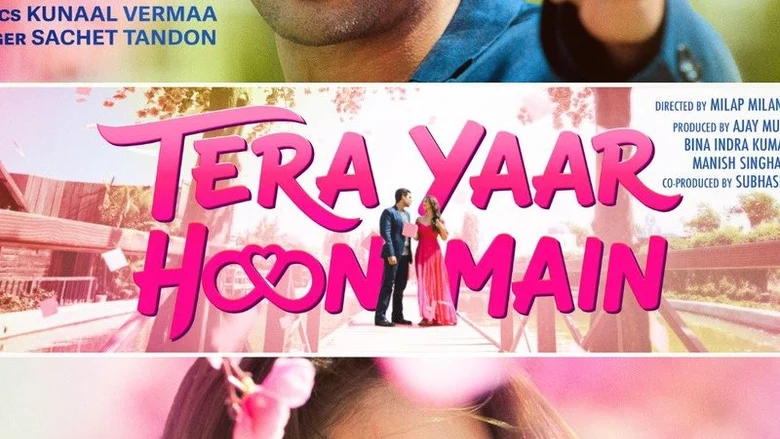
  • Tera Yaar Hoon Main (2026): Aman Indra Kumar stands out while the narrative loses grip

    Tera Yaar Hoon Main (2026): Aman Indra Kumar stands out while the narrative loses grip

    Aman Indra Kumar, as the carefree Sanju from Nagpur, walks a tightrope between naive charm and the desperation of a man in love. In the early scenes of settling into the Viswanath household, he brings a boyish energy that feels earned.

    But when the premise demands he confront the arranged marriage of Anu, the performance settles for predictable reactions, missing a layer of internal torment.

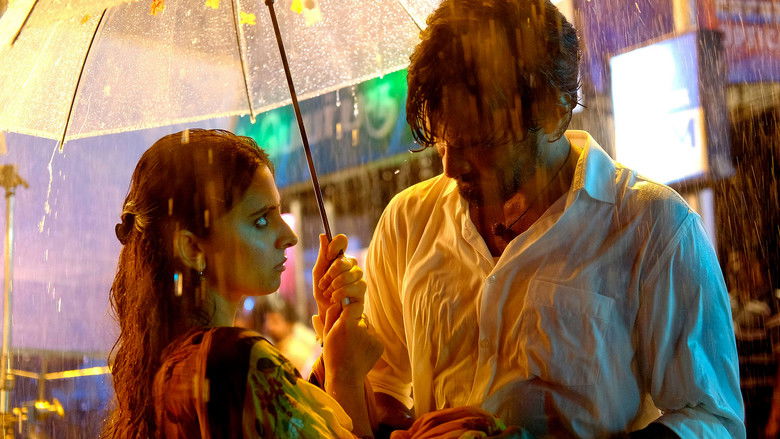
    Tera Yaar Hoon Main (2026) review image

    Milap Milan Zaveri’s Screenplay Plays it Safe

    Director Milap Milan Zaveri sets up a conflict between a promise and a parent’s love, a sturdy dramatic base. The linear romance-drama structure, however, leans too heavily on a familiar template without offering a narrative surprise.

    The biggest flaw surfaces in the screenplay’s unwillingness to push Sanju’s dilemma into morally uncomfortable territory, keeping the stakes feeling manufactured rather than organic.

    Tera Yaar Hoon Main - Genre-Core Execution: A Drama That Forgets Its Own Genre

    Genre-Core Execution: A Drama That Forgets Its Own Genre

    As a drama, the film is driven by the central tension of a father, Viswanath, torn between his duty to a friend and his daughter’s future. The story roots itself in this emotional chasm, which should provide rich soil for conflict. Unfortunately, the execution dilutes that tension with a tired romance track that lacks the urgency needed to make the final act land.

    The romance between Sanju and Anu is built on the flimsiest of interactions, shared spaces and friendly banter that never curdles into genuine, electric chemistry. The film’s emotional turning point, where Anu’s marriage is fixed with someone else, arrives without the slow-burn pain that a good drama demands. There is no real scene where you feel the weight of their connection breaking.

    For a film marketed with action and romance tags, the action is absent in the premise, and the romance never rises above a PG-rated sitcom. The drama remains the sole engine, sputtering through a plot that feels cribbed from a dozen 90s Hindi films without adding any contemporary bite.

    Paresh Rawal Carries the Weight of the Undramatic

    Paresh Rawal, as the conflicted host and father Viswanath, is the film’s most reliable anchor. In his scenes of quiet conflict, you can see the real movie struggling to break free from the formula.

    Akanksha Sharma, opposite Aman, has little to work with beyond the standard “girl-next-door” beats. Her casting signals a commitment to a clean, non-threatening romance, but the role requires a spark she is not given the material to provide.

    Audience Reception and the Familiarity Trap

    With no critic reviews or audience scores available ahead of release, the film’s prospects hinge entirely on how well it executes its worn-out template. For a Hindi romance-drama stepping into theatres without strong pre-release buzz, the risk of being dismissed as derivative is real.

    A broader audience, particularly those looking for experimental storytelling, may find the lack of a complex antagonist or any real plot hole a dealbreaker. The film’s best hope is that its core demographic appreciates the earnestness over the craft.

    For more content like this, explore our Hindi Action reviews.

    I have seen this story a hundred times before, and I struggle to find a single scene that justifies the journey.

    Skip it, unless you are a completionist for the lead cast or a die-hard fan of the “love vs. promise” subgenre. Watch it on regular streaming if you must, but do not expect a memorable film.

    Tera Yaar Hoon Main tries hard but earns a generous 2 out of 5 for its earnest performances alone.

    For a stronger father-son emotional conflict with a similar family bond at its core, check out Odyssey review.

    For a tighter, more tense take on a central friendship under pressure, read the Ire verdict.
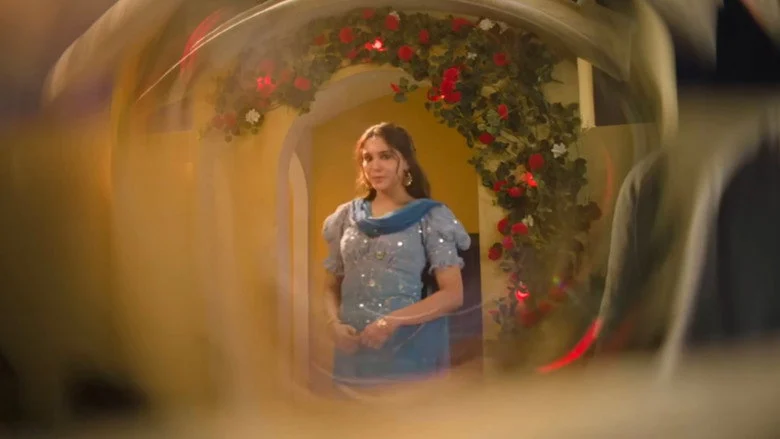
  • Main Vaapas Aaunga (2026): Naseeruddin Shah A stands out while the narrative loses grip

    Main Vaapas Aaunga (2026): Naseeruddin Shah A stands out while the narrative loses grip

    Naseeruddin Shah doesn’t just play Ishar Singh Grewal; he inhabits the shell of a 95-year-old man whose body has betrayed his will. The physical tremors, the vacant stares at a map of Pakistan, and the barely audible whisper of “Main vaapas aaunga” in the opening scene are disturbingly real. His performance relies on micro-expressions, a twitch of the lip, a glassy-eyed gaze, that communicate more than any monologue could.

    He reserves his full dramatic might for the climax. When Nirvair reveals that Afsana died waiting for him a decade ago, Shah’s face collapses into a silence that is louder than any wail. It is the rare kind of acting that reminds you why he is considered one of India’s finest.

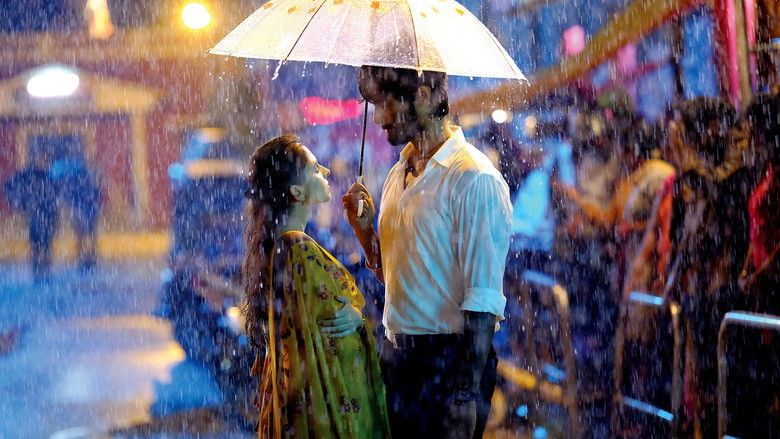
    Main Vaapas Aaunga (2026) review image

    Diljit Dosanjh: The Frustrated Anchor of the Present

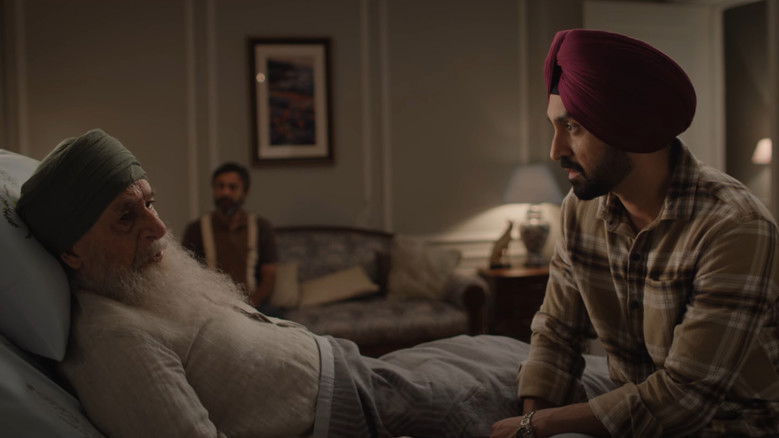
    Diljit Dosanjh, as grandson Nirvair, is tasked with being the bridge between a confused elder and a fragmented past. He carries the frustration of caring for a dementia patient without tipping into melodrama, using restrained facial cues rather than dialogue to express his helplessness. His chemistry with Shah is tender but never syrupy.

    However, the character remains underwritten as a mere plot conduit. Dosanjh does what he can, but the screenplay leaves him circling the same emotional well, exasperation followed by gentle compassion, without any arc of his own.

    Main Vaapas Aaunga - A.R. Rahman’s Score Carries the Emotional Weight

    A.R. Rahman’s Score Carries the Emotional Weight

    Rahman’s music is the film’s unsung protagonist. The background score during the 1947 Partition chaos, where Young Ishar and Afsana are violently separated by the crowd, pulses with a frantic, disorienting energy that matches the visual horror. The songs, with Irshad Kamil’s lyrics, deepen the ache of longing without ever feeling shoehorned.

    The warm, golden cinematography of the pre-Partition flashbacks contrasts starkly with the cold, desaturated present. This visual language does what the script sometimes fails to do: it makes you feel the distance between 1947 and 2026 without a single line of exposition.

    Main Vaapas Aaunga - Vedang Raina and Sharvari: A Promising, Underwritten Pair

    Vedang Raina and Sharvari: A Promising, Underwritten Pair

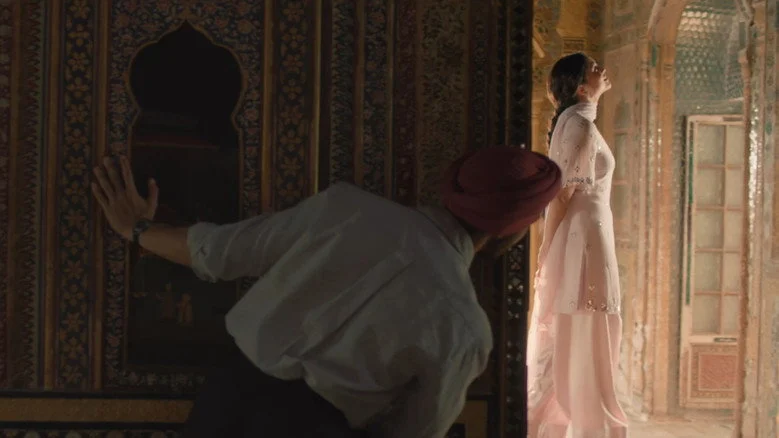
    Vedang Raina and Sharvari capture the giddy, stolen-glances innocence of young love in the flashback timeline. Their first meeting scene is shot with a painterly nostalgia that feels like a sepia photograph come alive. Yet the script gives them little more than a montage of bliss before ripping them apart.

    Sayani Gupta, in a brief supporting role, registers a quiet presence, but her character lacks any real texture or purpose. She exists to fill a frame rather than to deepen the story, a missed opportunity given the actor’s proven ability.

    Genre-Core Execution: Romance Thwarted by History

    Imtiaz Ali stages the genre-core romance with his signature yearning: a promise whispered in moonlight, a separation in a crowd, a lifetime of waiting. The 1947 crowd sequence is a masterclass in tragic-romance craft, every face in the chaos becomes a wall between the lovers. It is visceral and brutal, exactly the sort of setpiece that reminds you why partition stories still resonate.

    The problem lies in the “movie within a movie” device, Nirvair’s attempt to transport his grandfather back in time using music and visuals. It is conceptually clever but executed without narrative logic. How does the grandfather experience this movie? Is it a memory trigger or a literal time-travel? The ambiguity feels like a shortcut rather than art.

    The second half slows to a crawl, dwelling on the revelation of Afsana’s death for what feels like an eternity. The pacing is intentional, to sit with grief, but it also drains the film of dramatic momentum. I found myself wishing Ali had trimmed at least 20 minutes from the 166-minute runtime.

    For those drawn to the emotional register of this film, there is a wealth of similar storytelling waiting to be discovered in our Hindi Drama reviews.

    Controversy and Audience Reception: Soaring Praise, Quiet Complaints

    The film has received a stellar 92% on Rotten Tomatoes, with critics hailing Imtiaz Ali’s return to old-school romance. Fans have praised the emotional impact of the partition flashbacks, particularly the visual intensity of the separation scene. Naseeruddin Shah’s performance is universally cited as the film’s beating heart.

    Yet the audience has not been unanimously seduced. A notable complaint targets the ending: a resolution that is overwhelmingly tragic without offering a shred of hope. For a film about love and promises, the lack of catharsis has left some viewers frustrated. Another common grievance is the second-half pacing, which a segment of the audience found slogging rather than meditative.

    If you can sit with heartbreak without demanding a silver lining, this film will linger in your bones for days. Watch it on the largest screen you can find, the Immersive format amplifies the Partition setpiece into something close to trauma, but brace yourself for a two-hour-and-forty-six-minute emotional excavation that refuses to let you off easy.

    The narrative debt this owes to a more honest exploration of longing is clear for anyone who watches Cocktail 2 review.

    Main Vaapas Aaunga is an ambitious, deeply flawed, and occasionally transcendent film that earns a firm 3.5/5 for its acting and music, but loses points for its meandering script and questionable narrative mechanics.

    For a more grounded rural sports drama, Peddi verdict offers a different kind of gamble on high-stakes storytelling.

  • Cocktail 2 (2026): Shahid Kapoor’s Emotional Honesty Battles Contrived Plot Mechanics

    Cocktail 2 (2026): Shahid Kapoor’s Emotional Honesty Battles Contrived Plot Mechanics

    A decade-long marriage crumbles into farce when an old friend’s return becomes the spark for a “loyalty test” that spirals into chaos neither participant anticipated. Homi Adajania’s sequel constructs its emotional architecture around a single miscalculation, the moment Diya decides to weaponize suspicion against her husband Kunal, and watches it detonate across 149 minutes of escalating absurdity masquerading as contemporary romance.

    The film gambles on a high-wire premise: that manufactured betrayal, when excavated, might reveal truths about a relationship worth salvaging. It’s a risky bet that occasionally pays dividends but more often exposes the fragility of its own logic.

    Cocktail 2 (2026) review image

    Shahid Kapoor’s Stagnation Cuts Deeper Than the Plot Deserves

    Shahid’s Kunal doesn’t swagger or perform; he atrophies quietly in the film’s opening act, his body language a study in marital numbness. The way he moves through domestic space, shoulders folded inward, eyes avoiding his wife’s gaze during supposedly intimate moments, registers more authentically than any monologue about emotional distance could. His raw delivery in the confrontation scene, where he discovers the full extent of Diya and Ally’s deception, carries genuine hurt that the screenplay hasn’t earned through logical progression.

    This performance is the film’s greatest asset and its cruelest irony: watching a skilled actor navigate material that repeatedly undercuts his credibility.

    Cocktail 2 - Adajania's Direction Maintains Tone While Pacing Fractures Fatally

    Adajania’s Direction Maintains Tone While Pacing Fractures Fatally

    The director demonstrates technical competence, maintaining consistent emotional temperature across conflicting scenes and extracting genuine humor from tension. His visual choices, particularly close-ups and warm lighting during intimate moments, emphasize vulnerability without sentimentality. Yet the middle section collapses under its own weight, stretching the misunderstanding beyond plausibility, and the climax resolves with such velocity that emotional scaffolding crumbles.

    The screenplay’s linear structure, co-written by Luv Ranjan and Tarun Jain, plants the “loyalty test” sequence as its central pivot, a moment of dramatic irresponsibility that everything afterward must justify. It cannot.

    Cocktail 2 - The Loyalty Test Scene Exposes Romance's Genre Mechanics Under Pressure

    The Loyalty Test Scene Exposes Romance’s Genre Mechanics Under Pressure

    When Diya and Ally initiate their plan, the film attempts to blend comic miscalculation with relationship drama. What emerges instead is a sequence that prioritizes plot convenience over character logic. The audience watches three adults behave with the impulse control of teenagers, and the script offers no introspection sharp enough to contextualize this as deliberate folly. The humor lands occasionally, particularly in the escalating misunderstandings, but feels grafted onto conflict that should generate tension through consequence, not through contrived circumstance.

    The final resolution scene theoretically pivots toward emotional growth and redefined modern relationships. In practice, it compresses months of necessary healing into a few minutes of dialogue reassurance. Diya’s line, “Modern relationships are hard, but we have to try”, sounds like thematic instruction rather than earned wisdom from characters who’ve done little internal work to justify their second chance.

    Where the film succeeds is in its acknowledgment that contemporary coupledom operates without instruction manuals. Where it falters is in treating this insight as sufficient substitute for credible character behavior. The confrontation between husband and wife generates real tension because Shahid’s performance carries the scene, not because the plot has constructed legitimate dramatic stakes. This is a film sustained by acting against screenplay, not in concert with it.

    Hindi romantic comedies and dramas continue to explore modern coupling with varying success, and this particular entry sits uncomfortably between ambition and execution across the landscape of contemporary relationship cinema.

    Kriti Sanon and Rashmika Mandanna Navigate Underwritten Complexity

    Kriti Sanon embodies Diya’s internal contradiction, the wife desperate enough to sabotage her own marriage to test its durability, with genuine emotional range in the plan and confrontation scenes. Her vulnerability in the final resolution carries more weight than the screenplay deserves to claim. Rashmika Mandanna, cast as Ally, performs subtle manipulation during the scheme’s execution, yet her character dissolves into convenient emotional availability whenever the narrative requires redemption. Both actors manage the material’s limitations, but neither can transcend its fundamental implausibility.

    Amitabh Bachchan’s special appearance functions as tonal ballast, a gravitas-lending presence that signals the film’s thematic pretensions without demanding script space to justify them.

    Box Office Performance Reflects Audience Skepticism Toward Flawed Premise

    Opening with Rs 8 crore on its first day, according to the Sacnilk Report, the film accumulated Rs 25 crore across India in its first week, with a worldwide gross climbing to Rs 38 crore by the end of that span. Against a reported Rs 45-crore budget, these numbers signal modest market confidence in a narrative that critics and viewers alike identified as fundamentally compromised. The 6.2/10 rating from critical consensus (Sacnilk Report) aligns with BookMyShow’s 7.1/10 audience score and IMDb’s 6.4/10, a consistent middle zone that suggests competent execution of a premise audiences found increasingly difficult to accept as it unfolded.

    Social media sentiment split 68% positive against 32% negative, with admirers praising the film’s willingness to address modern relationship fragility and detractors pointing to the slow-paced middle section as narrative dead weight.

    Watch This If You’re Forgiving of Contrived Romance, Skip If You Demand Logic

    Cocktail 2 works best viewed as a character study sustained by Shahid Kapoor’s quiet desperation rather than as a thriller built on the loyalty test’s escalating chaos. The film’s relatable theme of contemporary couples struggling without maps resonates; its execution of that theme through increasingly implausible scenario feels like a miscalculation that even strong performances cannot fully redeem. IMAX screenings offer enhanced visual and audio texture to emotional moments, but won’t salvage the fundamental structural compromises that undermine the narrative’s second half. I found myself respecting the ambition and frustrated by the carelessness with which it was pursued.

    Cocktail 2 reaches for something honest about modern marriage but settles for contrivance when honesty became inconvenient, a 2.5 out of 5 film that mistakes actor commitment for dramatic coherence.

    Homi Adajania’s prior work and similar romantic dramas exploring relationship vulnerability appear frequently across contemporary Hindi cinema reviews.

    For similar examinations of relationship stress under manufactured pressure, Peddi offers comparable thematic terrain through different genre frameworks, exploring how external disruption reshapes domestic dynamics.

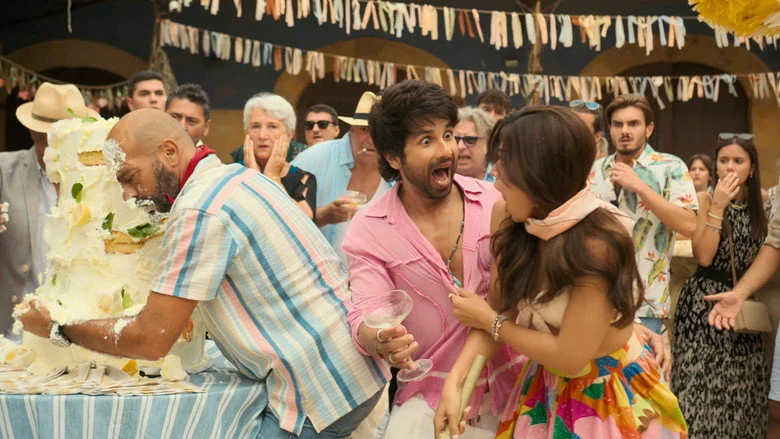
    The film’s struggle between emotional authenticity and plot mechanics echoes patterns visible in Hai Jawani Toh Ishq Hona Hai, another entry wrestling with how romantic frameworks fracture when predictability overrides character logic.

    Readers looking for more hindi drama reviews can explore them on Movies4u.

  • Hai Jawani Toh Ishq Hona Hai (2026): Dhawan’s Romantic Framework Fractures Under Predictable Plotting

    Hai Jawani Toh Ishq Hona Hai (2026): Dhawan’s Romantic Framework Fractures Under Predictable Plotting

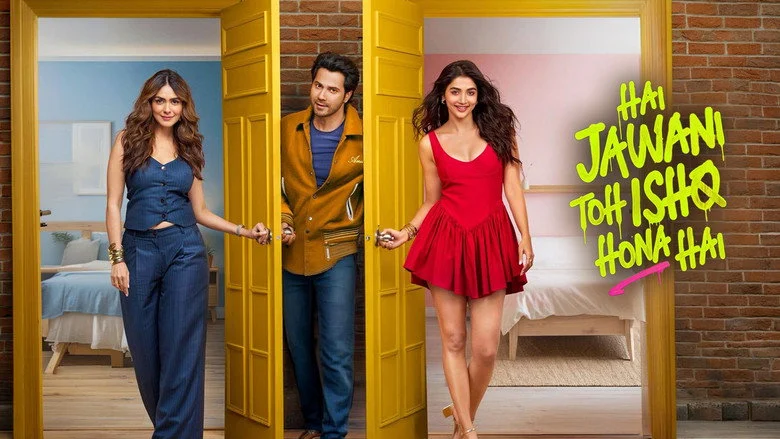
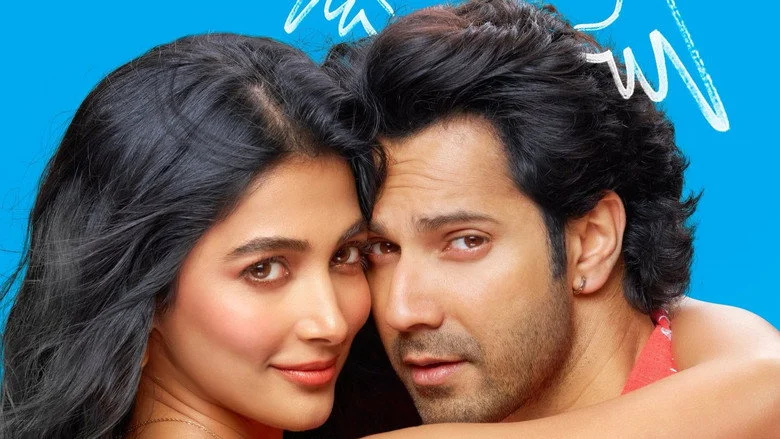
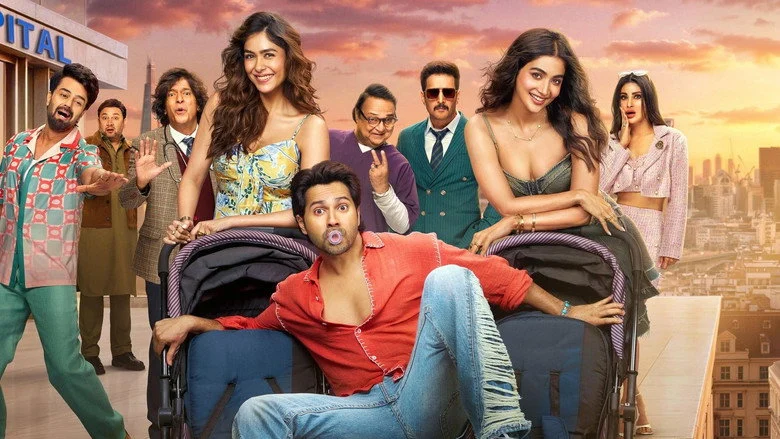
    Jass walks out of his five-year marriage, suffocated by Bani’s relentless climb up the corporate ladder while he starves for domestic stability. The camera follows him abroad into a new romance that promises everything his marriage couldn’t deliver, until shocking revelations detonate the entire emotional architecture. David Dhawan returns to his signature romantic-comedy terrain, but the execution splits between moments of genuine marital friction and plot machinery that groans under the weight of its own predictability.

    Hai Jawani Toh Ishq Hona Hai (2026) review image

    Varun Dhawan’s Emotional Credibility in the Revelation Scene

    Dhawan delivers his strongest work during the climactic revelation, where layers of self-deception crumble into genuine confrontation with love and loyalty. His portrayal of Jass’s emotional turmoil through the marital conflict carries weight, the actor inhabits the tension between desire for family and fear of irrelevance with visible restraint. Yet his comedic timing with Maniesh Paul, though sharp, occasionally overrides the gravity the narrative demands.

    Hai Jawani Toh Ishq Hona Hai - Dhawan's Direction Pulls Against the Screenplay's First-Half Collapse

    Dhawan’s Direction Pulls Against the Screenplay’s First-Half Collapse

    The director’s romantic-comedy signature remains intact, his framing favors intimate moments and domestic comedy with practiced ease. However, the transition where Jass abandons his marriage lands abruptly, as if the screenplay rushed past its own emotional setup to reach plot momentum. The second half recovers considerably once the revelation scene anchors the narrative, but that structural stumble in Act One never fully disappears.

    Hai Jawani Toh Ishq Hona Hai - Romance and Drama Strain Against Formula

    Romance and Drama Strain Against Formula

    The film uses marital conflict as its emotional spine, and this choice offers genuine vulnerability. Bani’s career ambitions aren’t presented as selfish, Mrunal Thakur conveys her determination with credible conviction, making the couple’s incompatibility feel rooted in competing dreams rather than melodramatic spite. The romantic tropes are deployed effectively: absence breeds resentment, new attraction clouds judgment, and buried truths explode under pressure.

    Pooja Hegde’s new romance character adds emotional complexity to Jass’s moral confusion, complicating the simple narrative of a man running from commitment. Yet the subplot itself follows predictable beats, the encounter abroad, the emotional entanglement, the convenient complications. Comedy integrates into the drama through supporting players rather than through structural wit; Maniesh Paul’s friendship scenes puncture tension without redefining it.

    What distinguishes this film from Dhawan’s earlier work is its willingness to linger on marital deterioration as a primary emotion rather than a plot device. The revelation scene justifies this investment by forcing both characters to reckon with what commitment actually costs. But arriving at that moment requires wading through 90 minutes of familiar relationship beats that unfold with minimal surprise.

    Explore more Hindi Romance reviews for deeper analysis of the genre’s current state.

    Mrunal Thakur’s Career-Driven Bani Outpaces the Script’s Depth

    Thakur steals attention precisely because Bani refuses to be a villain, her ambition reads as legitimate, her frustration justified. Jimmy Shergill and Mouni Roy occupy supporting positions without meaningful development, existing more as plot furniture than characters. Chunky Pandey’s antagonist role suffers from limited screen time and motivations that never crystallize beyond vague authority-figure dynamics.

    Marital Conflict Without Fresh Stakes or Originality

    The central tension between family and career echoes through contemporary cinema without resolution or insight here. Audiences praise the emotional resonance of watching a marriage unravel, yet the premise itself offers nothing new, career-versus-family conflict has defined romantic cinema for decades. The film executes it competently but doesn’t interrogate or subvert the dynamic; it simply performs it with Dhawan’s technical assurance.

    Viewers particularly criticize the abruptness of Jass’s departure and the predictability of the new romance subplot, two structural choices that feel obligatory rather than earned. The antagonist’s underdeveloped character compounds this sense of formula, Chunky Pandey’s father figure needed either deeper complexity or sharper comic relief, receiving neither.

    This is a solidly crafted romantic drama that knows its genre conventions inside-out but lacks the originality to elevate those conventions. Dhawan’s direction carries the film through its weaker plotting, particularly once the revelation scene arrives to justify the marital deterioration that precedes it. For fans of Varun Dhawan’s romantic register and family audiences comfortable with familiar terrain, the film delivers. Those seeking character depth or narrative surprise should look elsewhere. Watch it in theaters if the premise appeals; the emotional beats land better on the big screen than they likely will on streaming platforms.

    Like Bandar review, this film explores moral compromise beneath surface domesticity.

    Hai Jawani Toh Ishq Hona Hai executes romantic-comedy craft with competence but sacrifices originality in the process, a middling return to familiar territory that earns a 2.5/5 for technical proficiency without thematic ambition.

    Dhawan’s structural choices echo the character-driven restraint seen in Star Wars verdict that prioritize emotional clarity over novelty.

  • Ugly Story (2026): L. Pranava Swaroop crafts an honest, audience-chosen drama.

    Ugly Story (2026): L. Pranava Swaroop crafts an honest, audience-chosen drama.

    There is a version of Ugly Story that L. Pranava Swaroop could have made — the safe version, the version that Lucky Media might have preferred, the version that fills 2+ Hours without demanding anything of anyone. That is not the film released on May 22, 2026. The film released on May 22, 2026 is the better one.

    That 7 out of 10 on Ugly Story is the score of a film that chose its audience correctly and served them honestly. In a field where ratings are frequently manufactured by opening weekend enthusiasm, a settled score built over time carries considerably more critical weight.

    Ugly Story

    Plot and Intention: What Ugly Story Is Attempting

    The screenplay by L. Pranava Swaroop builds Ugly Story around A premise that announces itself clearly — a premise that functions on its surface as a Drama mechanism and beneath it as something more considered. L. Pranava Swaroop is alert to both registers and directs with an awareness of the distance between them.

    L. Pranava Swaroop has rooted Ugly Story in India with the understanding that geography is not neutral in Drama storytelling. The crores production from Lucky Media gives L. Pranava Swaroop access to the actual locations the script requires — and the film’s credibility depends on that access.

    L. Pranava Swaroop has written a conclusion for Ugly Story that reaches for more than the 2+ Hours runtime can fully accommodate. L. Pranava Swaroop executes it with care, but care cannot substitute for the structural discipline the final act lacks. The film arrives at its destination — the route is longer than necessary.

    Performance Under Scrutiny: The Cast of Ugly Story

    The performance Nandu Vijay Krishna gives in Ugly Story as a character deserves critical attention beyond the usual vocabulary of praise. This is not a performance of range or intensity — it is a performance of precision, and precision of this order is rarer and more valuable than either.

    What Avika Gor, Nandu Vijay Krishna, Pragya Nayan Sinha, Ravi Teja Mahadasyam bring to Ugly Story is the collective quality that distinguishes a cast from a group of actors: they appear to inhabit the same world. The coherence of the ensemble in Ugly Story is not accidental — it is the result of direction that prioritised the world over the individual performance.

    The critical undervaluation of supporting performance is a persistent problem in reviews of films like Ugly Story. The work of Pragya Nayan Sinha, Avika Gor and Nandu, Avika, Ravi, Pragya, Shivaji in Ugly Story is a corrective to that habit — both deliver performances of a quality that the film’s overall standard requires and that the final result depends on.

    Directorial Method and Technical Achievement in Ugly Story

    The production of Ugly Story under L. Pranava Swaroop for Lucky Media reflects a creative process in which the crores allocation followed the film’s requirements rather than preceded them. This is, unfortunately, rarer than it should be in the Telugu Drama space — and the film’s technical quality is the direct result.

    Mithun Soma, R. Srikanth Patnaik assembles Ugly Story at 2+ Hours with the editorial maturity that the film’s tonal ambitions require. The cut does not hurry what needs time and does not linger where the scene has concluded — a discipline that holds throughout Ugly Story with only the final act offering grounds for critical reservation.

    The technical coherence of Ugly Story across its 2+ Hours runtime reflects a production in which every department received the same creative brief and interpreted it faithfully. The result is a film that does not read as assembled but as conceived — which is the standard all serious Telugu Drama cinema should aspire to.

    Reception, Evaluation, and Recommendation — Ugly Story (2026)

    Ugly Story has accumulated a popularity score of 0.6473 — a figure that a critic should resist treating as either validation or irrelevance. The more useful observation is that a film of this formal ambition reaching 0.6473 suggests the Telugu Drama audience is more sophisticated than the market often assumes.

    1000+ audience votes and 7+ Stars. The mathematics are clear. Ugly Story has produced a consistent experience across a very large and diverse audience — which is the only audience verdict that a critic should treat as meaningful evidence about the film’s actual quality.

    Ugly Story is the kind of Telugu Romance, Drama, Thriller film that reminds you why the form matters when it is practiced well. L. Pranava Swaroop has made something that will hold up to repeated viewing and continued critical attention. At 2+ Hours, the investment is justified. The recommendation stands.

    The critical record continues — find more seriously made Telugu Drama films in our archive.

    [egp_related_silo genre=’Drama’ lang=’Telugu’]
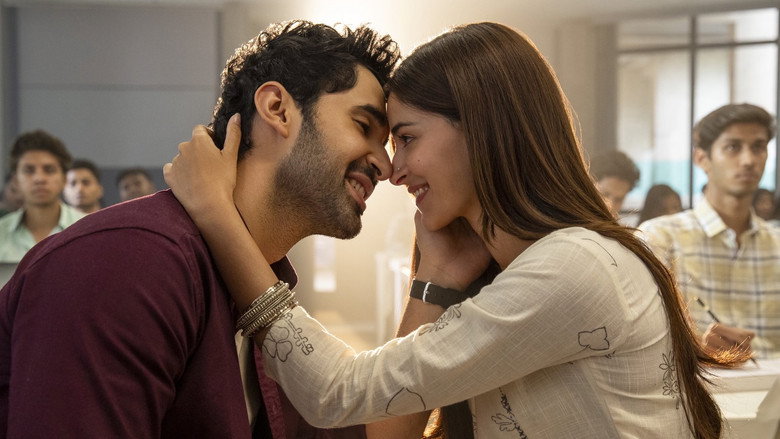
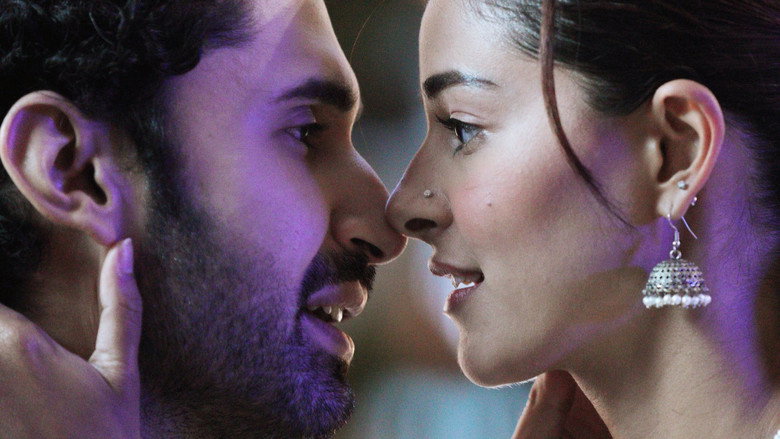
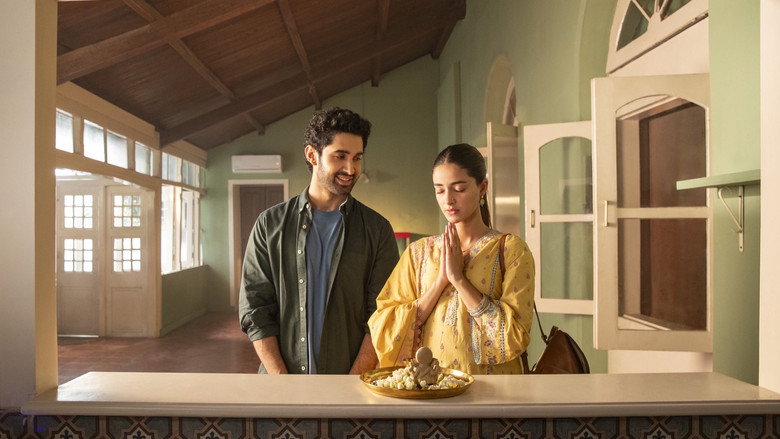
  • Chand Mera Dil (2026): Vivek Soni crafts a disciplined romance where genre indulgence rarely intrudes.

    Chand Mera Dil (2026): Vivek Soni crafts a disciplined romance where genre indulgence rarely intrudes.

    The Hindi Drama, Romance film has a persistent problem with ambition outrunning execution. Chand Mera Dil (2026), directed by Vivek Soni for Dharma Productions, is not that film. Released May 22, 2026 at 135 minutes, it is disciplined where the genre is usually indulgent — and the difference is considerable.

    The 7 out of 10 audience figure attached to Chand Mera Dil is consistent with a film doing something right at both the craft and entertainment level simultaneously. Films that achieve that alignment rarely see their scores erode as the audience grows — and Chand Mera Dil has not.

    Chand Mera Dil

    What Chand Mera Dil Says and How It Chooses to Say It

    The screenplay by Vivek Soni, Tushar Paranjape builds Chand Mera Dil around Aarav and Chandni’s passionate college romance is struck by adulthood far too… — a premise that functions on its surface as a Drama mechanism and beneath it as something more considered. Vivek Soni is alert to both registers and directs with an awareness of the distance between them.

    Vivek Soni, Tushar Paranjape has rooted Chand Mera Dil in India with the understanding that geography is not neutral in Drama storytelling. The crores production from Dharma Productions gives Vivek Soni access to the actual locations the script requires — and the film’s credibility depends on that access.

    The honest critical note on Chand Mera Dil is that Vivek Soni‘s control of the film’s pace and intention is more complete in the first half than the second. What enters the third act is not bad material — it is surplus material, and surplus is a different kind of problem.

    Chand Mera Dil

    Performance Under Scrutiny: The Cast of Chand Mera Dil

    The performance Ananya Panday gives in Chand Mera Dil as Chandni deserves critical attention beyond the usual vocabulary of praise. This is not a performance of range or intensity — it is a performance of precision, and precision of this order is rarer and more valuable than either.

    The supporting cast — Lakshya Lalwani, Pratham Rathod, Het Thakkar, Ananya Panday among them — has been directed by Vivek Soni with a clarity of expectation that produces uniformly credible work. These are not performances competing for attention. They are performances understanding their function within a larger design and executing it without ego.

    The supporting contributions of Ananya Panday in Chand Mera Dil represent the film at its most precisely observed. Their scenes carry a weight that the screenplay describes in outline and the performance fills in completely. Ananya, Lakshya, Het, Pratham, Aastha operates with comparable precision in a different register — the supporting cast as a whole does not have a weak point.

    Chand Mera Dil

    The Craft Argument for Chand Mera Dil (2026)

    Vivek Soni directs Chand Mera Dil from a position of creative authority that the crores production from Dharma Productions reinforces rather than creates. The money is in service of a vision, not a substitute for one — a distinction that most Hindi Drama productions at this budget level fail to make.

    The 2 hr 15 mins edit from Prashanth Ramachandran is the product of a genuine understanding of what Chand Mera Dil requires at the level of pace and internal logic. The film’s rhythm is established early and maintained consistently — the loosening in the final act is a screenplay problem that editing can mitigate but not solve.

    The visual argument of Chand Mera Dil is made consistently and with conviction. Vivek Soni has developed a cinematographic language for Chand Mera Dil that is specific to its story and setting — the India locations are not photographed for their beauty but for their meaning, which is the correct critical priority.

    Chand Mera Dil

    Reception, Evaluation, and Recommendation — Chand Mera Dil (2026)

    The 2.7784 score on Chand Mera Dil deserves neither critical dismissal nor uncritical celebration. What it indicates is that a film made with genuine intention has reached a genuinely large audience — and that those viewers have responded to the intention as well as the entertainment.

    The audience has provided Chand Mera Dil with 1000+ ratings averaging 7+ Stars. The critical question is not whether this score is deserved — it is — but what it tells us about the current state of Hindi Drama audience expectation. The answer is encouraging.

    The critical recommendation for Chand Mera Dil is unambiguous: watch it, and watch it with the attention that Vivek Soni‘s direction and Ananya Panday‘s performance deserve. 2h 15m of serious Hindi Romance, Drama filmmaking at this level is not available every season.

    The critical record continues — find more seriously made Hindi Drama films in our archive.

    [egp_related_silo genre=’Drama’ lang=’Hindi’]
  • 29 (2026): Rathna Kumar crafts a sincere, flawed Tamil romance

    29 (2026): Rathna Kumar crafts a sincere, flawed Tamil romance

    It is worth being precise about what 29 (2026) is and is not. It is a 149 minutes Tamil Drama, Comedy, Romance film from Rathna Kumar and Stone Bench Creations, G Squad (IN), released May 8, 2026. It is not a perfect film. It is, however, a seriously made one — which in the current Tamil release landscape counts for considerably more.

    The 6 out of 10 consensus deserves neither uncritical celebration nor dismissal. It reflects a film that has connected with a broad audience without condescending to one — a balance that most Tamil Drama productions at this budget level fail to strike.

    29

    The Story 29 (2026) Is Telling — And How Well It Tells It

    Rathna Kumar has given Rathna Kumar a script in 29 that opens on The story of this film tells the events that happen in the… and does not pretend the premise is more novel than it is. What the screenplay does instead is execute the familiar with enough craft and specificity to justify its existence — which is the more demanding achievement.

    The decision to film 29 in India is not a production convenience — it is an argument. Rathna Kumar’s screenplay is written from the inside of a specific cultural context, and the crores that Stone Bench Creations, G Squad (IN) committed ensures Rathna Kumar could honour that context rather than merely approximate it.

    29 is a tighter film for roughly two thirds of its runtime than the final act allows. The looseness that enters in the closing sequences is a screenwriting problem more than a directorial one — Rathna Kumar has loaded the third act with material that competes rather than converges.

    29

    The Performances That Make 29 Credible

    Vidhu brings to Sathya in 29 a quality that the screenplay points toward but cannot guarantee: interiority. The character’s inner life is visible without being stated, communicated through an accumulation of small choices that a less disciplined actor would not have made and most audiences will not consciously notice.

    The relationship between Vidhu‘s central performance and the ensemble of Preethi Asrani, Prem, Vidhu, Mahendran in 29 is the relationship between a soloist and an orchestra that has learned not to overplay. The balance is Rathna Kumar‘s achievement, and it holds across the full runtime of 29.

    Aadhira Pandilakshmi, Preethi Asrani demonstrates in 29 what supporting performance looks like when an actor refuses to treat secondary status as a creative limitation. The role is not the film’s largest. The work done within it is among the film’s most exacting. Vidhu, Preethi, Mahendran, Prem, Avinash meets the same standard through different means.

    29

    Direction, Editing, and Visual Intelligence in 29 (2026)

    The technical achievement of 29 begins with the relationship between Rathna Kumar and the crores that Stone Bench Creations, G Squad (IN) committed to the production. That relationship — of filmmaker leading and resources following — is what gives 29 its coherence.

    The 2 hr 29 mins edit from R.S. Sathish kumar is the product of a genuine understanding of what 29 requires at the level of pace and internal logic. The film’s rhythm is established early and maintained consistently — the loosening in the final act is a screenplay problem that editing can mitigate but not solve.

    The technical coherence of 29 across its 2h 29m runtime reflects a production in which every department received the same creative brief and interpreted it faithfully. The result is a film that does not read as assembled but as conceived — which is the standard all serious Tamil Drama cinema should aspire to.

    29

    Reception, Evaluation, and Recommendation — 29 (2026)

    The commercial reception of 29 — 0.5558 on the popularity index — confirms what the critical case for the film suggests: that Rathna Kumar and Stone Bench Creations, G Squad (IN) have made something that functions simultaneously as serious cinema and accessible entertainment. That achievement is rarer than either alone.

    The audience has provided 29 with 1 ratings averaging 6+ Stars. The critical question is not whether this score is deserved — it is — but what it tells us about the current state of Tamil Drama audience expectation. The answer is encouraging.

    29 does not resolve all the problems it sets itself. What it does — with 2h 29m of carefully made Tamil Drama, Comedy, Romance cinema — is demonstrate that Rathna Kumar is a filmmaker worth following and that the form itself still has critical territory worth exploring.

    The critical record continues — read our full critical coverage of Tamil Drama cinema.

    [egp_related_silo genre=’Drama’ lang=’Tamil’]
  • Krishnavataram Part 1 : The Heart (2026): Hardik Gajjar’s restrained devotional epic rewards patient audiences.

    Krishnavataram Part 1 : The Heart (2026): Hardik Gajjar’s restrained devotional epic rewards patient audiences.

    It is worth being precise about what Krishnavataram Part 1 : The Heart (2026) is and is not. It is a 2+ Hours Hindi Drama, Romance film from Hardik Gajjar and Unknown, released May 7, 2026. It is not a perfect film. It is, however, a seriously made one — which in the current Hindi release landscape counts for considerably more.

    Krishnavataram Part 1 : The Heart holds 7 out of 10 across platforms, which for a film of its formal ambition is a strong result. Audience scoring systems do not typically reward restraint — the fact that Krishnavataram Part 1 : The Heart scores this well while exercising it suggests the film has genuine cross-audience appeal.

    Krishnavataram Part 1 : The Heart

    Plot and Intention: What Krishnavataram Part 1 : The Heart Is Attempting

    Hardik Gajjar, Prakash R. Kapadia situates Krishnavataram Part 1 : The Heart in An epic devotional narrative that reimagines the journey of Lord Krishna, tracing… with a restraint that announces the film’s priorities early. This is not a screenplay interested in exploitation. It is interested in consequence — and Hardik Gajjar follows that interest throughout the 2+ Hours runtime without flinching.

    The crores production across gives Krishnavataram Part 1 : The Heart a specificity that is essential to what Hardik Gajjar, Prakash R. Kapadia is writing about. Hardik Gajjar treats this specificity as a responsibility rather than an asset — the film does not display its locations, it inhabits them.

    Krishnavataram Part 1 : The Heart is a tighter film for roughly two thirds of its runtime than the final act allows. The looseness that enters in the closing sequences is a screenwriting problem more than a directorial one — Hardik Gajjar, Prakash R. Kapadia has loaded the third act with material that competes rather than converges.

    From Siddharth Gupta Down: A Critical Account of Krishnavataram Part 1 : The Heart’s Performances

    Siddharth Gupta brings to Krishna in Krishnavataram Part 1 : The Heart a quality that the screenplay points toward but cannot guarantee: interiority. The character’s inner life is visible without being stated, communicated through an accumulation of small choices that a less disciplined actor would not have made and most audiences will not consciously notice.

    The supporting architecture of Krishnavataram Part 1 : The Heart — inhabited by Nivaashiyni Krishnan, Sushmitha Bhat, Siddharth Gupta, Sanskruti Jayana — is the work of a director who casts against the assumption that supporting roles are less important than central ones. Hardik Gajjar has clearly not made that assumption, and the film’s credibility depends on the result.

    The performances of Sushmitha Bhat and Siddharth, Sushmitha, Sanskruti, Nivaashiyni, J. in Krishnavataram Part 1 : The Heart are built on the principle that supporting roles in a well-directed film do not exist in isolation from its larger design. Both actors appear to understand the design they are supporting — which is precisely what makes their contributions to Krishnavataram Part 1 : The Heart valuable.

    Directorial Method and Technical Achievement in Krishnavataram Part 1 : The Heart

    The technical achievement of Krishnavataram Part 1 : The Heart begins with the relationship between Hardik Gajjar and the crores that Unknown committed to the production. That relationship — of filmmaker leading and resources following — is what gives Krishnavataram Part 1 : The Heart its coherence.

    The editorial work of Unknown on Krishnavataram Part 1 : The Heart at 2+ Hours reflects a collaboration with Hardik Gajjar that has produced a cut of real quality across most of the film’s duration. The final act is where the editing is working hardest and achieving least — a disproportion that a more severe pass might have corrected.

    The production design of Krishnavataram Part 1 : The Heart operates at the level of the screenplay — it is making interpretive choices, not illustrative ones. Combined with the cinematography and the location work, it produces a film whose visual surface and intellectual content are in genuine alignment.

    The Critical Verdict on Krishnavataram Part 1 : The Heart — What It Achieves and What It Does Not

    Popularity at 2.3461 for Krishnavataram Part 1 : The Heart is a market signal worth reading carefully. It suggests the film has found viewers beyond its natural critical constituency — which means Hardik Gajjar has made something that works at both the craft and entertainment level without compromising either.

    The audience has provided Krishnavataram Part 1 : The Heart with 1000+ ratings averaging 7+ Stars. The critical question is not whether this score is deserved — it is — but what it tells us about the current state of Hindi Drama audience expectation. The answer is encouraging.

    Krishnavataram Part 1 : The Heart is, on critical balance, one of the better Hindi Romance, Drama films of its season. Its limitations are real and have been noted. Its achievements — formal, performative, and thematic — are more substantial and less common. At 2+ Hours, it warrants the attention it asks for.

    The critical record continues — see every performance from Siddharth Gupta we have written about.

    [egp_related_silo genre=’Drama’ lang=’Hindi’]
  • Ek Din (2026): Sunil Pandey crafts a disciplined romance where restraint elevates emotion.

    Ek Din (2026): Sunil Pandey crafts a disciplined romance where restraint elevates emotion.

    The Hindi Drama, Romance film has a persistent problem with ambition outrunning execution. Ek Din (2026), directed by Sunil Pandey for Aamir Khan Productions, is not that film. Released May 1, 2026 at 125 minutes, it is disciplined where the genre is usually indulgent — and the difference is considerable.

    The 7 out of 10 consensus deserves neither uncritical celebration nor dismissal. It reflects a film that has connected with a broad audience without condescending to one — a balance that most Hindi Drama productions at this budget level fail to strike.

    Ek Din

    Structural Analysis: The Narrative of Ek Din

    Spandan Mishra, Sneha Desai situates Ek Din in Rohan is in love with his colleague Meera but does not have… with a restraint that announces the film’s priorities early. This is not a screenplay interested in exploitation. It is interested in consequence — and Sunil Pandey follows that interest throughout the 125 minutes runtime without flinching.

    The decision to film Ek Din in India is not a production convenience — it is an argument. Spandan Mishra, Sneha Desai’s screenplay is written from the inside of a specific cultural context, and the crores that Aamir Khan Productions committed ensures Sunil Pandey could honour that context rather than merely approximate it.

    Ek Din is a tighter film for roughly two thirds of its runtime than the final act allows. The looseness that enters in the closing sequences is a screenwriting problem more than a directorial one — Spandan Mishra, Sneha Desai has loaded the third act with material that competes rather than converges.

    Acting in Ek Din (2026): What Holds and What Does Not

    The central performance from Junaid Khan as Rohan is the element of Ek Din that most resists easy summary. It is a performance of sustained intelligence — not intelligence announced, but intelligence demonstrated, scene by scene, in choices that accumulate rather than declare.

    The supporting cast — Sai Pallavi, Pragati Mishra, Kunal Kapoor, Junaid Khan among them — has been directed by Sunil Pandey with a clarity of expectation that produces uniformly credible work. These are not performances competing for attention. They are performances understanding their function within a larger design and executing it without ego.

    The supporting contributions of Sai Pallavi, Pragati Mishra in Ek Din represent the film at its most precisely observed. Their scenes carry a weight that the screenplay describes in outline and the performance fills in completely. Junaid, Sai, Kunal, Pragati, Kavin operates with comparable precision in a different register — the supporting cast as a whole does not have a weak point.

    Directorial Method and Technical Achievement in Ek Din

    The directorial intelligence of Ek Din is most legible in what Sunil Pandey chooses not to do with the crores from Aamir Khan Productions. The film does not expand to fill its resources — it focuses them, and that focus produces a visual and tonal precision that the Hindi Drama field rarely achieves at this scale.

    The editing of Ek Din by Ballu Saluja at 2 hr 5 mins demonstrates what editorial intelligence looks like in service of a director who has made clear decisions. The rhythm is Sunil Pandey‘s — Ballu Saluja has found and sustained it, which is the editor’s proper function and the most demanding version of it.

    Sunil Pandey has constructed the visual identity of Ek Din with the discipline of a filmmaker who understands that style without purpose is decoration. Every formal choice in Ek Din — the framing, the movement, the light — is answerable to the film’s larger intentions.

    Final Critical Assessment — Ek Din by Sunil Pandey

    The commercial reception of Ek Din — 2.0434 on the popularity index — confirms what the critical case for the film suggests: that Sunil Pandey and Aamir Khan Productions have made something that functions simultaneously as serious cinema and accessible entertainment. That achievement is rarer than either alone.

    The audience has provided Ek Din with 1000+ ratings averaging 7+ Stars. The critical question is not whether this score is deserved — it is — but what it tells us about the current state of Hindi Drama audience expectation. The answer is encouraging.

    Ek Din does not resolve all the problems it sets itself. What it does — with 2h 5m of carefully made Hindi Romance, Drama cinema — is demonstrate that Sunil Pandey is a filmmaker worth following and that the form itself still has critical territory worth exploring.

    The critical record continues — find more seriously made Hindi Drama films in our archive.

    [egp_related_silo genre=’Drama’ lang=’Hindi’]
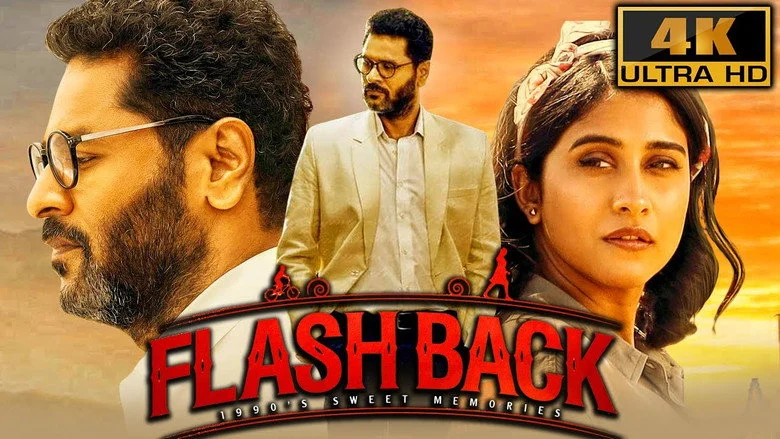
  • Flashback (2026): Don Sandy’s honest craft elevates a tight, culturally-rooted premise.

    Flashback (2026): Don Sandy’s honest craft elevates a tight, culturally-rooted premise.

    Flashback (2026) arrives on April 30, 2026 with fewer promises than most Tamil Comedy, Romance, Action releases and keeps more of them. Don Sandy and Abhishek Pictures have made a 109 minutes film that earns its craft credentials rather than assuming them.

    A 7 out of 10 from the audience is, in this case, a more meaningful figure than it might appear. Flashback is not a film engineered for mass satisfaction. That it achieves 7 out of 10 while maintaining its creative integrity is the more interesting data point.

    Flashback

    What Flashback Says and How It Chooses to Say It

    Don Sandy has written Flashback around A premise that announces itself clearly with a structural clarity that Don Sandy honours rather than complicates. The result is a film whose intentions are legible throughout — which does not make it simple, but does make it honest.

    The decision to film Flashback in India is not a production convenience — it is an argument. Don Sandy’s screenplay is written from the inside of a specific cultural context, and the crores that Abhishek Pictures committed ensures Don Sandy could honour that context rather than merely approximate it.

    Flashback is a tighter film for roughly two thirds of its runtime than the final act allows. The looseness that enters in the closing sequences is a screenwriting problem more than a directorial one — Don Sandy has loaded the third act with material that competes rather than converges.

    Flashback (2026): Who in the Cast Earns Their Place

    Prabhu Deva‘s work as a character in Flashback is the kind of screen acting that critics tend to undervalue because it does not offer obvious handles. There is no moment of theatrical release, no scene that announces itself as the performance’s centre. The centre is everywhere, consistently.

    The relationship between Prabhu Deva‘s central performance and the ensemble of Anasuya Bharadwaj, Regina Cassandra, Prabhu Deva, Ram Karthik in Flashback is the relationship between a soloist and an orchestra that has learned not to overplay. The balance is Don Sandy‘s achievement, and it holds across the full runtime of Flashback.

    It would be a critical failure to assess Flashback without accounting for Anasuya Bharadwaj, Regina Cassandra, whose performance in the film’s middle section is its most emotionally complex passage. Prabhu, Regina, Anasuya, Ram, Aryan brings a different kind of complexity to their scenes — more structural than emotional — and Flashback needs both.

    Critical Assessment of Flashback’s Filmmaking

    The production of Flashback under Don Sandy for Abhishek Pictures reflects a creative process in which the crores allocation followed the film’s requirements rather than preceded them. This is, unfortunately, rarer than it should be in the Tamil Romance space — and the film’s technical quality is the direct result.

    The editing of Flashback by San Lokesh at 1 hr 49 mins demonstrates what editorial intelligence looks like in service of a director who has made clear decisions. The rhythm is Don Sandy‘s — San Lokesh has found and sustained it, which is the editor’s proper function and the most demanding version of it.

    The visual argument of Flashback is made consistently and with conviction. Don Sandy has developed a cinematographic language for Flashback that is specific to its story and setting — the India locations are not photographed for their beauty but for their meaning, which is the correct critical priority.

    Final Critical Assessment — Flashback by Don Sandy

    The commercial reception of Flashback — 4.548 on the popularity index — confirms what the critical case for the film suggests: that Don Sandy and Abhishek Pictures have made something that functions simultaneously as serious cinema and accessible entertainment. That achievement is rarer than either alone.

    1000+ audience votes and 7+ Stars. The mathematics are clear. Flashback has produced a consistent experience across a very large and diverse audience — which is the only audience verdict that a critic should treat as meaningful evidence about the film’s actual quality.

    Flashback merits a considered recommendation. Not an unqualified one — the third act has been addressed — but a considered one, based on 1h 49m of filmmaking that takes its audience seriously and Prabhu Deva‘s performance of the kind that makes a film worth revisiting.

    The critical record continues — find more films at this level of craft in our Tamil review index.

    [egp_related_silo genre=’Romance’ lang=’Tamil’]
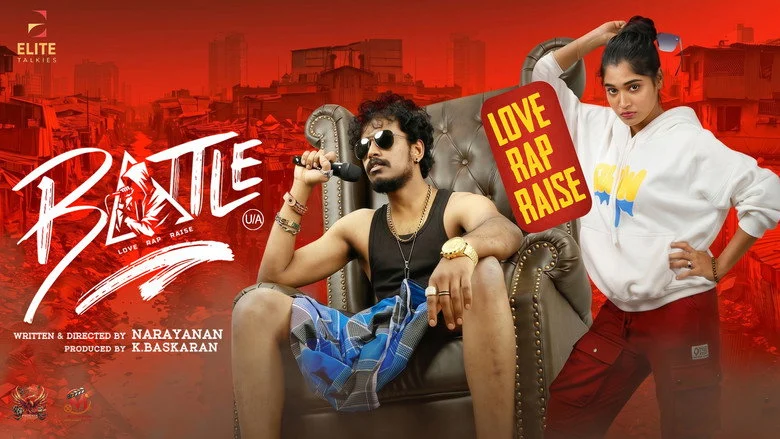
  • Battle (2026): Narayanan’s disciplined direction elevates a familiar drama premise.

    Battle (2026): Narayanan’s disciplined direction elevates a familiar drama premise.

    The Tamil Drama, Romance film has a persistent problem with ambition outrunning execution. Battle (2026), directed by Narayanan for Elite Talkies, is not that film. Released April 24, 2026 at 125 minutes, it is disciplined where the genre is usually indulgent — and the difference is considerable.

    That 7 out of 10 on Battle is the score of a film that chose its audience correctly and served them honestly. In a field where ratings are frequently manufactured by opening weekend enthusiasm, a settled score built over time carries considerably more critical weight.

    Battle

    The Story Battle (2026) Is Telling — And How Well It Tells It

    The screenplay by Narayanan builds Battle around Born mute until the age of ten, a boy rises to fame… — a premise that functions on its surface as a Drama mechanism and beneath it as something more considered. Narayanan is alert to both registers and directs with an awareness of the distance between them.

    The decision to film Battle in India is not a production convenience — it is an argument. Narayanan’s screenplay is written from the inside of a specific cultural context, and the crores that Elite Talkies committed ensures Narayanan could honour that context rather than merely approximate it.

    The structural weakness of Battle is localised in its final act, where Narayanan’s script accumulates more than it resolves. Narayanan manages the excess with skill — the film does not collapse — but a more rigorous edit would have clarified what the narrative is ultimately arguing.

    The Performances That Make Battle Credible

    The critical question about any central performance is whether it earns the film’s trust in it. Arjun Anbudan‘s portrayal of Rapper Mani in Battle answers that question affirmatively from the first scene and does not revise that answer once across the full 125 minutes runtime.

    The supporting cast — Arjun Anbudan, Aradhya, Munishkanth, Subramaniam Siva among them — has been directed by Narayanan with a clarity of expectation that produces uniformly credible work. These are not performances competing for attention. They are performances understanding their function within a larger design and executing it without ego.

    demonstrates in Battle what supporting performance looks like when an actor refuses to treat secondary status as a creative limitation. The role is not the film’s largest. The work done within it is among the film’s most exacting. Arjun, Aradhya, Subramaniam, Munishkanth, Saravana meets the same standard through different means.

    Production, Direction, and the Limits of Both in Battle

    Narayanan directs Battle from a position of creative authority that the crores production from Elite Talkies reinforces rather than creates. The money is in service of a vision, not a substitute for one — a distinction that most Tamil Drama productions at this budget level fail to make.

    K. Kaamesh cuts Battle to 2 hr 5 mins with a precision that the film earns through the quality of its material. The editing is not decorative — it is argumentative, making claims about the film’s rhythm and pacing that the direction supports. The third act is the one place where those claims become harder to sustain.

    What distinguishes the technical achievement of Battle from merely competent filmmaking is the relationship between its visual choices and its thematic ones. Narayanan has made a film in India that looks like what it means — which is the most demanding standard in Tamil Drama cinema and the one that Battle meets.

    Reception, Evaluation, and Recommendation — Battle (2026)

    Popularity at 0.939 for Battle is a market signal worth reading carefully. It suggests the film has found viewers beyond its natural critical constituency — which means Narayanan has made something that works at both the craft and entertainment level without compromising either.

    The 7+ Stars from 1000+ audience reviews constitutes the clearest available evidence that Battle has succeeded on its own terms. Not the terms of the market, not the terms of the genre — the terms that Narayanan established for this film specifically.

    The critical recommendation for Battle is unambiguous: watch it, and watch it with the attention that Narayanan‘s direction and Arjun Anbudan‘s performance deserve. 2h 5m of serious Tamil Romance, Drama filmmaking at this level is not available every season.

    The critical record continues — explore our critical catalogue of Tamil releases from 2026.

    [egp_related_silo genre=’Drama’ lang=’Tamil’]
  • Ginny Wedss Sunny 2 (2026): Prashant Jha’s narrative discipline elevates a familiar comedy.

    Ginny Wedss Sunny 2 (2026): Prashant Jha’s narrative discipline elevates a familiar comedy.

    Critical fatigue with the Hindi Comedy form is understandable. What Prashant Jha has made in Ginny Wedss Sunny 2 (2026) is the argument against that fatigue. Produced by Soundrya Production, Zee Studios at 134 minutes and released April 24, 2026, it demonstrates what the genre looks like when a filmmaker treats it as a vehicle for something real.

    That 7 out of 10 on Ginny Wedss Sunny 2 is the score of a film that chose its audience correctly and served them honestly. In a field where ratings are frequently manufactured by opening weekend enthusiasm, a settled score built over time carries considerably more critical weight.

    Ginny Wedss Sunny 2

    Narrative Discipline and Its Limits in Ginny Wedss Sunny 2

    The screenplay by Prashant Jha builds Ginny Wedss Sunny 2 around A mismatched pair, with a storyline involving a wrestler and a vibrant… — a premise that functions on its surface as a Comedy mechanism and beneath it as something more considered. Prashant Jha is alert to both registers and directs with an awareness of the distance between them.

    Produced across India at crores, Ginny Wedss Sunny 2 carries the authority of genuine location. This matters because Prashant Jha’s script makes demands of its setting that a studio approximation could not meet. Prashant Jha and Soundrya Production, Zee Studios understood that, and the film is stronger for the decision.

    Ginny Wedss Sunny 2 is a tighter film for roughly two thirds of its runtime than the final act allows. The looseness that enters in the closing sequences is a screenwriting problem more than a directorial one — Prashant Jha has loaded the third act with material that competes rather than converges.

    Cast Assessment — Ginny Wedss Sunny 2: Rigorous and Fair

    The central performance from Avinash Tiwary as Sunny is the element of Ginny Wedss Sunny 2 that most resists easy summary. It is a performance of sustained intelligence — not intelligence announced, but intelligence demonstrated, scene by scene, in choices that accumulate rather than declare.

    The supporting architecture of Ginny Wedss Sunny 2 — inhabited by Govind Namdeo, Avinash Tiwary, Lillete Dubey, Medha Shankr — is the work of a director who casts against the assumption that supporting roles are less important than central ones. Prashant Jha has clearly not made that assumption, and the film’s credibility depends on the result.

    The supporting contributions of Medha Shankr, Lillete Dubey in Ginny Wedss Sunny 2 represent the film at its most precisely observed. Their scenes carry a weight that the screenplay describes in outline and the performance fills in completely. Avinash, Medha, Govind, Lillete, Vishwanath operates with comparable precision in a different register — the supporting cast as a whole does not have a weak point.

    Directorial Method and Technical Achievement in Ginny Wedss Sunny 2

    Prashant Jha has brought to Ginny Wedss Sunny 2 a formal sensibility that the crores production from Soundrya Production, Zee Studios makes visible but does not explain. The choices are directorial, not budgetary — which is the correct hierarchy and the one that most commercial productions invert.

    The editorial work of Bunty Nagi on Ginny Wedss Sunny 2 at 2 hours 14 minutes reflects a collaboration with Prashant Jha that has produced a cut of real quality across most of the film’s duration. The final act is where the editing is working hardest and achieving least — a disproportion that a more severe pass might have corrected.

    What distinguishes the technical achievement of Ginny Wedss Sunny 2 from merely competent filmmaking is the relationship between its visual choices and its thematic ones. Prashant Jha has made a film in India that looks like what it means — which is the most demanding standard in Hindi Comedy cinema and the one that Ginny Wedss Sunny 2 meets.

    Assessing Ginny Wedss Sunny 2: Where It Stands in the Hindi Comedy Field

    A popularity index of 1.3323 for a Hindi Comedy film of Ginny Wedss Sunny 2’s ambition is the kind of figure that should provoke a reassessment of assumptions about what this audience will and will not support. Prashant Jha has not made a compromise — and the market has not punished the refusal.

    The audience has provided Ginny Wedss Sunny 2 with 1000+ ratings averaging 7+ Stars. The critical question is not whether this score is deserved — it is — but what it tells us about the current state of Hindi Comedy audience expectation. The answer is encouraging.

    Ginny Wedss Sunny 2 is the kind of Hindi Romance, Drama, Comedy film that reminds you why the form matters when it is practiced well. Prashant Jha has made something that will hold up to repeated viewing and continued critical attention. At 2h 14m, the investment is justified. The recommendation stands.

    The critical record continues — find more films at this level of craft in our Hindi review index.

    [egp_related_silo genre=’Comedy’ lang=’Hindi’]
  • The Worst He Can Say Is. (2026): Ajay Krishnan Vijayan’s restrained 6-minute comedy crafts a gem.

    The Worst He Can Say Is. (2026): Ajay Krishnan Vijayan’s restrained 6-minute comedy crafts a gem.

    Ajay Krishnan Vijayan has made The Worst He Can Say Is. (2026) with the economy of a filmmaker who knows that restraint is harder to achieve than spectacle. At 6 minutes, this English Comedy, Romance production from Kerala Kattan arrived on April 9, 2026 and made the case that the form still has something to say.

    A 8 out of 10 from the audience is, in this case, a more meaningful figure than it might appear. The Worst He Can Say Is. is not a film engineered for mass satisfaction. That it achieves 8 out of 10 while maintaining its creative integrity is the more interesting data point.

    The Worst He Can Say Is.

    Plot and Intention: What The Worst He Can Say Is. Is Attempting

    The premise of The Worst He Can Say Is. — “The Worst He Can Say Is” follows two friends, Anand and Devan,… — has been used before. What Ajay Krishnan Vijayan’s script and Ajay Krishnan Vijayan‘s direction contribute is a specific treatment of that premise that is observably theirs rather than generic. That specificity is what separates the film from its antecedents.

    The India setting of The Worst He Can Say Is. is not pictorial — it is argumentative. Ajay Krishnan Vijayan has written a story that means something different because of where it happens, and Ajay Krishnan Vijayan films the crores production with the awareness that the location is doing narrative work, not just visual work.

    A more severe editor than Ajay Krishnan Vijayan might have found twenty minutes in The Worst He Can Say Is.’s final act that the film would be better without. What exists is not without merit — but the distinction between what is present and what is necessary becomes harder to sustain as the film approaches its conclusion.

    The Performances That Make The Worst He Can Say Is. Credible

    The critical question about any central performance is whether it earns the film’s trust in it. Dhiya Pothen‘s portrayal of Meera in The Worst He Can Say Is. answers that question affirmatively from the first scene and does not revise that answer once across the full 6 minutes runtime.

    The relationship between Dhiya Pothen‘s central performance and the ensemble of Abhiram V, Kurian Mathew, Issac Mathew, Dhiya Pothen in The Worst He Can Say Is. is the relationship between a soloist and an orchestra that has learned not to overplay. The balance is Ajay Krishnan Vijayan‘s achievement, and it holds across the full runtime of The Worst He Can Say Is..

    It would be a critical failure to assess The Worst He Can Say Is. without accounting for , whose performance in the film’s middle section is its most emotionally complex passage. Dhiya, Abhiram, Kurian, Issac brings a different kind of complexity to their scenes — more structural than emotional — and The Worst He Can Say Is. needs both.

    Direction, Editing, and Visual Intelligence in The Worst He Can Say Is. (2026)

    The production of The Worst He Can Say Is. under Ajay Krishnan Vijayan for Kerala Kattan reflects a creative process in which the crores allocation followed the film’s requirements rather than preceded them. This is, unfortunately, rarer than it should be in the English Romance space — and the film’s technical quality is the direct result.

    Ajay Krishnan Vijayan cuts The Worst He Can Say Is. to 6 mins with a precision that the film earns through the quality of its material. The editing is not decorative — it is argumentative, making claims about the film’s rhythm and pacing that the direction supports. The third act is the one place where those claims become harder to sustain.

    What distinguishes the technical achievement of The Worst He Can Say Is. from merely competent filmmaking is the relationship between its visual choices and its thematic ones. Ajay Krishnan Vijayan has made a film in India that looks like what it means — which is the most demanding standard in English Romance cinema and the one that The Worst He Can Say Is. meets.

    Reception, Evaluation, and Recommendation — The Worst He Can Say Is. (2026)

    The commercial reception of The Worst He Can Say Is. — 0.0286 on the popularity index — confirms what the critical case for the film suggests: that Ajay Krishnan Vijayan and Kerala Kattan have made something that functions simultaneously as serious cinema and accessible entertainment. That achievement is rarer than either alone.

    1 audience votes and 8+ Stars. The mathematics are clear. The Worst He Can Say Is. has produced a consistent experience across a very large and diverse audience — which is the only audience verdict that a critic should treat as meaningful evidence about the film’s actual quality.

    The Worst He Can Say Is. is, on critical balance, one of the better English Comedy, Romance films of its season. Its limitations are real and have been noted. Its achievements — formal, performative, and thematic — are more substantial and less common. At 6m, it warrants the attention it asks for.

    The critical record continues — read our full critical coverage of English Romance cinema.

    [egp_related_silo genre=’Romance’ lang=’English’]
  • Inkosari – Chapter 1 : Rewind (2026): Rugved Chandra’s disciplined narrative rewards patient romance fans.

    Inkosari – Chapter 1 : Rewind (2026): Rugved Chandra’s disciplined narrative rewards patient romance fans.

    Rugved Chandra has made Inkosari – Chapter 1 : Rewind (2026) with the economy of a filmmaker who knows that restraint is harder to achieve than spectacle. At 38 minutes, this Telugu Romance, Fantasy, Comedy production from ExpressoFilms arrived on March 30, 2026 and made the case that the form still has something to say.

    That 7 out of 10 on Inkosari – Chapter 1 : Rewind is the score of a film that chose its audience correctly and served them honestly. In a field where ratings are frequently manufactured by opening weekend enthusiasm, a settled score built over time carries considerably more critical weight.

    Inkosari - Chapter 1 : Rewind

    Narrative Discipline and Its Limits in Inkosari – Chapter 1 : Rewind

    The first act of Inkosari – Chapter 1 : Rewind establishes INKOSARI follows the journey of Shashank, a man haunted by the shadows… with the economy of a Rugved Chandra, Shashank Kundavaram script that knows its own purpose. There is no throat-clearing, no unnecessary scene-setting — Rugved Chandra is in the material from the first frame, and the film benefits from that directness.

    Rugved Chandra, Shashank Kundavaram’s script for Inkosari – Chapter 1 : Rewind is built around a sense of place — — that the crores investment from ExpressoFilms allows Rugved Chandra to realise properly. Films that underinvest in their settings ask their audiences to overlook the gap. Inkosari – Chapter 1 : Rewind does not ask that.

    Rugved Chandra, Shashank Kundavaram has written a conclusion for Inkosari – Chapter 1 : Rewind that reaches for more than the 38 minutes runtime can fully accommodate. Rugved Chandra executes it with care, but care cannot substitute for the structural discipline the final act lacks. The film arrives at its destination — the route is longer than necessary.

    Performance Under Scrutiny: The Cast of Inkosari – Chapter 1 : Rewind

    The central performance from Shashank Kundavaram as Shashank / Shashi is the element of Inkosari – Chapter 1 : Rewind that most resists easy summary. It is a performance of sustained intelligence — not intelligence announced, but intelligence demonstrated, scene by scene, in choices that accumulate rather than declare.

    What Meghana, Danish Bukkapatanam, Rugved Chandra, Shashank Kundavaram bring to Inkosari – Chapter 1 : Rewind is the collective quality that distinguishes a cast from a group of actors: they appear to inhabit the same world. The coherence of the ensemble in Inkosari – Chapter 1 : Rewind is not accidental — it is the result of direction that prioritised the world over the individual performance.

    The supporting contributions of in Inkosari – Chapter 1 : Rewind represent the film at its most precisely observed. Their scenes carry a weight that the screenplay describes in outline and the performance fills in completely. Shashank, Rugved, Meghana, Danish, Kaparthi operates with comparable precision in a different register — the supporting cast as a whole does not have a weak point.

    Production, Direction, and the Limits of Both in Inkosari – Chapter 1 : Rewind

    Rugved Chandra has made Inkosari – Chapter 1 : Rewind as though the crores were a tool rather than a mandate. The ExpressoFilms production funding appears to have been given with genuine creative latitude, and Rugved Chandra has used that latitude to make decisions that serve the film rather than the investment.

    The editing of Inkosari – Chapter 1 : Rewind by Rugved Chandra at 38 mins demonstrates what editorial intelligence looks like in service of a director who has made clear decisions. The rhythm is Rugved Chandra‘s — Rugved Chandra has found and sustained it, which is the editor’s proper function and the most demanding version of it.

    The technical coherence of Inkosari – Chapter 1 : Rewind across its 38m runtime reflects a production in which every department received the same creative brief and interpreted it faithfully. The result is a film that does not read as assembled but as conceived — which is the standard all serious Telugu Romance cinema should aspire to.

    Final Critical Assessment — Inkosari – Chapter 1 : Rewind by Rugved Chandra

    Inkosari – Chapter 1 : Rewind has accumulated a popularity score of 0.0256 — a figure that a critic should resist treating as either validation or irrelevance. The more useful observation is that a film of this formal ambition reaching 0.0256 suggests the Telugu Romance audience is more sophisticated than the market often assumes.

    With 1000+ responses producing 7+ Stars, Inkosari – Chapter 1 : Rewind occupies a critical position that its directorial ambition alone would not guarantee. The audience has independently arrived at the assessment that the film merits — which suggests that quality, when it is present, continues to be recognised.

    Inkosari – Chapter 1 : Rewind merits a considered recommendation. Not an unqualified one — the third act has been addressed — but a considered one, based on 38m of filmmaking that takes its audience seriously and Shashank Kundavaram‘s performance of the kind that makes a film worth revisiting.

    The critical record continues — return to our homepage for rigorous Romance film criticism.

    [egp_related_silo genre=’Romance’ lang=’Telugu’]
  • Unseen Moves: A story of trust (2026): Director Unknown crafts a restrained, trust-driven thriller that resonates.

    Unseen Moves: A story of trust (2026): Director Unknown crafts a restrained, trust-driven thriller that resonates.

    has made Unseen Moves: A story of trust (2026) with the economy of a filmmaker who knows that restraint is harder to achieve than spectacle. At 10 minutes, this Hindi Romance, Thriller, Mystery production from Camroll Films arrived on March 6, 2026 and made the case that the form still has something to say.

    The 7 out of 10 audience score is worth contextualising. It reflects a large number of viewers who arrived with mainstream expectations and found a film that exceeded them — which is the most useful kind of positive reception a serious Hindi Thriller film can generate.

    Unseen Moves: A story of trust

    What Unseen Moves: A story of trust Says and How It Chooses to Say It

    The premise of Unseen Moves: A story of trust — When Harsh falls for Tanya in an intense online romance, their love… — has been used before. What Unknown’s script and ‘s direction contribute is a specific treatment of that premise that is observably theirs rather than generic. That specificity is what separates the film from its antecedents.

    The crores production across India gives Unseen Moves: A story of trust a specificity that is essential to what Unknown is writing about. treats this specificity as a responsibility rather than an asset — the film does not display its locations, it inhabits them.

    A more severe editor than Unknown might have found twenty minutes in Unseen Moves: A story of trust’s final act that the film would be better without. What exists is not without merit — but the distinction between what is present and what is necessary becomes harder to sustain as the film approaches its conclusion.

    Acting in Unseen Moves: A story of trust (2026): What Holds and What Does Not

    The critical question about any central performance is whether it earns the film’s trust in it. Vasu Goud‘s portrayal of Rudra in Unseen Moves: A story of trust answers that question affirmatively from the first scene and does not revise that answer once across the full 10 minutes runtime.

    Sneha Rajput, Vasu Goud, Naitik Agrawal, Prince Naneriya give Unseen Moves: A story of trust the kind of supporting performances that the film’s central argument requires — specific, grounded, and free of the self-consciousness that afflicts actors who know they are being watched. has created the conditions for unselfconscious work and the cast has delivered it.

    The supporting contributions of in Unseen Moves: A story of trust represent the film at its most precisely observed. Their scenes carry a weight that the screenplay describes in outline and the performance fills in completely. Vasu, Prince, Sneha, Naitik operates with comparable precision in a different register — the supporting cast as a whole does not have a weak point.

    Critical Assessment of Unseen Moves: A story of trust’s Filmmaking

    has brought to Unseen Moves: A story of trust a formal sensibility that the crores production from Camroll Films makes visible but does not explain. The choices are directorial, not budgetary — which is the correct hierarchy and the one that most commercial productions invert.

    Unknown assembles Unseen Moves: A story of trust at 10 minutes with the editorial maturity that the film’s tonal ambitions require. The cut does not hurry what needs time and does not linger where the scene has concluded — a discipline that holds throughout Unseen Moves: A story of trust with only the final act offering grounds for critical reservation.

    The visual argument of Unseen Moves: A story of trust is made consistently and with conviction. has developed a cinematographic language for Unseen Moves: A story of trust that is specific to its story and setting — the India locations are not photographed for their beauty but for their meaning, which is the correct critical priority.

    Final Critical Assessment — Unseen Moves: A story of trust by

    The commercial reception of Unseen Moves: A story of trust — 0.1679 on the popularity index — confirms what the critical case for the film suggests: that and Camroll Films have made something that functions simultaneously as serious cinema and accessible entertainment. That achievement is rarer than either alone.

    Across 1000+ logged responses, Unseen Moves: A story of trust holds 7+ Stars — a figure that has not eroded as the audience has widened beyond the film’s initial constituency. This stability is the critical signal that matters: the film’s quality does not depend on who is watching it.

    Unseen Moves: A story of trust is the kind of Hindi Romance, Thriller, Mystery film that reminds you why the form matters when it is practiced well. has made something that will hold up to repeated viewing and continued critical attention. At 10m, the investment is justified. The recommendation stands.

    The critical record continues — return to our homepage for rigorous Thriller film criticism.

    [egp_related_silo genre=’Thriller’ lang=’Hindi’]
  • Na Jaane Kaun Aa Gaya (2026): Vikas Arora’s ambitious romance rewards patient viewers.

    Na Jaane Kaun Aa Gaya (2026): Vikas Arora’s ambitious romance rewards patient viewers.

    There is a version of Na Jaane Kaun Aa Gaya that Vikas Arora could have made — the safe version, the version that Unknown might have preferred, the version that fills 113 minutes without demanding anything of anyone. That is not the film released on March 6, 2026. The film released on March 6, 2026 is the better one.

    Na Jaane Kaun Aa Gaya holds 7 out of 10 across platforms, which for a film of its formal ambition is a strong result. Audience scoring systems do not typically reward restraint — the fact that Na Jaane Kaun Aa Gaya scores this well while exercising it suggests the film has genuine cross-audience appeal.

    Na Jaane Kaun Aa Gaya

    What Na Jaane Kaun Aa Gaya Says and How It Chooses to Say It

    The screenplay by Vikas Arora, Amal Singh builds Na Jaane Kaun Aa Gaya around A love triangle. From Kaushal’s breaking world to Tina’s silent emotional conflict… — a premise that functions on its surface as a Romance mechanism and beneath it as something more considered. Vikas Arora is alert to both registers and directs with an awareness of the distance between them.

    The India setting of Na Jaane Kaun Aa Gaya is not pictorial — it is argumentative. Vikas Arora, Amal Singh has written a story that means something different because of where it happens, and Vikas Arora films the crores production with the awareness that the location is doing narrative work, not just visual work.

    Vikas Arora, Amal Singh has written a conclusion for Na Jaane Kaun Aa Gaya that reaches for more than the 113 minutes runtime can fully accommodate. Vikas Arora executes it with care, but care cannot substitute for the structural discipline the final act lacks. The film arrives at its destination — the route is longer than necessary.

    The Performances That Make Na Jaane Kaun Aa Gaya Credible

    The central performance from Jatin Sarna as Kaushal is the element of Na Jaane Kaun Aa Gaya that most resists easy summary. It is a performance of sustained intelligence — not intelligence announced, but intelligence demonstrated, scene by scene, in choices that accumulate rather than declare.

    The supporting architecture of Na Jaane Kaun Aa Gaya — inhabited by Madhurima Roy, Pranay Pachauri, Jatin Sarna — is the work of a director who casts against the assumption that supporting roles are less important than central ones. Vikas Arora has clearly not made that assumption, and the film’s credibility depends on the result.

    The performances of Madhurima Roy and Jatin, Madhurima, Pranay in Na Jaane Kaun Aa Gaya are built on the principle that supporting roles in a well-directed film do not exist in isolation from its larger design. Both actors appear to understand the design they are supporting — which is precisely what makes their contributions to Na Jaane Kaun Aa Gaya valuable.

    How Vikas Arora Has Solved the Technical Problems of Na Jaane Kaun Aa Gaya

    The production of Na Jaane Kaun Aa Gaya under Vikas Arora for Unknown reflects a creative process in which the crores allocation followed the film’s requirements rather than preceded them. This is, unfortunately, rarer than it should be in the Hindi Romance space — and the film’s technical quality is the direct result.

    Unknown cuts Na Jaane Kaun Aa Gaya to 1 hr 53 mins with a precision that the film earns through the quality of its material. The editing is not decorative — it is argumentative, making claims about the film’s rhythm and pacing that the direction supports. The third act is the one place where those claims become harder to sustain.

    Vikas Arora has constructed the visual identity of Na Jaane Kaun Aa Gaya with the discipline of a filmmaker who understands that style without purpose is decoration. Every formal choice in Na Jaane Kaun Aa Gaya — the framing, the movement, the light — is answerable to the film’s larger intentions.

    Assessing Na Jaane Kaun Aa Gaya: Where It Stands in the Hindi Romance Field

    A popularity index of 0.0623 for a Hindi Romance film of Na Jaane Kaun Aa Gaya’s ambition is the kind of figure that should provoke a reassessment of assumptions about what this audience will and will not support. Vikas Arora has not made a compromise — and the market has not punished the refusal.

    1000+ audience votes and 7+ Stars. The mathematics are clear. Na Jaane Kaun Aa Gaya has produced a consistent experience across a very large and diverse audience — which is the only audience verdict that a critic should treat as meaningful evidence about the film’s actual quality.

    The critical recommendation for Na Jaane Kaun Aa Gaya is unambiguous: watch it, and watch it with the attention that Vikas Arora‘s direction and Jatin Sarna‘s performance deserve. 1h 53m of serious Hindi Romance, Drama filmmaking at this level is not available every season.

    The critical record continues — see all Romance films from Unknown we have assessed.

    [egp_related_silo genre=’Romance’ lang=’Hindi’]
  • Therincha Kadhalinga (2026): Gajendran Mayandithevar’s disciplined romance rewards patient viewers

    Therincha Kadhalinga (2026): Gajendran Mayandithevar’s disciplined romance rewards patient viewers

    It is worth being precise about what Therincha Kadhalinga (2026) is and is not. It is a 132 minutes Tamil Romance, Drama film from Gajendran Mayandithevar and Agri Land Films, released February 13, 2026. It is not a perfect film. It is, however, a seriously made one — which in the current Tamil release landscape counts for considerably more.

    A 7 out of 10 from the audience is, in this case, a more meaningful figure than it might appear. Therincha Kadhalinga is not a film engineered for mass satisfaction. That it achieves 7 out of 10 while maintaining its creative integrity is the more interesting data point.

    Therincha Kadhalinga

    Narrative Discipline and Its Limits in Therincha Kadhalinga

    Gajendran Mayandithevar situates Therincha Kadhalinga in Karthi falls in love with a village girl named Pechi,and brings her… with a restraint that announces the film’s priorities early. This is not a screenplay interested in exploitation. It is interested in consequence — and Gajendran Mayandithevar follows that interest throughout the 132 minutes runtime without flinching.

    The India setting of Therincha Kadhalinga is not pictorial — it is argumentative. Gajendran Mayandithevar has written a story that means something different because of where it happens, and Gajendran Mayandithevar films the crores production with the awareness that the location is doing narrative work, not just visual work.

    Therincha Kadhalinga is a tighter film for roughly two thirds of its runtime than the final act allows. The looseness that enters in the closing sequences is a screenwriting problem more than a directorial one — Gajendran Mayandithevar has loaded the third act with material that competes rather than converges.

    From Kiran T Joseph Down: A Critical Account of Therincha Kadhalinga’s Performances

    Kiran T Joseph brings to a character in Therincha Kadhalinga a quality that the screenplay points toward but cannot guarantee: interiority. The character’s inner life is visible without being stated, communicated through an accumulation of small choices that a less disciplined actor would not have made and most audiences will not consciously notice.

    Vipin Aruchamy, Kiran T Joseph, Ajanya Ramachandran, Shadulpran Shaji operate in the supporting register of Therincha Kadhalinga with the discipline of a cast that has been given a coherent brief and followed it. The ensemble does not introduce tonal inconsistency at any point — which, given the number of individual performances that comprise it, is a significant directorial achievement.

    The supporting contributions of in Therincha Kadhalinga represent the film at its most precisely observed. Their scenes carry a weight that the screenplay describes in outline and the performance fills in completely. Kiran, Vipin, Shadulpran, Ajanya operates with comparable precision in a different register — the supporting cast as a whole does not have a weak point.

    Direction, Editing, and Visual Intelligence in Therincha Kadhalinga (2026)

    The technical achievement of Therincha Kadhalinga begins with the relationship between Gajendran Mayandithevar and the crores that Agri Land Films committed to the production. That relationship — of filmmaker leading and resources following — is what gives Therincha Kadhalinga its coherence.

    The editorial work of Vibin Reji on Therincha Kadhalinga at 2 hours 12 minutes reflects a collaboration with Gajendran Mayandithevar that has produced a cut of real quality across most of the film’s duration. The final act is where the editing is working hardest and achieving least — a disproportion that a more severe pass might have corrected.

    Therincha Kadhalinga has been photographed with the understanding that cinematography in Romance cinema is not embellishment — it is argument. Every compositional decision Gajendran Mayandithevar makes in Therincha Kadhalinga has a relationship to what the film is saying, not just to what it is showing.

    Therincha Kadhalinga (2026): A Critic’s Final Account

    The 0.1086 score on Therincha Kadhalinga deserves neither critical dismissal nor uncritical celebration. What it indicates is that a film made with genuine intention has reached a genuinely large audience — and that those viewers have responded to the intention as well as the entertainment.

    Across 1000+ logged responses, Therincha Kadhalinga holds 7+ Stars — a figure that has not eroded as the audience has widened beyond the film’s initial constituency. This stability is the critical signal that matters: the film’s quality does not depend on who is watching it.

    Therincha Kadhalinga does not resolve all the problems it sets itself. What it does — with 2h 12m of carefully made Tamil Drama, Romance cinema — is demonstrate that Gajendran Mayandithevar is a filmmaker worth following and that the form itself still has critical territory worth exploring.

    The critical record continues — return to our homepage for rigorous Romance film criticism.

    [egp_related_silo genre=’Romance’ lang=’Tamil’]
  • The Heart Knows (2025) Movie Movies4u

    The Heart Knows (2025) Movie Movies4u

    The Heart Knows is Netflix’s latest Argentine romantic drama that premiered in 2025. This unique film brings viewers a blend of love, loss, and second chances that feels both fresh and familiar.

    Film Title:The Heart Knows
    Main Cast:Julieta Díaz, Peto Menahem, Benjamín Vicuña
    Film Duration:1h 29m
    Category:Romance, Drama
    Primary Star:Benjamín Vicuña
    Studio:Leyenda Films, Kuarzo Entertainment Argentina
    Premiere Date:May 30, 2025
    Filmmaker:Marcos Carnevale
    The Heart Knows

    Directed by Marcos Carnevale and produced by Sony Pictures, this film stars Benjamín Vicuña as Juan Manuel and Julieta Díaz as Valeria. The story explores the profound connections between hearts both literal and metaphorical.

    The Heart Knows Movie Actors

    ActorCharacter
    Veronica Hassan
    Javier De Nevares
    Julieta Díaz
    Peto Menahem
    Gloria Carrá
    Benjamín Vicuña
    Yayo Guridi
    Bicho Gómez
    Mariano Sayavedra
    Julia Calvo
    The Heart Knows
    The Heart Knows

    Plot and Storyline

    The story follows Juan Manuel, a cold-hearted businessman who receives a heart transplant from Pedro, a humble man. While investigating the origin of his donor, he meets Valeria, Pedro’s widow, and falls in love with her.

    The twist comes when Manuel conceals his identity while fighting to save Pedro’s neighborhood. He never reveals that Pedro’s heart beats in his chest, creating compelling moral and emotional tension throughout the film.

    Cast Performance

    Julieta Díaz’s performance as Valeria stands out as the film’s strongest element. She brings grace and compassion to a character that could easily have been relegated to a damsel in distress, creating a believable widow who is both vulnerable and strong.

    Benjamín Vicuña delivers a solid performance as the conflicted businessman undergoing transformation. His portrayal captures the internal struggle of a man trying to honor his donor while building a new life.

    Direction and Visual Style

    Marcos Carnevale’s direction takes a measured approach to this romantic drama. His understanding of local culture and community dynamics shows throughout the film, benefiting from authentic portrayals of Buenos Aires neighborhoods.

    The cinematography captures both the sterile world of Manuel’s business life and the warm community feeling. This visual contrast effectively emphasizes Manuel’s transformation between different worlds.

    My Take on the Film

    I found The Heart Knows to be emotionally sincere, though it has its challenges. The film works best when focusing on the central relationship and Manuel’s moral complexities. The movie made me tear up, which doesn’t happen often with romantic dramas.

    The unique premise exploring organ transplantation as a metaphor for human connection sets it apart from typical romance films. However, I noticed pacing issues that might test some viewers’ patience.

    Critical Reception and Ratings

    The film currently holds a 5.8/10 rating on IMDb, indicating mixed reception from audiences. Some professional critics scored it 2.5/5, describing it as a boring and forgettable romantic drama film with character development issues.

    Common Sense Media describes it as a moving Argentine drama with mature themes. The film handles its subject matter with appropriate seriousness, though this contributes to its somber tone.

    What Works

    The film’s strongest elements include Julieta Díaz’s powerful performance and the authentic community dynamics. The leads have great chemistry, making their relationship development engaging to watch.

    The emotional authenticity resonates with viewers who connect with themes of transformation and community. The film delivers moments of genuine emotional impact that feel earned rather than manipulative.

    Areas for Improvement

    Pacing issues represent the film’s biggest weakness, with some scenes feeling unnecessarily drawn out. The supporting characters could use more development beyond their basic functions in the story.

    I also noticed tonal inconsistency between the romantic elements and heavier dramatic themes. The film sometimes struggles to balance its different emotional registers effectively.

    Public Response

    Audience feedback shows appreciation for the film’s heart, with viewers enjoying the relationship development. Many describe it as an unexpected discovery that focuses on community unity and personal growth.

    International viewers through Netflix’s platform have responded positively to the emotional core, though some cultural specificity may limit broader appeal.

    Final Verdict

    The Heart Knows succeeds as an emotionally sincere exploration of love and redemption. While it suffers from pacing issues and some underdeveloped elements, the film’s unique premise and authentic emotional core make it worthwhile.

    I recommend this film for viewers who appreciate character-driven romantic dramas with serious themes. It works best when focusing on the central relationship and moral complexities of the situation.

    The movie reminds us that love stories can emerge from unexpected circumstances. Despite its flaws, it delivers genuine emotional resonance that will appeal to those seeking meaningful romantic content on Netflix.

  • Bhool Chuk Maaf (2025) Movie Movies4u

    Bhool Chuk Maaf (2025) Movie Movies4u

    Bhool Chuk Maaf directed by Karan Sharma hit theaters on May 23, 2025. This comedy-fantasy-romance stars Rajkummar Rao and Wamiqa Gabbi with Sanjay Mishra and Raghubir Yadav in supporting roles. The film marks Sharma’s second collaboration with Maddock Films and Rao’s sixth project with the production house.

    Film Title:Bhool Chuk Maaf
    Main Cast:Raghubir Yadav, Rajkummar Rao, Wamiqa Gabbi
    Film Duration:2h 1m
    Category:Romance, Science Fiction, Comedy
    Primary Star:Rajkummar Rao
    Studio:Maddock Films, Amazon MGM Studios
    Premiere Date:May 23, 2025
    Filmmaker:Karan Shrikant Sharma
    Bhool Chuk Maaf

    Set in Banaras, the story follows Ranjan, a small-town romantic who lands a government job to marry Titli. When he forgets his vow to Lord Shiva, he gets trapped in a time loop until he fulfills his promise.

    Bhool Chuk Maaf Movie Actors

    ActorCharacter
    Ishtiyak KhanKishan
    Rajkummar RaoRanjan
    Raghubir YadavRaghunath
    Dhanashree VermaJugni
    Wamiqa GabbiTitli Mishra
    Zakir HussainBrijmohan
    Seema PahwaRamawati
    Anubha FatehpuriaAnandi
    Sanjay MishraBhagwan Das
    Poornima SharmaSweety
    Bhool Chuk Maaf
    Bhool Chuk Maaf
    Bhool Chuk Maaf

    Plot and Story

    The film centers around Ranjan’s struggle to break free from the repetitive cycle. Each loop presents new challenges as he tries to win Titli and honor his commitment to Lord Shiva.

    The Banaras setting adds cultural richness to the narrative. However, the 121-minute runtime feels stretched, with repetitive sequences becoming tiresome rather than entertaining.

    Cast Performance

    Rajkummar Rao delivers his trademark charm as Ranjan. His comic timing and authentic portrayal of small-town characters shine through, though even his strong performance cannot fully elevate the material.

    Wamiqa Gabbi brings energy to Titli’s role but remains limited by the script. The chemistry between the leads works well despite character development constraints.

    Sanjay Mishra and Raghubir Yadav provide reliable comic support. Their veteran presence adds authenticity to the small-town atmosphere, though their talents feel underused.

    Direction and Technical Quality

    Director Karan Sharma attempts to blend comedy with fantasy elements. The cinematography captures Banaras beautifully with authentic locations and cultural details.

    The production design successfully creates a genuine small-town feel. However, editing issues make the film feel longer than necessary, with pacing problems affecting the overall experience.

    Critical Reception and Ratings

    The film received mixed to negative reviews from critics. IMDb rates it 6.0/10, showing polarized audience reception.

    India Today gave 1.5/5 stars, criticizing outdated concepts and missed opportunities for progressive storytelling. Film critic Sumit Kadel also awarded 1.5/5 stars.

    Rotten Tomatoes called it a decent time-loop comedy that doesn’t fully utilize its concept but works as light entertainment.

    What I Liked

    I found Rajkummar Rao’s performance genuinely engaging. His natural comic timing makes Ranjan likeable despite the character’s flaws. The authentic Banaras setting creates a believable backdrop that grounds the fantastical elements.

    The supporting cast chemistry works well, creating a convincing community atmosphere. The film’s attempt to blend traditional storytelling with modern concepts shows ambition.

    What Could Be Better

    The repetitive structure becomes the film’s biggest weakness. I felt the time-loop concept had much more potential that remained unexplored.

    Character development, especially for Wamiqa Gabbi’s role, feels limited. The 121-minute runtime drags with unnecessary sequences that test patience.

    The film relies on outdated humor and stereotypes instead of exploring deeper philosophical implications of its premise.

    Box Office Performance

    Despite critical reception, the film earned ₹70.35 crores in its first 20 days. This shows audiences found appeal in the small-town story and Rao’s star power, highlighting the gap between critical and popular reception.

    Public Reviews

    Social media reactions remain divided. Some viewers appreciated the small-town portrayal and compared it favorably to films like Bareilly Ki Barfi. However, others called it disappointing, with harsh criticism about wasted potential.

    The film’s 6.0 IMDb rating reflects this mixed response, with audiences split between those who enjoyed the cultural authenticity and those who expected more from the innovative concept.

    Final Verdict

    Bhool Chuk Maaf represents a missed opportunity with its unique premise. While Rajkummar Rao’s performance and cultural authenticity provide entertainment value, the film fails to fully realize its time-loop concept potential.

    I’d recommend it to fans of small-town comedies who don’t mind slower pacing. However, those expecting clever, tightly-crafted storytelling might find it disappointing.

    The film earns points for ambitious concept and strong lead performance but loses marks for repetitive structure and pacing issues.

    Rating: 2.5/5

  • Retro (2025) Movie Movies4u

    Retro (2025) Movie Movies4u

    Retro brings together director Karthik Subbaraj and superstar Suriya in their first collaboration. This romantic action thriller marks Suriya’s 44th film and was produced by Stone Bench Creations and 2D Entertainment. The film hit theaters on May 1, 2025, creating significant buzz in Indian cinema.

    Film Title:Retro
    Main Cast:Suriya, Joju George, Pooja Hegde
    Film Duration:2h 42m
    Category:Romance, Action, Crime
    Primary Star:Suriya
    Studio:2D Entertainment, Stone Bench Creations
    Premiere Date:April 30, 2025
    Filmmaker:Karthik Subbaraj
    Retro

    The story follows Paarivel Paari Kannan, an orphan raised by a gangster who faces betrayal and violence. The film features Pooja Hegde as the female lead, alongside Jayaram, Joju George, Nasser, and Prakash Raj. The technical team includes music by Santhosh Narayanan and cinematography by Shreyaas Krishna.

    Retro Movie Actors

    ActorCharacter
    Jayaram‘Chaplin’ Lolly
    SingampuliRukmini’s Father
    NassarRajavel Mirasu
    SwasikaSandhya
    Vidhu‘King’ Michael Mirasu
    Prakash RajDharmendran
    Joju GeorgeThilagam
    Sujith SankarFreddie Milton
    SuriyaJada Muni / Paarivel Kannan
    Pooja HegdeRukmani
    Retro
    Retro
    Retro

    Plot and Storyline

    The narrative follows a non-linear approach, segmenting the story across different phases of Paari’s life. The film attempts to merge a gritty gangster tale with a love story, though neither arc feels fully developed. The plot revolves around Paari’s internal conflict between his violent past and desire for peace.

    The central premise involves a gangster trying to avoid violence after vowing to his wife. However, the film falters in balancing its emotional depth, never fully committing to exploring the conflict between love and violence.

    Cast Performances

    Suriya delivers what many consider a powerful comeback performance after a brief hiatus. He carries the film on his shoulders, shining in emotional moments and transitioning effortlessly into action sequences. His portrayal of Paari showcases both vulnerability and intensity.

    Pooja Hegde receives praise for her career-best performance. She brings depth and authenticity to Rukmini, forming the emotional backbone with her chemistry with Suriya. The supporting cast, especially Joju George and Jayaram, provides solid backing to the narrative.

    Direction and Technical Aspects

    Karthik Subbaraj’s direction showcases his signature style, emphasizing visual flair and technical excellence. The film offers stylish action but lacks freshness in story execution. The director prioritizes style over substance, creating stunning visuals that don’t always serve the narrative.

    The production values are solid and the film looks visually polished. The cinematography captures the retro aesthetic beautifully, with particular praise for night seashore sequences. The music by Santhosh Narayanan receives widespread acclaim, especially the Kannima song.

    My Review Experience

    I found the first half engaging with its focus on character development and romance. The emotional moments between Suriya and Pooja felt genuine and well-crafted. However, the second half disappointed me with its convoluted approach to action sequences.

    The technical brilliance is undeniable – the mirror scenes and single-shot sequences are impressive. But I couldn’t shake the feeling that the film prioritizes spectacle over storytelling. The length becomes apparent, and I found myself checking the time during certain segments.

    Critical Reception and Ratings

    Retro holds a 6.9 rating on IMDb, indicating mixed reception from audiences. The film has generated polarizing reviews, with critics praising technical aspects while criticizing narrative execution. Some critics rated it 2/5, describing it as clumsy and confusing.

    User reviews express frustration, with some calling it poorly directed. However, early reviews were highly positive, describing it as a thriller with top-notch performance. This disparity reflects the film’s uneven execution.

    What Works

    Suriya’s commanding performance stands out as the film’s biggest strength. The technical highlights including mirror scenes and the Kannima song are impressive. The production values and visual aesthetics create a polished viewing experience.

    The background score enhances dramatic moments effectively. The art direction and action choreography show professional craftsmanship throughout.

    What Could Be Better

    The story lacks emotional depth despite attempts to merge genres. Pacing issues particularly affect the second half experience. The narrative structure becomes confusing and affects overall coherence.

    I felt the film’s length could have been trimmed for better impact. Character development for supporting cast members needed more attention.

    Box Office Performance

    The film achieved the highest sale rate ever for a Tamil film in the year. Booking sites crashed due to high traffic, demonstrating massive anticipation. Netflix acquired streaming rights for a record price of ₹80 crore.

    The film began streaming on Netflix from May 30, 2025, extending its global reach.

    Final Verdict

    Retro stands as a technically proficient film that showcases visual storytelling and Suriya’s acting prowess. While it creates moments of genuine impact and stunning sequences, it struggles with narrative coherence and pacing.

    For Suriya fans and those who appreciate stylized filmmaking, it offers entertainment value despite flaws. However, viewers seeking tightly woven narratives might find themselves disappointed. The film represents both potential and pitfalls of contemporary Tamil cinema’s emphasis on style over substance.

  • Thandel (2025) Movie Movies4u

    Thandel (2025) Movie Movies4u

    Thandel, the 2025 Telugu romantic drama, brings together Naga and Sai Pallavi for their second collaboration after the successful Love Story. Directed by Chandoo, this film combines love, patriotism, and survival drama in a unique way. The movie tells the story of Indian fishermen who accidentally crossed into Pakistani waters, turning a simple fishing trip into a tale of human strength and love.

    Film Title:Thandel
    Main Cast:Sundip Ved, Sai Pallavi, Naga Chaitanya Akkineni
    Film Duration:2h 32m
    Category:Action, Drama, Romance
    Primary Star:Naga Chaitanya Akkineni
    Studio:Geetha Arts
    Premiere Date:February 7, 2025
    Filmmaker:Chandoo Mondeti
    Thandel

    Released on February 7, 2025, Thandel falls under action, adventure, and romance genres. The film features music by Devi Sri Prasad, cinematography by Shamdat Sainudeen, and is produced under the Geetha Arts banner. With its story based on real events and the proven chemistry between its lead actors, Thandel has created significant buzz in Telugu cinema and aims for a pan-Indian release.

    Thandel Movie Actors

    ActorCharacter
    Prakash Belawadi
    Mahesh Achanta
    Kalpalatha
    Karunakaran
    Naga Chaitanya AkkineniRaju
    Parvateesam
    Sundip Ved
    Sai PallaviSatya
    Divya PillaiChandra
    Babloo Prithiveeraj
    Thandel
    Thandel
    Thandel

    Plot and Storyline

    The story revolves around Raju (Naga Chaitanya), a fisherman from Srikakulam, who is deeply in love with Satya (Sai Pallavi). The film shows their beautiful romance while building the coastal setting that forms the story’s foundation. Satya worries about the dangers of Raju’s profession and asks him to find safer work.

    However, Raju’s dedication to fishing leads him to ignore her concerns. The story takes a dramatic turn when Raju goes on what seems like a routine fishing trip but accidentally drifts into Pakistani waters, where he gets arrested. This changes the film from a simple love story into a gripping survival drama with patriotic elements that tests their love.

    Cast Performance

    Naga Chaitanya as Raju

    Naga Chaitanya delivers what I consider one of his finest performances as Thandel Raju. After facing some career challenges with previous films, this role gives him the perfect chance to show his acting skills. His transformation into a fisherman feels genuine, with great attention to body language, dialect, and the rough authenticity needed for the role.

    I was particularly impressed by his emotional depth in showing a man torn between love and duty. His performance in the intense scenes, especially those in Pakistani custody, shows his growth as an actor.

    Sai Pallavi as Satya

    Sai Pallavi once again proves why she’s one of the most talented actresses in Indian cinema today. Her portrayal of Satya brings both strength and vulnerability to the character. I found her emotional range, especially in scenes dealing with separation and worry, to be deeply moving.

    Her dance sequences are visual treats that showcase her exceptional skills while staying important to the story. The chemistry between Naga Chaitanya and Sai Pallavi remains one of the film’s strongest points.

    Direction and Technical Aspects

    Chandoo Mondeti’s Direction

    Director Chandoo Mondeti has created a film that tries to balance multiple genres while keeping the story coherent. His focus on emotional truth over commercial tricks has mixed results but shows his understanding of character development.

    However, I noticed that the second half suffers from pacing issues. The challenge of balancing romance with survival drama and patriotic themes creates some problems that stop the film from reaching its full potential.

    Cinematography and Music

    Shamdat Sainudeen’s cinematography beautifully captures coastal life and a fisherman’s harsh realities. The visuals effectively contrast the sea’s beauty with its dangers, creating a perfect backdrop for the story.

    Devi Sri Prasad’s music stands out as one of the film’s strongest elements. The soundtrack blends romantic songs with patriotic themes, creating an emotional journey that enhances the storytelling.

    Critical Reception and Reviews

    The film has received mixed to positive reviews from critics. Most praise the lead performances and technical aspects while critiquing some story choices. Critics agree that while Thandel works as an emotional love story, it struggles to fully achieve its goals due to second-half pacing issues.

    IMDb Rating shows 6.6/10, indicating generally positive audience reception. Popular review sites have rated the film between 3-3.5 out of 5 stars, with most highlighting the emotional content and performances while noting story inconsistencies.

    Box Office Performance

    Thandel has shown strong commercial success, grossing over ₹100 crores worldwide and becoming the fifth highest-grossing Telugu film of 2025. The film’s success reflects positive audience response to its emotional content and star power.

    The movie performed particularly well in overseas markets, with international viewers appreciating the universal themes of love and sacrifice.

    What I Liked

    Genuine Performances

    The film’s biggest strength lies in the real performances by its lead actors. Both stars have deeply invested in their characters, creating believable portrayals that form the story’s heart.

    Emotional Connect

    I was moved by how the movie creates an emotional bond with audiences through its portrayal of love, separation, and hope. The genuine emotions throughout the film leave a lasting impact.

    Technical Quality

    The cinematography, music, and production values show high standards that improve the storytelling experience. The coastal life visuals and musical score both add significantly to the film’s appeal.

    Real-Life Connection

    The fact that true events inspire the story adds authenticity that lifts it beyond typical romantic dramas. This reality connection makes the struggles more meaningful.

    What Could Be Better

    Second Half Issues

    I found pacing problems in the film’s second half, where the story loses some initial energy. Better editing could have fixed these concerns.

    Genre Balance

    While the film tries to blend romance, action, and patriotism, the balance could be more refined. Some patriotic elements feel forced rather than naturally woven into the love story.

    Supporting Characters

    The supporting cast, while adequate, could have been given more depth to create a richer story environment around the central romance.

    Public Response

    The public has responded largely positively to Thandel, with audiences connecting particularly with the emotional aspects. Social media reactions highlight the film’s ability to create genuine emotions, with many praising the lead actors’ chemistry.

    The movie has found success among family audiences and romantic drama fans who appreciate emotional storytelling over commercial elements. Many viewers have reported watching it multiple times, showing its lasting emotional appeal.

    Final Verdict

    Thandel succeeds primarily on its emotional core and committed lead performances. While it may not achieve perfection in story structure, it delivers a genuinely moving experience that connects with audiences emotionally.

    The film reminds us of authentic storytelling’s power in creating meaningful cinema. Despite its flaws, Thandel offers enough emotional rewards to justify watching, especially for those who enjoy character-driven romantic dramas with social relevance.

    For Naga Chaitanya, this represents a successful comeback, while Sai Pallavi continues to prove her reliability as a performer. Together, they create a cinematic experience that touches the heart despite being imperfect.

    I recommend Thandel for viewers who enjoy emotionally rich romantic dramas and can overlook some story issues for genuine performances and heartfelt storytelling. The film’s commercial success shows it has successfully connected with its audience and delivered an engaging love story based on real-life inspiration.

    My Rating: 3.5/5 stars

  • Your Fault (2024) Movie Movies4u

    Your Fault (2024) Movie Movies4u

    Your Fault is a 2024 Spanish romantic drama film directed by Domingo González based on the Culpables series by Mercedes Ron. The film stars Nicole Wallace and Gabriel Guevara as the lead characters. It serves as the direct sequel to My Fault (2023), continuing the passionate love story between Noah and Nick that captivated viewers worldwide.

    Film Title:Your Fault
    Main Cast:Gabriel Guevara, Nicole Wallace, Marta Hazas
    Film Duration:1h 58m
    Category:Drama, Romance
    Primary Star:Nicole Wallace
    Studio:Pokeepsie Films, Amazon MGM Studios
    Premiere Date:December 26, 2024
    Filmmaker:Domingo González
    Your Fault

    The film features the returning leads Nicole Wallace as Noah and Gabriel Guevara as Nick, alongside supporting cast members Marta Hazas and Iván Sánchez. Based on the second book in Mercedes Ron’s bestselling Culpables trilogy, the movie maintains the visual style and emotional intensity that made the original such a streaming success.

    Your Fault Movie Actors

    ActorCharacter
    Gabriela AndradaSofía
    Alex BejarBriar
    Nicole WallaceNoah Morgan
    Marta HazasRafaela
    Víctor VaronaLion
    Goya ToledoAnabel
    Eva RuizJenna
    Javier MorgadeMichael
    Iván SánchezWilliam Leister
    Gabriel GuevaraNick Leister
    Your Fault
    Your Fault
    Your Fault

    Plot and Storyline

    The love between Noah and Nick seems strong despite their parents’ attempts to separate them. However, Nick’s new job and Noah’s college life open doors to new relationships that threaten their bond. The sequel picks up where the first film ended, with both characters facing fresh challenges that test their commitment.

    This time, the film explores trust and jealousy in greater depth. Noah is now a college student, while Nick begins working at his father’s law firm. The separation creates new dynamics in their relationship, introducing potential romantic rivals and real-world obstacles.

    Cast Performance

    Nicole Wallace returns as Noah, delivering a performance that shows her character’s growth from rebellious teenager to young woman. I found her portrayal particularly strong in scenes where Noah deals with jealousy about Nick’s new work environment. Her emotional range has clearly improved since the first film.

    Gabriel Guevara reprises his role as Nick, balancing his character’s romantic devotion with professional ambitions. I appreciated how Guevara shows Nick’s struggle to prove he’s changed from his reckless past. The chemistry between Wallace and Guevara remains the film’s strongest asset.

    The supporting cast provides solid performances that enhance the family drama elements. New characters, particularly potential romantic rivals, add layers to existing dynamics and create natural sources of conflict.
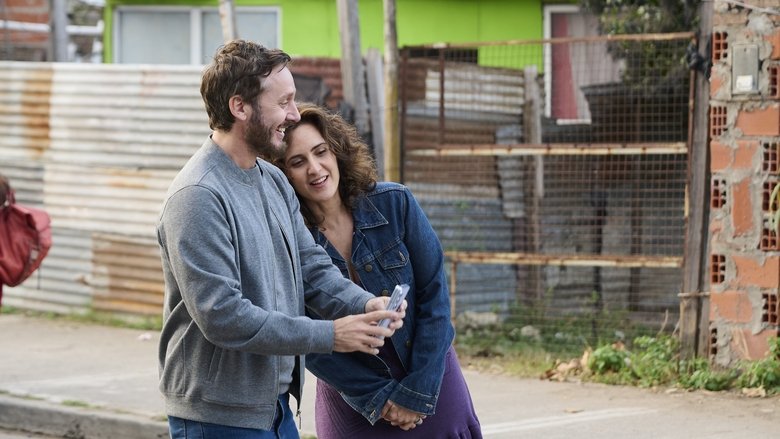
    Direction and Visual Style

    Domingo González returns as director, bringing consistency to the visual style established in the first film. His direction maintains the lush, romantic atmosphere fans expect while incorporating new locations like college campuses and law offices. I noticed the production values show clear improvement over the original.

    The cinematography captures both intimate romantic moments and broader family drama effectively. The visual style emphasizes emotional intensity while maintaining the polished, contemporary look that appeals to the target audience.

    Critical Reception

    The film currently holds a 5.2 rating on IMDb, indicating mixed reception from general audiences. Critics noted that while the cast is stunning and locations breathtaking, the film feels like a collection of young adult romance tropes. Despite mixed reviews, the movie has found streaming success on Prime Video.

    Common Sense Media and family review sites noted the film’s mature themes, including drinking and sexual content. The movie maintains the same content warnings as its predecessor, making it suitable for older teen and adult audiences.
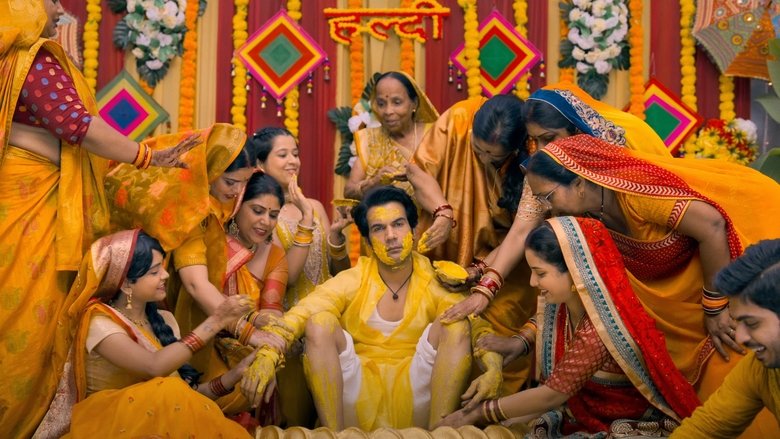
    What Works Well

    I found several elements that work effectively in this sequel. The chemistry between lead actors remains compelling, with both showing growth in their performances. The production values represent clear improvement, with better cinematography and visual storytelling than the original.

    The exploration of more mature themes feels natural for characters who have grown since the first film. College and professional settings provide fresh backdrops that prevent the sequel from feeling repetitive. The emotional core of Noah and Nick’s relationship stays strong throughout.

    Areas for Improvement

    While the film shows improvement, it still faces challenges from its predecessor. The adherence to romance tropes may limit appeal beyond the target demographic. Some plot developments feel predictable, following familiar patterns from similar films and books.

    I felt the runtime could benefit from tighter editing, particularly in the middle section where some scenes feel drawn out. The balance between romantic drama and family conflict occasionally feels uneven, with some subplots receiving insufficient development.

    Streaming Performance

    The film has achieved streaming success despite mixed reviews, demonstrating the strong fan base for this franchise. Public response has been generally positive among fans of the book series and original film. Social media reaction has been particularly enthusiastic among young adult viewers.

    The movie’s success across multiple countries suggests the appeal extends beyond Spanish audiences, finding international viewers who connect with universal themes of young love and family drama.

    Final Verdict

    Your Fault serves as a competent sequel that will satisfy fans while showing modest improvements in production quality. While it may not break new ground in young adult romance, it delivers the emotional intensity and drama audiences expect from this franchise.

    I found the film succeeds in advancing the central relationship while introducing challenges appropriate for character growth. The performances from lead actors show development, and production values represent a clear step up from the first film.

    For viewers who enjoyed My Fault, this sequel provides satisfying continuation of Noah and Nick’s story. While it may not convert genre skeptics, it offers enough improvement and emotional payoff to justify its existence. The movie effectively sets up potential future films while providing a complete story arc for this chapter.

    Your Fault stands as a solid entry in the young adult romance genre, offering passionate romance and family drama while showing enough growth to suggest positive direction for future franchise installments.