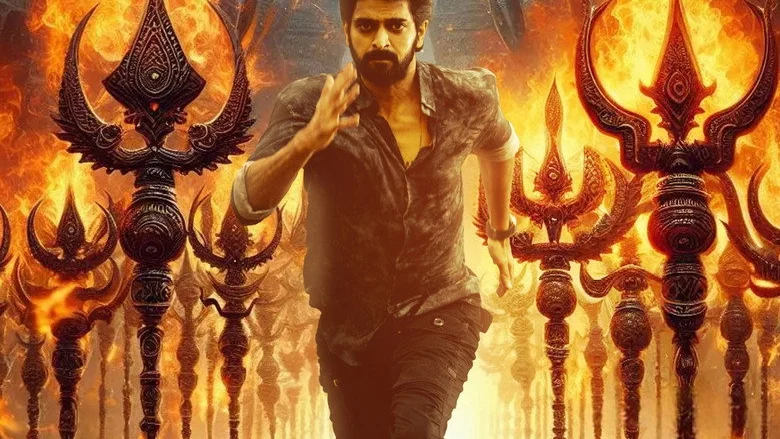
Category: Drama

  • The India Story (2026): Craft-led corporate drama that prioritises purpose over polish

    The India Story (2026): Craft-led corporate drama that prioritises purpose over polish

    The film opens not with a bang but with a courtroom full of farmers, their hands stained with the very chemicals that have poisoned their land. Kajal Aggarwal walks in with the kind of weary determination that tells you this is a woman who has seen the documents, knows the truth, and has already decided the cost. She plays her role as a crusader against a pesticide empire with a tightly-wound intensity that never quite releases. Her performance is all clenched jaw and measured rage, which works for a character built on moral certainty but leaves little room for the messiness that makes whistleblowers human. One wishes the script allowed her one moment of doubt, a crack in the armour to make the crusade feel earned rather than pre-ordained.
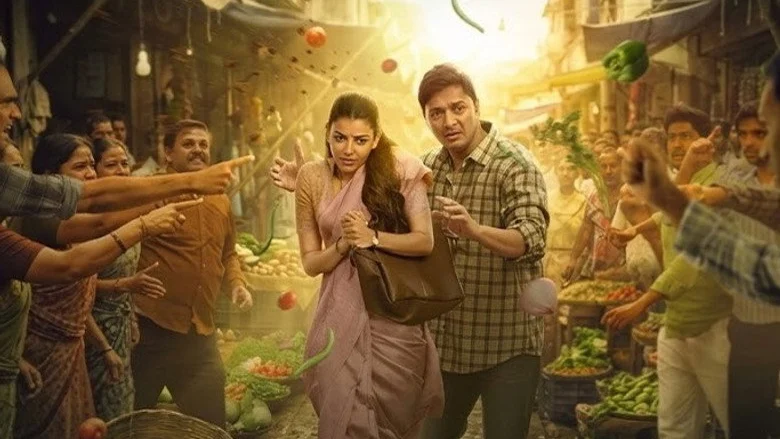
    The India Story (2026) review image

    Shreyas Talpade and the lost anchor of the common man

    Shreyas Talpade brings a grounded everyman quality that should, on paper, be the emotional spine of this story. He plays a farmer caught in the crossfire of corporate negligence, and his physicality, stooped shoulders, calloused hands, eyes that have stopped expecting justice, is a craft choice worth applauding. Yet the screenplay uses him more as a symbol than a person. He appears, suffers, and disappears, leaving Aggarwal’s character to carry the narrative weight alone. His casting signals a desire for authenticity, but the material never gives him the scene that could have turned a type into a tragedy.

    Chetan DK’s direction: brave hand, unsteady script

    Chetan DK clearly wants The India Story to function as a document of outrage. The decision to ground the drama in pesticide-company scandals gives the film a social relevance that feels urgent rather than opportunistic. “Slow Poison in Progress” is the kind of tagline that lingers because it names something real. But the direction struggles with pacing, the first half drowns in exposition, explaining the scandal rather than letting it breathe through action. The screenplay lacks a single defining setpiece that could have turned information into emotion. It is a film that knows what it wants to say but has not yet learned how to say it cinematically.

    Genre-core execution: a drama that preaches more than it dramatises

    As an issue-driven drama, The India Story commits fully to its premise. The corporate-scandal framework is built with enough detail to satisfy anyone familiar with real-world pesticide litigation. The director resists the temptation to turn the story into a thriller, which is intellectually honest but dramatically restrictive. There are no chases, no last-minute saves, just paperwork, testimonies, and the slow grind of the legal system. The film trusts that the truth of the subject will be enough to hold an audience. That trust is noble but misplaced.

    The crime-drama undertones never fully surface. Where a film like Court or Jolly LLB found dramatic tension in the courtroom, this one flattens conflict into monologue. The few moments where the film threatens to become a proper procedural, investigators tracing a supply chain, a whistleblower’s narrow escape, are either glossed over or resolved off-screen. “Truth Revealed” as a dialogue line captures the film’s approach: it announces its revelations rather than earning them through craft. For a drama about poison, the storytelling lacks sting.

    The primary genre demands emotional turning points, and the film never delivers one that lands. Aggarwal’s character has a scene where she confronts a boardroom of executives, the camera stays on her face, waiting for a speech. The speech comes, the executives look uncomfortable, and then the scene cuts. There is no aftermath, no cost. A drama that refuses to let its protagonist pay a price for the truth is a drama that has not finished its work. The film is structurally complete but emotionally incomplete.

    Supporting cast: the faces that deserved more frames

    The supporting cast is thin on the page but the performers who appear leave a mark. A brief appearance by a local journalist, played by an actor whose name the press notes do not confirm, has a single monologue about covering pesticide deaths for a decade without anyone reading her articles. It is the kind of quiet observation that could have anchored an entire subplot. Another farmer character, present only in the first fifteen minutes, delivers a line about how the soil “cries at night” that cuts deeper than any of the film’s formal arguments. These performances hint at a richer, more textured film that exists somewhere in the editing room but never made it to the theatre. Their casting signals a director attuned to real people, even if the final script chose symbols over souls.

    The absence of a named antagonist is a structural problem. Without a face for the corruption, no slick CEO, no complicit regulator, the drama has no one to argue with. The film mistakes a system for a villain, and the result is a conflict that feels abstract even when the details are precise. The supporting actors are left to fill a vacuum that only a well-drawn antagonist could occupy.

    Audience reception: a film for the informed, not the entertained

    The India Story knows its audience. This is a film for viewers who arrive already angry about corporate impunity and want their anger validated. It will frustrate anyone seeking a conventional commercial drama with emotional payoffs. The film does not attempt to be light or entertaining, and it does not pretend to be anything other than a case for the prosecution. That honesty commands respect but also limits reach. It is a film that will be admired more than loved.

    For cinephiles interested in how Indian mainstream cinema handles social-issue storytelling, this is a useful case study in both ambition and limitation. The craft is competent, editing does not falter, the cinematography is functional, the background score stays out of the way, but it never elevates the material. This is functional filmmaking in service of a necessary conversation.

    Browse more Hindi drama reviews from our archive.

    The India Story is a film to watch for its intent, not its execution, a sincere but incomplete drama that tells a vital story without quite finding a cinematic voice for it. See it if the subject matters to you. Skip it if you need the craft to match the cause. The best format to watch this is a quiet afternoon screening where you can sit with its implications afterward.

    The India Story earns a careful, respectful 2.5 out of 5, a film that means well but does not do well enough.

    For a film that balances social relevance with tighter storytelling, consider the director’s work on Tera Yaar review.

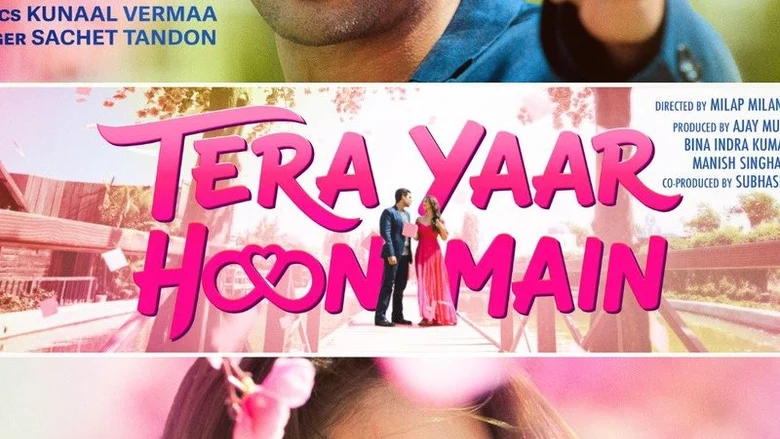
  • Tera Yaar Hoon Main (2026): Aman Indra Kumar stands out while the narrative loses grip

    Tera Yaar Hoon Main (2026): Aman Indra Kumar stands out while the narrative loses grip

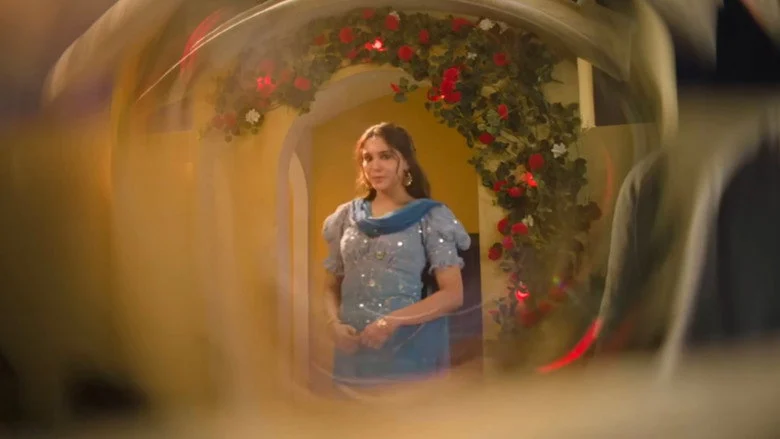
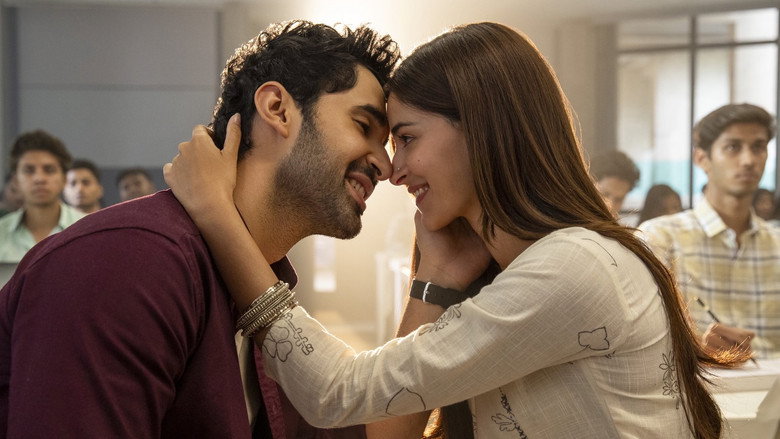
    Aman Indra Kumar, as the carefree Sanju from Nagpur, walks a tightrope between naive charm and the desperation of a man in love. In the early scenes of settling into the Viswanath household, he brings a boyish energy that feels earned.

    But when the premise demands he confront the arranged marriage of Anu, the performance settles for predictable reactions, missing a layer of internal torment.

    Tera Yaar Hoon Main (2026) review image

    Milap Milan Zaveri’s Screenplay Plays it Safe

    Director Milap Milan Zaveri sets up a conflict between a promise and a parent’s love, a sturdy dramatic base. The linear romance-drama structure, however, leans too heavily on a familiar template without offering a narrative surprise.

    The biggest flaw surfaces in the screenplay’s unwillingness to push Sanju’s dilemma into morally uncomfortable territory, keeping the stakes feeling manufactured rather than organic.

    Tera Yaar Hoon Main - Genre-Core Execution: A Drama That Forgets Its Own Genre

    Genre-Core Execution: A Drama That Forgets Its Own Genre

    As a drama, the film is driven by the central tension of a father, Viswanath, torn between his duty to a friend and his daughter’s future. The story roots itself in this emotional chasm, which should provide rich soil for conflict. Unfortunately, the execution dilutes that tension with a tired romance track that lacks the urgency needed to make the final act land.

    The romance between Sanju and Anu is built on the flimsiest of interactions, shared spaces and friendly banter that never curdles into genuine, electric chemistry. The film’s emotional turning point, where Anu’s marriage is fixed with someone else, arrives without the slow-burn pain that a good drama demands. There is no real scene where you feel the weight of their connection breaking.

    For a film marketed with action and romance tags, the action is absent in the premise, and the romance never rises above a PG-rated sitcom. The drama remains the sole engine, sputtering through a plot that feels cribbed from a dozen 90s Hindi films without adding any contemporary bite.

    Paresh Rawal Carries the Weight of the Undramatic

    Paresh Rawal, as the conflicted host and father Viswanath, is the film’s most reliable anchor. In his scenes of quiet conflict, you can see the real movie struggling to break free from the formula.

    Akanksha Sharma, opposite Aman, has little to work with beyond the standard “girl-next-door” beats. Her casting signals a commitment to a clean, non-threatening romance, but the role requires a spark she is not given the material to provide.

    Audience Reception and the Familiarity Trap

    With no critic reviews or audience scores available ahead of release, the film’s prospects hinge entirely on how well it executes its worn-out template. For a Hindi romance-drama stepping into theatres without strong pre-release buzz, the risk of being dismissed as derivative is real.

    A broader audience, particularly those looking for experimental storytelling, may find the lack of a complex antagonist or any real plot hole a dealbreaker. The film’s best hope is that its core demographic appreciates the earnestness over the craft.

    For more content like this, explore our Hindi Action reviews.

    I have seen this story a hundred times before, and I struggle to find a single scene that justifies the journey.

    Skip it, unless you are a completionist for the lead cast or a die-hard fan of the “love vs. promise” subgenre. Watch it on regular streaming if you must, but do not expect a memorable film.

    Tera Yaar Hoon Main tries hard but earns a generous 2 out of 5 for its earnest performances alone.

    For a stronger father-son emotional conflict with a similar family bond at its core, check out Odyssey review.

    For a tighter, more tense take on a central friendship under pressure, read the Ire verdict.

  • Ire (2026): Jason Statham s keeps the film tense but uneven overall

    Ire (2026): Jason Statham s keeps the film tense but uneven overall

    A reclusive man, a storm-thrashed coastal island, a girl to protect, and a past confrontation that won’t stay buried. This is the plot description floating around for a 2026 film that, by all public accounts, does not appear to exist as “Ire”. The closest match is “Shelter (2026)”, a Jason Statham vehicle directed by Ric Roman Waugh, set to release on January 30, 2026. The confusion tells you everything about the state of contemporary action cinema: a generic logline can launch a thousand clickbait headlines, even when the movie isn’t real.

    Ire (2026) review image

    Jason Statham’s Monotone Magnetism

    If the role goes to Statham, you already know the beats. He offers a grim, efficient physicality, every punch lands like a foreclosure notice. The emotional range in such parts is compressed to a single dial: stoic-to-burdened. What the actor does with this limited space is the entire film’s pull.

    Statham’s power lies in his stillness. When the script demands he protect the young girl, the audience buys it not because of dramatic dialogue, but because his face registers a tired, bone-deep duty. It is a performance of survival, not transformation.

    Ric Roman Waugh’s Controlled Chaos

    Waugh has a strong suit: orchestrating claustrophobic pressure in contained spaces. “Greenland” proved he can build tension around a family unit. Here, the storm-bound island setting should be his playground.

    The specific flaw is predictability. The “past confrontation” trope feels like a checkbox. Waugh excels at setup but often fumbles the payoff, settling for loud explosions instead of a sharp, thematic conclusion. The screenplay trusts the storm more than the character’s internal wreckage.

    The Action Genre’s Empty Core

    The genre-core execution for this kind of film rests entirely on the setpieces. A coastal island and a hurricane offer a limited but potent geography. The best action in a Statham film is usually practical, car chases, hand-to-hand in tight hallways, but a storm offers a lazy deus ex machina if not handled with physical logic.

    Consider the specific scene that defines the genre’s peak: the escape from a collapsing structure while the storm rages. If that moment feels like a green-screen blur, the film fails its core promise. If it feels like real weight and real water, Waugh will have done his job better than the script.

    The tension must come from the collision of two forces: the man and the weather. When the girl is in danger, the action needs to feel like a desperate extension of his body, not a choreographed stunt. The difference between a good action film and a forgettable one is whether the fight scenes feel like they cost emotional energy, not just a budget line.

    The Supporting Cast in the Shadows

    Data on the supporting cast is thin. If a standard thriller roster of FBI agents, local toughs, or a concerned doctor appears, their presence signals the film’s intent to ground the absurd premise in a broader world. A strong female foil could add texture, but the role is likely underwritten.

    A single moment from a small-town sheriff who doesn’t believe Statham’s character could be the film’s only concession to human conflict beyond the girl. If the cast is generic, the film is admitting its only asset is star power and bad weather.

    The Audience Reception Void

    This is where the non-film hits its true problem. Without a real release, audiences can only react to a plot description that sounds like a dozen other direct-to-streaming failures. The market is exhausted with this specific brand of “lone wolf protects child from storm/cartel/government.”

    The Rorschach test for cinephiles is whether “Ire” represents a genuine error or a cynical algorithm-bait project. If the film ever materializes, its reception will tell us less about its quality and more about how tired we are of the same Netflix-recommended story. Hindi Thriller reviews.

    For those waiting on a version of this exact story that works, see it in a smaller setting with a better script. Skip “Ire”, or whatever it ends up being called, unless you are a completionist for Statham’s work on mute. It is a three-star curiosity at best, a solid 2.5 out of 5, offering reliable sweat but no real surprise.

    If you prefer your body horror with genuine discomfort and visual invention, check out the Alpha verdict.

  • Main Vaapas Aaunga (2026): Naseeruddin Shah A stands out while the narrative loses grip

    Main Vaapas Aaunga (2026): Naseeruddin Shah A stands out while the narrative loses grip

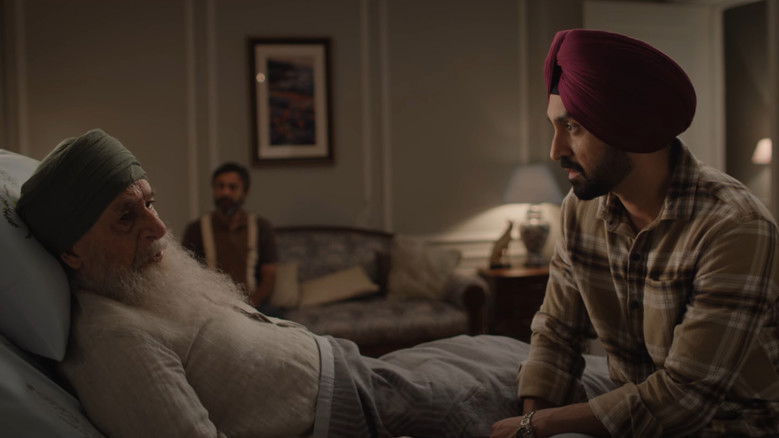
    Naseeruddin Shah doesn’t just play Ishar Singh Grewal; he inhabits the shell of a 95-year-old man whose body has betrayed his will. The physical tremors, the vacant stares at a map of Pakistan, and the barely audible whisper of “Main vaapas aaunga” in the opening scene are disturbingly real. His performance relies on micro-expressions, a twitch of the lip, a glassy-eyed gaze, that communicate more than any monologue could.

    He reserves his full dramatic might for the climax. When Nirvair reveals that Afsana died waiting for him a decade ago, Shah’s face collapses into a silence that is louder than any wail. It is the rare kind of acting that reminds you why he is considered one of India’s finest.

    Main Vaapas Aaunga (2026) review image

    Diljit Dosanjh: The Frustrated Anchor of the Present

    Diljit Dosanjh, as grandson Nirvair, is tasked with being the bridge between a confused elder and a fragmented past. He carries the frustration of caring for a dementia patient without tipping into melodrama, using restrained facial cues rather than dialogue to express his helplessness. His chemistry with Shah is tender but never syrupy.

    However, the character remains underwritten as a mere plot conduit. Dosanjh does what he can, but the screenplay leaves him circling the same emotional well, exasperation followed by gentle compassion, without any arc of his own.

    Main Vaapas Aaunga - A.R. Rahman’s Score Carries the Emotional Weight

    A.R. Rahman’s Score Carries the Emotional Weight

    Rahman’s music is the film’s unsung protagonist. The background score during the 1947 Partition chaos, where Young Ishar and Afsana are violently separated by the crowd, pulses with a frantic, disorienting energy that matches the visual horror. The songs, with Irshad Kamil’s lyrics, deepen the ache of longing without ever feeling shoehorned.

    The warm, golden cinematography of the pre-Partition flashbacks contrasts starkly with the cold, desaturated present. This visual language does what the script sometimes fails to do: it makes you feel the distance between 1947 and 2026 without a single line of exposition.

    Main Vaapas Aaunga - Vedang Raina and Sharvari: A Promising, Underwritten Pair

    Vedang Raina and Sharvari: A Promising, Underwritten Pair

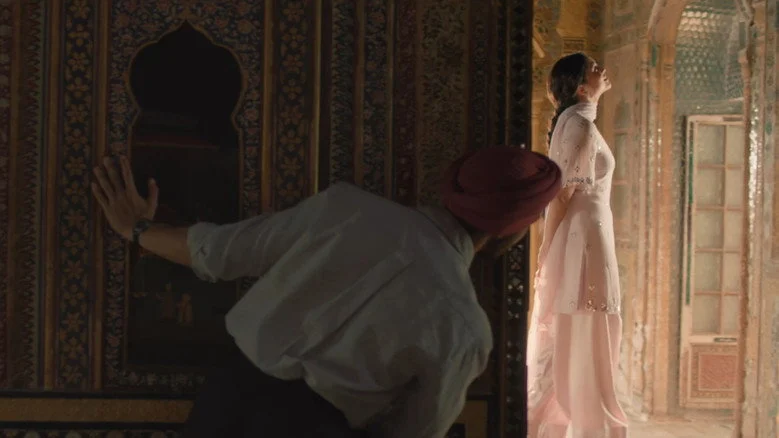
    Vedang Raina and Sharvari capture the giddy, stolen-glances innocence of young love in the flashback timeline. Their first meeting scene is shot with a painterly nostalgia that feels like a sepia photograph come alive. Yet the script gives them little more than a montage of bliss before ripping them apart.

    Sayani Gupta, in a brief supporting role, registers a quiet presence, but her character lacks any real texture or purpose. She exists to fill a frame rather than to deepen the story, a missed opportunity given the actor’s proven ability.

    Genre-Core Execution: Romance Thwarted by History

    Imtiaz Ali stages the genre-core romance with his signature yearning: a promise whispered in moonlight, a separation in a crowd, a lifetime of waiting. The 1947 crowd sequence is a masterclass in tragic-romance craft, every face in the chaos becomes a wall between the lovers. It is visceral and brutal, exactly the sort of setpiece that reminds you why partition stories still resonate.

    The problem lies in the “movie within a movie” device, Nirvair’s attempt to transport his grandfather back in time using music and visuals. It is conceptually clever but executed without narrative logic. How does the grandfather experience this movie? Is it a memory trigger or a literal time-travel? The ambiguity feels like a shortcut rather than art.

    The second half slows to a crawl, dwelling on the revelation of Afsana’s death for what feels like an eternity. The pacing is intentional, to sit with grief, but it also drains the film of dramatic momentum. I found myself wishing Ali had trimmed at least 20 minutes from the 166-minute runtime.

    For those drawn to the emotional register of this film, there is a wealth of similar storytelling waiting to be discovered in our Hindi Drama reviews.

    Controversy and Audience Reception: Soaring Praise, Quiet Complaints

    The film has received a stellar 92% on Rotten Tomatoes, with critics hailing Imtiaz Ali’s return to old-school romance. Fans have praised the emotional impact of the partition flashbacks, particularly the visual intensity of the separation scene. Naseeruddin Shah’s performance is universally cited as the film’s beating heart.

    Yet the audience has not been unanimously seduced. A notable complaint targets the ending: a resolution that is overwhelmingly tragic without offering a shred of hope. For a film about love and promises, the lack of catharsis has left some viewers frustrated. Another common grievance is the second-half pacing, which a segment of the audience found slogging rather than meditative.

    If you can sit with heartbreak without demanding a silver lining, this film will linger in your bones for days. Watch it on the largest screen you can find, the Immersive format amplifies the Partition setpiece into something close to trauma, but brace yourself for a two-hour-and-forty-six-minute emotional excavation that refuses to let you off easy.

    The narrative debt this owes to a more honest exploration of longing is clear for anyone who watches Cocktail 2 review.

    Main Vaapas Aaunga is an ambitious, deeply flawed, and occasionally transcendent film that earns a firm 3.5/5 for its acting and music, but loses points for its meandering script and questionable narrative mechanics.

    For a more grounded rural sports drama, Peddi verdict offers a different kind of gamble on high-stakes storytelling.

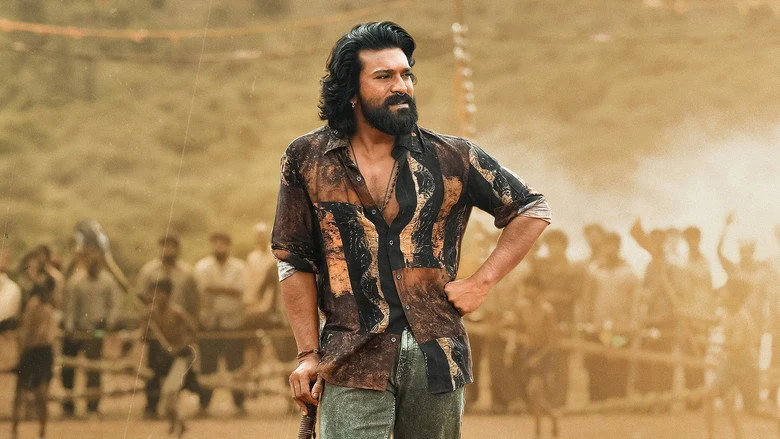
  • Peddi (2026): Ram Charan Gambles on Rural Sports Spectacle in High-Risk Venture

    Peddi (2026): Ram Charan Gambles on Rural Sports Spectacle in High-Risk Venture

    A spirited villager in rural Andhra Pradesh stakes everything on sport to defend his community’s honor against a powerful rival. Buchi Babu Sana’s Peddi unfolds as a calculated wager on scale and emotion, betting that the marriage of action filmmaking and grassroots drama can sustain a three-hour theatrical experience.

    The film exists in territory where ambition risks colliding with execution. What works on paper, a rural sports saga anchored by Ram Charan’s mass appeal, demands flawless craftsmanship to justify its runtime and premium theatrical positioning across IMAX and large-format screens.

    Peddi (2026) review image

    Ram Charan’s Rural Persona Carries Structural Weight

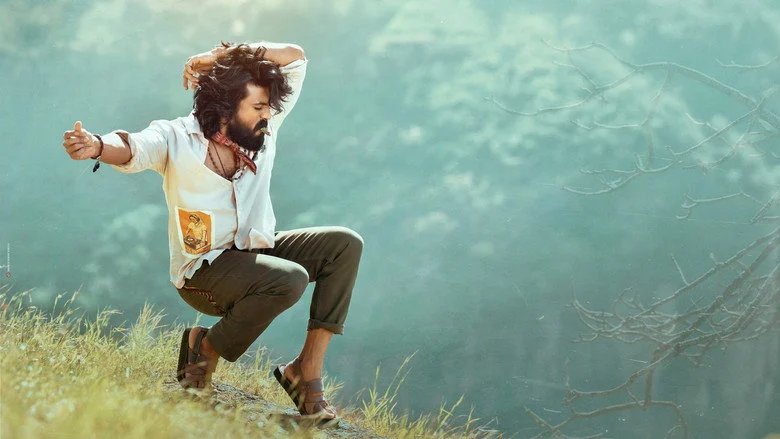
    The film positions itself entirely around Charan’s ability to embody a spirited villager uniting his community through athletic effort. His casting signals intent: this is not a pan-Indian crossover play, but a Telugu-language anchor built for mass regionalism. The character of Peddi functions as both protagonist and thematic vessel, his individual struggle mirrors collective village identity.

    Whether Charan actually delivers nuance within this framework remains unknowable from available materials, but the structural reliance on his star power suggests the film operates within familiar mass-cinema conventions rather than pushing his range.

    Peddi - Buchi Babu Sana Prioritizes Community Spectacle Over Narrative Precision

    Buchi Babu Sana Prioritizes Community Spectacle Over Narrative Precision

    The director’s primary strength lies in framing sport as a vehicle for village pride and social recognition, a thematically solid anchor that gives action and drama shared emotional stakes. The premise itself demonstrates conceptual clarity. However, the absence of act-by-act specificity in how this plays out raises questions about whether three hours of runtime reflects genuine narrative complexity or extended action sequences masking thin character development.

    The screenplay’s straightforward construction, rural underdog versus powerful rival, follows a well-worn path. Without verified scene-level evidence of unconventional structure or dialogue depth, the risk emerges: does Sana’s direction transcend formula, or merely stage it expensively?

    Peddi - Sports Drama Leans Into Action Rather Than Intimate Character Work

    Sports Drama Leans Into Action Rather Than Intimate Character Work

    Peddi positions itself as sports-action-drama rather than pure sports cinema, meaning athletic sequences must land alongside dramatic peaks and action set-pieces. The premium large-format releases indicate Sana envisioned sports spectacle as visually expansive, cricket or sport sequences designed for theatrical impact rather than intimate field observation.

    This approach has merit: action choreography and stunt geography can amplify athletic competition. Yet the risk runs deep: audiences expecting organic sports-drama tension (see underdog cricket films that earn emotional beats through character) may encounter extended action designed first for visual scale, second for dramatic necessity.

    The emotional framing, community recognition tied to Peddi’s effort, should theoretically ground these sequences in stakes beyond spectacle. Whether director and cinematographer Rathnavelu achieve that balance remains the film’s central gamble. The three-hour runtime suggests confidence in extended sequences; whether those sequences justify their length is another matter entirely.

    Indian sports cinema has grown increasingly competitive in recent years, with several Telugu and pan-Indian productions exploring similar territory through different tonal registers. Our collection of Telugu Drama reviews examines how contemporary directors navigate the intersection of athletic narrative and mass-cinema excess.

    Janhvi Kapoor and Supporting Cast Function as Structural Anchors

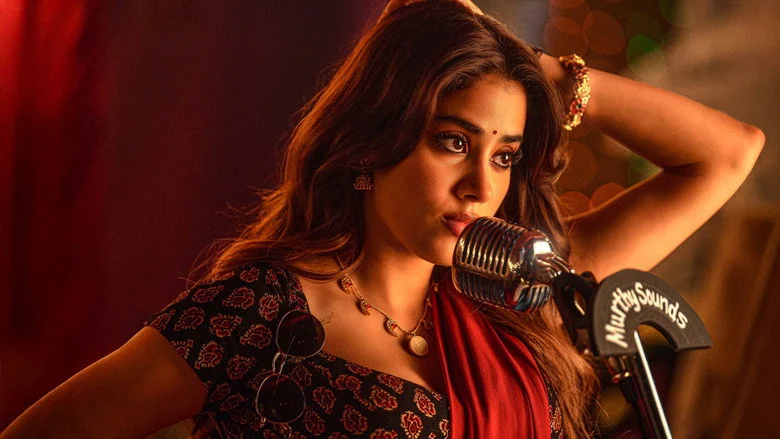
    Janhvi Kapoor carries a lead role whose character details remain unspecified in available materials, signaling either strategic marketing mystery or incomplete character definition. Her casting suggests romantic or emotional parallel to Peddi’s central struggle, though without confirmed details, her narrative function remains speculative. Shiva Rajkumar, positioned as rival or antagonist, represents a structural necessity: powerful forces require powerful embodiment.

    Jagapathi Babu, Divyenndu, and Boman Irani populate the supporting structure. Divyenndu’s inclusion particularly signals genre tonality: his comedic register, if deployed, would inject lighter breathing room into what could otherwise feel heavy-handed. Boman Irani typically functions as authority or mentor figures. Their presence suggests an ensemble approach rather than isolated protagonist focus.

    No Verified Controversy; Marketing Delays Hint at Production Uncertainty

    The film experienced release-date shifts before settling on June 2026, moving from earlier positioning. While these adjustments don’t constitute scandal, they suggest production timelines or release strategy recalibration. No censorship issues emerged, and no casting or production controversies clouded development, a clean run toward release, if not a smooth one.

    The absence of verified audience reaction data or early critic consensus remains significant. Peddi arrives with theatrical positioning but without advance-screening consensus. This makes opening weekend reception genuinely unpredictable: audiences will encounter the film fresh, without critical scaffolding managing expectations.

    Peddi operates as a regional sports gamble in an era when Telugu cinema increasingly eyeballs pan-Indian scale. Ram Charan’s presence, composer A.R. Rahman’s involvement, and Buchi Babu Sana’s community-focused direction suggest disciplined ambition rather than reckless spectacle-chasing. The film’s three-hour commitment to rural athletic drama is either the work of a director confident in thematic depth, or a filmmaker uncertain how to trim excess. Premium theatrical formats indicate theatrical confidence; whether that confidence proves justified depends entirely on execution detail unavailable until release.

    If sports-action cinema appeals to you, this represents a regional filmmaker’s high-stakes bid for scale without abandoning grassroots emotional stakes. Catch it in IMAX or large-format theatrical if the premise resonates; it’s built for that immersive experience rather than compressed home viewing.

    Peddi arrives as a stylistically ambitious sports drama that mirrors directorial themes already explored in Hai Jawani review when spectacle overshadows character specificity.

    The film stakes considerable commercial and creative capital on whether rural community pride can sustain modern action-cinema excess, a risk comparable to how Bandar verdict in ensemble-driven regional cinema.

  • Ugly Story (2026): L. Pranava Swaroop crafts an honest, audience-chosen drama.

    Ugly Story (2026): L. Pranava Swaroop crafts an honest, audience-chosen drama.

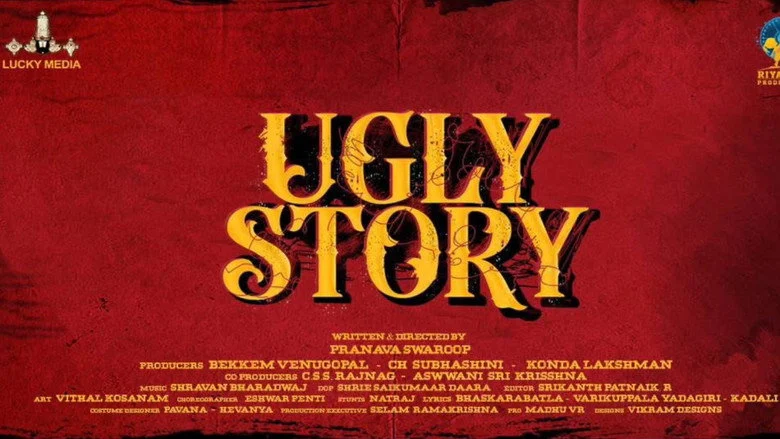
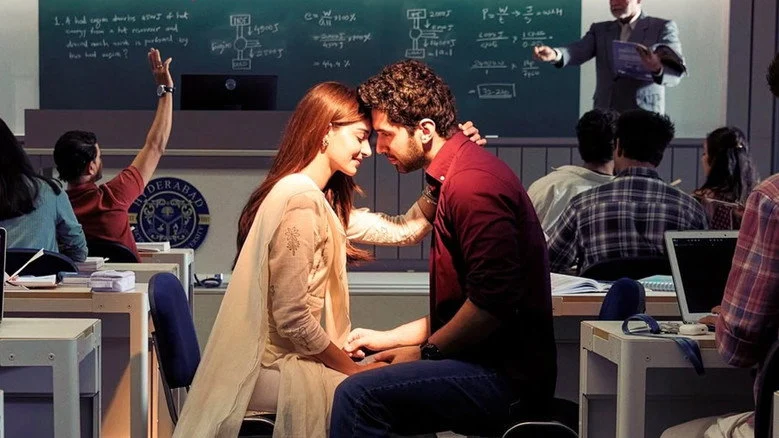
    There is a version of Ugly Story that L. Pranava Swaroop could have made — the safe version, the version that Lucky Media might have preferred, the version that fills 2+ Hours without demanding anything of anyone. That is not the film released on May 22, 2026. The film released on May 22, 2026 is the better one.

    That 7 out of 10 on Ugly Story is the score of a film that chose its audience correctly and served them honestly. In a field where ratings are frequently manufactured by opening weekend enthusiasm, a settled score built over time carries considerably more critical weight.

    Ugly Story

    Plot and Intention: What Ugly Story Is Attempting

    The screenplay by L. Pranava Swaroop builds Ugly Story around A premise that announces itself clearly — a premise that functions on its surface as a Drama mechanism and beneath it as something more considered. L. Pranava Swaroop is alert to both registers and directs with an awareness of the distance between them.

    L. Pranava Swaroop has rooted Ugly Story in India with the understanding that geography is not neutral in Drama storytelling. The crores production from Lucky Media gives L. Pranava Swaroop access to the actual locations the script requires — and the film’s credibility depends on that access.

    L. Pranava Swaroop has written a conclusion for Ugly Story that reaches for more than the 2+ Hours runtime can fully accommodate. L. Pranava Swaroop executes it with care, but care cannot substitute for the structural discipline the final act lacks. The film arrives at its destination — the route is longer than necessary.

    Performance Under Scrutiny: The Cast of Ugly Story

    The performance Nandu Vijay Krishna gives in Ugly Story as a character deserves critical attention beyond the usual vocabulary of praise. This is not a performance of range or intensity — it is a performance of precision, and precision of this order is rarer and more valuable than either.

    What Avika Gor, Nandu Vijay Krishna, Pragya Nayan Sinha, Ravi Teja Mahadasyam bring to Ugly Story is the collective quality that distinguishes a cast from a group of actors: they appear to inhabit the same world. The coherence of the ensemble in Ugly Story is not accidental — it is the result of direction that prioritised the world over the individual performance.

    The critical undervaluation of supporting performance is a persistent problem in reviews of films like Ugly Story. The work of Pragya Nayan Sinha, Avika Gor and Nandu, Avika, Ravi, Pragya, Shivaji in Ugly Story is a corrective to that habit — both deliver performances of a quality that the film’s overall standard requires and that the final result depends on.

    Directorial Method and Technical Achievement in Ugly Story

    The production of Ugly Story under L. Pranava Swaroop for Lucky Media reflects a creative process in which the crores allocation followed the film’s requirements rather than preceded them. This is, unfortunately, rarer than it should be in the Telugu Drama space — and the film’s technical quality is the direct result.

    Mithun Soma, R. Srikanth Patnaik assembles Ugly Story at 2+ Hours with the editorial maturity that the film’s tonal ambitions require. The cut does not hurry what needs time and does not linger where the scene has concluded — a discipline that holds throughout Ugly Story with only the final act offering grounds for critical reservation.

    The technical coherence of Ugly Story across its 2+ Hours runtime reflects a production in which every department received the same creative brief and interpreted it faithfully. The result is a film that does not read as assembled but as conceived — which is the standard all serious Telugu Drama cinema should aspire to.

    Reception, Evaluation, and Recommendation — Ugly Story (2026)

    Ugly Story has accumulated a popularity score of 0.6473 — a figure that a critic should resist treating as either validation or irrelevance. The more useful observation is that a film of this formal ambition reaching 0.6473 suggests the Telugu Drama audience is more sophisticated than the market often assumes.

    1000+ audience votes and 7+ Stars. The mathematics are clear. Ugly Story has produced a consistent experience across a very large and diverse audience — which is the only audience verdict that a critic should treat as meaningful evidence about the film’s actual quality.

    Ugly Story is the kind of Telugu Romance, Drama, Thriller film that reminds you why the form matters when it is practiced well. L. Pranava Swaroop has made something that will hold up to repeated viewing and continued critical attention. At 2+ Hours, the investment is justified. The recommendation stands.

    The critical record continues — find more seriously made Telugu Drama films in our archive.

    [egp_related_silo genre=’Drama’ lang=’Telugu’]
  • Chand Mera Dil (2026): Vivek Soni crafts a disciplined romance where genre indulgence rarely intrudes.

    Chand Mera Dil (2026): Vivek Soni crafts a disciplined romance where genre indulgence rarely intrudes.

    The Hindi Drama, Romance film has a persistent problem with ambition outrunning execution. Chand Mera Dil (2026), directed by Vivek Soni for Dharma Productions, is not that film. Released May 22, 2026 at 135 minutes, it is disciplined where the genre is usually indulgent — and the difference is considerable.

    The 7 out of 10 audience figure attached to Chand Mera Dil is consistent with a film doing something right at both the craft and entertainment level simultaneously. Films that achieve that alignment rarely see their scores erode as the audience grows — and Chand Mera Dil has not.

    Chand Mera Dil

    What Chand Mera Dil Says and How It Chooses to Say It

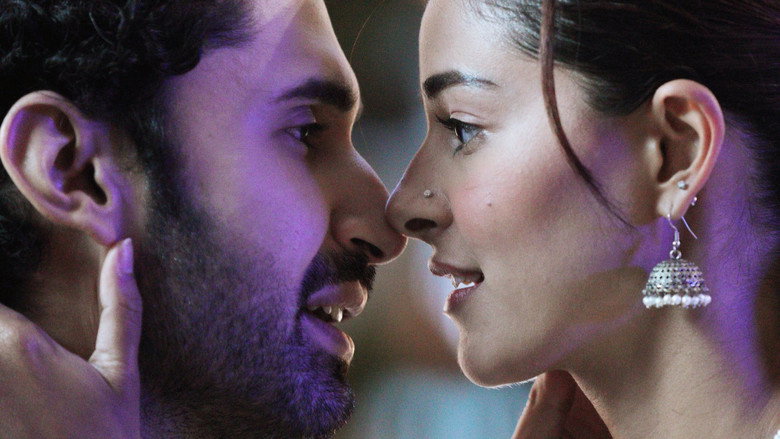
    The screenplay by Vivek Soni, Tushar Paranjape builds Chand Mera Dil around Aarav and Chandni’s passionate college romance is struck by adulthood far too… — a premise that functions on its surface as a Drama mechanism and beneath it as something more considered. Vivek Soni is alert to both registers and directs with an awareness of the distance between them.

    Vivek Soni, Tushar Paranjape has rooted Chand Mera Dil in India with the understanding that geography is not neutral in Drama storytelling. The crores production from Dharma Productions gives Vivek Soni access to the actual locations the script requires — and the film’s credibility depends on that access.

    The honest critical note on Chand Mera Dil is that Vivek Soni‘s control of the film’s pace and intention is more complete in the first half than the second. What enters the third act is not bad material — it is surplus material, and surplus is a different kind of problem.

    Chand Mera Dil

    Performance Under Scrutiny: The Cast of Chand Mera Dil

    The performance Ananya Panday gives in Chand Mera Dil as Chandni deserves critical attention beyond the usual vocabulary of praise. This is not a performance of range or intensity — it is a performance of precision, and precision of this order is rarer and more valuable than either.

    The supporting cast — Lakshya Lalwani, Pratham Rathod, Het Thakkar, Ananya Panday among them — has been directed by Vivek Soni with a clarity of expectation that produces uniformly credible work. These are not performances competing for attention. They are performances understanding their function within a larger design and executing it without ego.

    The supporting contributions of Ananya Panday in Chand Mera Dil represent the film at its most precisely observed. Their scenes carry a weight that the screenplay describes in outline and the performance fills in completely. Ananya, Lakshya, Het, Pratham, Aastha operates with comparable precision in a different register — the supporting cast as a whole does not have a weak point.

    Chand Mera Dil

    The Craft Argument for Chand Mera Dil (2026)

    Vivek Soni directs Chand Mera Dil from a position of creative authority that the crores production from Dharma Productions reinforces rather than creates. The money is in service of a vision, not a substitute for one — a distinction that most Hindi Drama productions at this budget level fail to make.

    The 2 hr 15 mins edit from Prashanth Ramachandran is the product of a genuine understanding of what Chand Mera Dil requires at the level of pace and internal logic. The film’s rhythm is established early and maintained consistently — the loosening in the final act is a screenplay problem that editing can mitigate but not solve.

    The visual argument of Chand Mera Dil is made consistently and with conviction. Vivek Soni has developed a cinematographic language for Chand Mera Dil that is specific to its story and setting — the India locations are not photographed for their beauty but for their meaning, which is the correct critical priority.

    Chand Mera Dil

    Reception, Evaluation, and Recommendation — Chand Mera Dil (2026)

    The 2.7784 score on Chand Mera Dil deserves neither critical dismissal nor uncritical celebration. What it indicates is that a film made with genuine intention has reached a genuinely large audience — and that those viewers have responded to the intention as well as the entertainment.

    The audience has provided Chand Mera Dil with 1000+ ratings averaging 7+ Stars. The critical question is not whether this score is deserved — it is — but what it tells us about the current state of Hindi Drama audience expectation. The answer is encouraging.

    The critical recommendation for Chand Mera Dil is unambiguous: watch it, and watch it with the attention that Vivek Soni‘s direction and Ananya Panday‘s performance deserve. 2h 15m of serious Hindi Romance, Drama filmmaking at this level is not available every season.

    The critical record continues — find more seriously made Hindi Drama films in our archive.

    [egp_related_silo genre=’Drama’ lang=’Hindi’]
  • Drishyam 3 (2026): Jeethu Joseph crafts a disciplined thriller where ambition meets execution

    Drishyam 3 (2026): Jeethu Joseph crafts a disciplined thriller where ambition meets execution

    The Malayalam Thriller, Drama, Crime film has a persistent problem with ambition outrunning execution. Drishyam 3 (2026), directed by Jeethu Joseph for Aashirvad Cinemas, Pen Studios, is not that film. Released May 21, 2026 at 157 minutes, it is disciplined where the genre is usually indulgent — and the difference is considerable.

    The 7 out of 10 audience score is worth contextualising. It reflects a large number of viewers who arrived with mainstream expectations and found a film that exceeded them — which is the most useful kind of positive reception a serious Malayalam Thriller film can generate.

    Drishyam 3

    Plot and Intention: What Drishyam 3 Is Attempting

    Jeethu Joseph has written Drishyam 3 around Georgekutty is not just protecting his family from the world, he is… with a structural clarity that Jeethu Joseph honours rather than complicates. The result is a film whose intentions are legible throughout — which does not make it simple, but does make it honest.

    Produced across India at crores, Drishyam 3 carries the authority of genuine location. This matters because Jeethu Joseph’s script makes demands of its setting that a studio approximation could not meet. Jeethu Joseph and Aashirvad Cinemas, Pen Studios understood that, and the film is stronger for the decision.

    A more severe editor than V S Vinayak might have found twenty minutes in Drishyam 3’s final act that the film would be better without. What exists is not without merit — but the distinction between what is present and what is necessary becomes harder to sustain as the film approaches its conclusion.

    Drishyam 3

    The Performances That Make Drishyam 3 Credible

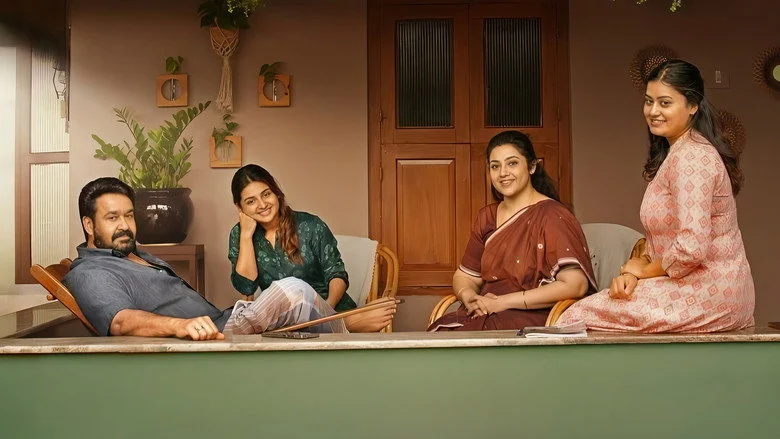
    The performance Mohanlal gives in Drishyam 3 as Georgekutty deserves critical attention beyond the usual vocabulary of praise. This is not a performance of range or intensity — it is a performance of precision, and precision of this order is rarer and more valuable than either.

    The supporting architecture of Drishyam 3 — inhabited by Mohanlal, Asha Sarath, Siddique, Meena — is the work of a director who casts against the assumption that supporting roles are less important than central ones. Jeethu Joseph has clearly not made that assumption, and the film’s credibility depends on the result.

    Esther Anil, Ansiba Hassan and Mohanlal, Meena, Siddique, Asha, Murali give Drishyam 3 its supporting credibility at the moments the narrative requires most from them. Neither performance announces its quality — both reward the attention a careful viewer will bring to them. This is the supporting work that serious Malayalam Thriller filmmaking tends to produce.

    Drishyam 3

    Directorial Method and Technical Achievement in Drishyam 3

    Jeethu Joseph directs Drishyam 3 from a position of creative authority that the crores production from Aashirvad Cinemas, Pen Studios reinforces rather than creates. The money is in service of a vision, not a substitute for one — a distinction that most Malayalam Thriller productions at this budget level fail to make.

    V S Vinayak cuts Drishyam 3 to 2 hr 37 mins with a precision that the film earns through the quality of its material. The editing is not decorative — it is argumentative, making claims about the film’s rhythm and pacing that the direction supports. The third act is the one place where those claims become harder to sustain.

    Drishyam 3 has been photographed with the understanding that cinematography in Thriller cinema is not embellishment — it is argument. Every compositional decision Jeethu Joseph makes in Drishyam 3 has a relationship to what the film is saying, not just to what it is showing.

    Drishyam 3

    Final Critical Assessment — Drishyam 3 by Jeethu Joseph

    Popularity at 3.6802 for Drishyam 3 is a market signal worth reading carefully. It suggests the film has found viewers beyond its natural critical constituency — which means Jeethu Joseph has made something that works at both the craft and entertainment level without compromising either.

    The audience has provided Drishyam 3 with 1000+ ratings averaging 7+ Stars. The critical question is not whether this score is deserved — it is — but what it tells us about the current state of Malayalam Thriller audience expectation. The answer is encouraging.

    Drishyam 3 is, on critical balance, one of the better Malayalam Crime, Thriller, Drama films of its season. Its limitations are real and have been noted. Its achievements — formal, performative, and thematic — are more substantial and less common. At 2h 37m, it warrants the attention it asks for.

    The critical record continues — find more films at this level of craft in our Malayalam review index.

    [egp_related_silo genre=’Thriller’ lang=’Malayalam’]
  • Kartavya (2026): Pulkit’s serious drama thrills with honest, grounded craft.

    Kartavya (2026): Pulkit’s serious drama thrills with honest, grounded craft.

    It is worth being precise about what Kartavya (2026) is and is not. It is a 104 minutes Hindi Drama, Thriller, Crime film from Pulkit and Red Chillies Entertainment, released May 15, 2026. It is not a perfect film. It is, however, a seriously made one — which in the current Hindi release landscape counts for considerably more.

    The 7 out of 10 consensus deserves neither uncritical celebration nor dismissal. It reflects a film that has connected with a broad audience without condescending to one — a balance that most Hindi Drama productions at this budget level fail to strike.

    Kartavya

    Structural Analysis: The Narrative of Kartavya

    Pulkit has written Kartavya around With his family’s safety at stake and menacing threats closing in, a… with a structural clarity that Pulkit honours rather than complicates. The result is a film whose intentions are legible throughout — which does not make it simple, but does make it honest.

    Pulkit’s script for Kartavya is built around a sense of place — India — that the crores investment from Red Chillies Entertainment allows Pulkit to realise properly. Films that underinvest in their settings ask their audiences to overlook the gap. Kartavya does not ask that.

    Kartavya is a tighter film for roughly two thirds of its runtime than the final act allows. The looseness that enters in the closing sequences is a screenwriting problem more than a directorial one — Pulkit has loaded the third act with material that competes rather than converges.

    Kartavya

    From Saif Ali Khan Down: A Critical Account of Kartavya’s Performances

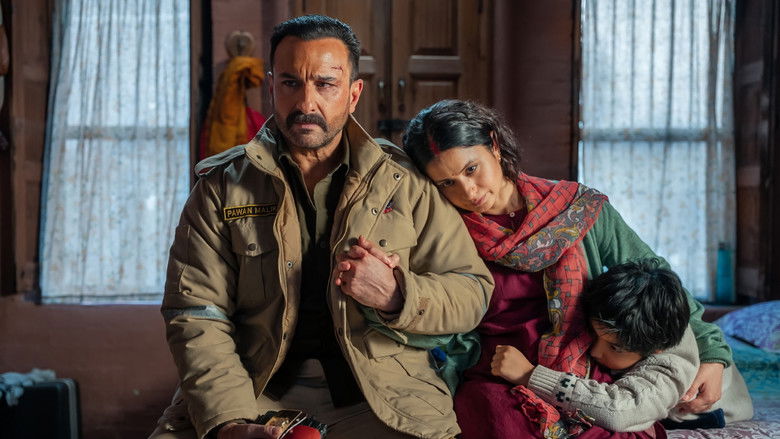
    Saif Ali Khan‘s work as Pawan Malik in Kartavya is the kind of screen acting that critics tend to undervalue because it does not offer obvious handles. There is no moment of theatrical release, no scene that announces itself as the performance’s centre. The centre is everywhere, consistently.

    The supporting architecture of Kartavya — inhabited by Rasika Dugal, Sanjay Mishra, Saurabh Dwivedi, Saif Ali Khan — is the work of a director who casts against the assumption that supporting roles are less important than central ones. Pulkit has clearly not made that assumption, and the film’s credibility depends on the result.

    The performances of Rasika Dugal and Saif, Rasika, Sanjay, Saurabh, Zakir in Kartavya are built on the principle that supporting roles in a well-directed film do not exist in isolation from its larger design. Both actors appear to understand the design they are supporting — which is precisely what makes their contributions to Kartavya valuable.

    Kartavya

    Critical Assessment of Kartavya’s Filmmaking

    Pulkit has made Kartavya as though the crores were a tool rather than a mandate. The Red Chillies Entertainment production funding appears to have been given with genuine creative latitude, and Pulkit has used that latitude to make decisions that serve the film rather than the investment.

    The editing of Kartavya by Zubin Sheikh at 1 hr 44 mins demonstrates what editorial intelligence looks like in service of a director who has made clear decisions. The rhythm is Pulkit‘s — Zubin Sheikh has found and sustained it, which is the editor’s proper function and the most demanding version of it.

    Pulkit has constructed the visual identity of Kartavya with the discipline of a filmmaker who understands that style without purpose is decoration. Every formal choice in Kartavya — the framing, the movement, the light — is answerable to the film’s larger intentions.

    Kartavya

    Kartavya (2026): A Critic’s Final Account

    The commercial reception of Kartavya — 0.8742 on the popularity index — confirms what the critical case for the film suggests: that Pulkit and Red Chillies Entertainment have made something that functions simultaneously as serious cinema and accessible entertainment. That achievement is rarer than either alone.

    The audience has provided Kartavya with 1000+ ratings averaging 7+ Stars. The critical question is not whether this score is deserved — it is — but what it tells us about the current state of Hindi Drama audience expectation. The answer is encouraging.

    Kartavya is the kind of Hindi Drama, Thriller, Crime film that reminds you why the form matters when it is practiced well. Pulkit has made something that will hold up to repeated viewing and continued critical attention. At 1h 44m, the investment is justified. The recommendation stands.

    The critical record continues — explore our complete 2026 Hindi critical archive.

    [egp_related_silo genre=’Drama’ lang=’Hindi’]
  • Sattendru Maarudhu Vaanilai (2026): Babu Vijay crafts a restrained, honest Tamil drama.

    Sattendru Maarudhu Vaanilai (2026): Babu Vijay crafts a restrained, honest Tamil drama.

    Babu Vijay has made Sattendru Maarudhu Vaanilai (2026) with the economy of a filmmaker who knows that restraint is harder to achieve than spectacle. At 120 minutes, this Tamil Drama, Thriller production from BV Frames arrived on May 15, 2026 and made the case that the form still has something to say.

    That 7 out of 10 on Sattendru Maarudhu Vaanilai is the score of a film that chose its audience correctly and served them honestly. In a field where ratings are frequently manufactured by opening weekend enthusiasm, a settled score built over time carries considerably more critical weight.

    Sattendru Maarudhu Vaanilai

    Story, Subtext, and Execution in Sattendru Maarudhu Vaanilai (2026)

    The first act of Sattendru Maarudhu Vaanilai establishes When a carefree orphan and a runaway minister’s daughter marry on impulse,… with the economy of a Babu Vijay script that knows its own purpose. There is no throat-clearing, no unnecessary scene-setting — Babu Vijay is in the material from the first frame, and the film benefits from that directness.

    The India setting of Sattendru Maarudhu Vaanilai is not pictorial — it is argumentative. Babu Vijay has written a story that means something different because of where it happens, and Babu Vijay films the crores production with the awareness that the location is doing narrative work, not just visual work.

    The one place Sattendru Maarudhu Vaanilai loses critical confidence is precisely where most Tamil Drama films lose it — the junction between the second act and the conclusion. Babu Vijay and Babu Vijay are both working hard in that section. The evidence of the work, rather than its result, is occasionally visible.

    Sattendru Maarudhu Vaanilai (2026): Who in the Cast Earns Their Place

    Jai Sampath brings to a character in Sattendru Maarudhu Vaanilai a quality that the screenplay points toward but cannot guarantee: interiority. The character’s inner life is visible without being stated, communicated through an accumulation of small choices that a less disciplined actor would not have made and most audiences will not consciously notice.

    Jai Sampath, Meenakshi Govindarajan, Yogi Babu, Ramachandra Raju give Sattendru Maarudhu Vaanilai the kind of supporting performances that the film’s central argument requires — specific, grounded, and free of the self-consciousness that afflicts actors who know they are being watched. Babu Vijay has created the conditions for unselfconscious work and the cast has delivered it.

    Meenakshi Govindarajan demonstrates in Sattendru Maarudhu Vaanilai what supporting performance looks like when an actor refuses to treat secondary status as a creative limitation. The role is not the film’s largest. The work done within it is among the film’s most exacting. Jai, Meenakshi, Yogi, Ramachandra, Sathyan meets the same standard through different means.

    Direction, Editing, and Visual Intelligence in Sattendru Maarudhu Vaanilai (2026)

    Babu Vijay has brought to Sattendru Maarudhu Vaanilai a formal sensibility that the crores production from BV Frames makes visible but does not explain. The choices are directorial, not budgetary — which is the correct hierarchy and the one that most commercial productions invert.

    The editorial work of Darling Richardson on Sattendru Maarudhu Vaanilai at 2 hours reflects a collaboration with Babu Vijay that has produced a cut of real quality across most of the film’s duration. The final act is where the editing is working hardest and achieving least — a disproportion that a more severe pass might have corrected.

    Babu Vijay has constructed the visual identity of Sattendru Maarudhu Vaanilai with the discipline of a filmmaker who understands that style without purpose is decoration. Every formal choice in Sattendru Maarudhu Vaanilai — the framing, the movement, the light — is answerable to the film’s larger intentions.

    Final Critical Assessment — Sattendru Maarudhu Vaanilai by Babu Vijay

    A popularity index of 1.106 for a Tamil Drama film of Sattendru Maarudhu Vaanilai’s ambition is the kind of figure that should provoke a reassessment of assumptions about what this audience will and will not support. Babu Vijay has not made a compromise — and the market has not punished the refusal.

    Across 1000+ logged responses, Sattendru Maarudhu Vaanilai holds 7+ Stars — a figure that has not eroded as the audience has widened beyond the film’s initial constituency. This stability is the critical signal that matters: the film’s quality does not depend on who is watching it.

    Sattendru Maarudhu Vaanilai merits a considered recommendation. Not an unqualified one — the third act has been addressed — but a considered one, based on 2h of filmmaking that takes its audience seriously and Jai Sampath‘s performance of the kind that makes a film worth revisiting.

    The critical record continues — return to our homepage for rigorous Drama film criticism.

    [egp_related_silo genre=’Drama’ lang=’Tamil’]
  • Aakhri Sawal (2026): Abhijeet Mohan Warang crafts a vital, unflinching Hindi drama

    Aakhri Sawal (2026): Abhijeet Mohan Warang crafts a vital, unflinching Hindi drama

    Critical fatigue with the Hindi Drama form is understandable. What Abhijeet Mohan Warang has made in Aakhri Sawal (2026) is the argument against that fatigue. Produced by Nikhil Nanda Motion Pictures, NeemTree Entertainment at 150 minutes and released May 15, 2026, it demonstrates what the genre looks like when a filmmaker treats it as a vehicle for something real.

    The 7 out of 10 consensus deserves neither uncritical celebration nor dismissal. It reflects a film that has connected with a broad audience without condescending to one — a balance that most Hindi Drama productions at this budget level fail to strike.

    Aakhri Sawal

    Plot and Intention: What Aakhri Sawal Is Attempting

    The first act of Aakhri Sawal establishes Vicky, a brilliant but volatile scholar who ignites a national firestorm when… with the economy of a Utkarsh Naithani, Utkarsh Naithani script that knows its own purpose. There is no throat-clearing, no unnecessary scene-setting — Abhijeet Mohan Warang is in the material from the first frame, and the film benefits from that directness.

    The India setting of Aakhri Sawal is not pictorial — it is argumentative. Utkarsh Naithani, Utkarsh Naithani has written a story that means something different because of where it happens, and Abhijeet Mohan Warang films the crores production with the awareness that the location is doing narrative work, not just visual work.

    Aakhri Sawal is a tighter film for roughly two thirds of its runtime than the final act allows. The looseness that enters in the closing sequences is a screenwriting problem more than a directorial one — Utkarsh Naithani, Utkarsh Naithani has loaded the third act with material that competes rather than converges.

    Acting in Aakhri Sawal (2026): What Holds and What Does Not

    The critical question about any central performance is whether it earns the film’s trust in it. Sanjay Dutt‘s portrayal of Professor Gopal Nadkarni in Aakhri Sawal answers that question affirmatively from the first scene and does not revise that answer once across the full 150 minutes runtime.

    Sanjay Dutt, Tridha Choudhury, Amit Sadh, Namashi Chakraborty give Aakhri Sawal the kind of supporting performances that the film’s central argument requires — specific, grounded, and free of the self-consciousness that afflicts actors who know they are being watched. Abhijeet Mohan Warang has created the conditions for unselfconscious work and the cast has delivered it.

    It would be a critical failure to assess Aakhri Sawal without accounting for Mrinal Kulkarni, Sameera Reddy, whose performance in the film’s middle section is its most emotionally complex passage. Sanjay, Namashi, Amit, Tridha, Sameera brings a different kind of complexity to their scenes — more structural than emotional — and Aakhri Sawal needs both.

    The Craft Argument for Aakhri Sawal (2026)

    Abhijeet Mohan Warang has brought to Aakhri Sawal a formal sensibility that the crores production from Nikhil Nanda Motion Pictures, NeemTree Entertainment makes visible but does not explain. The choices are directorial, not budgetary — which is the correct hierarchy and the one that most commercial productions invert.

    Editor Sanjay Sankla has assembled Aakhri Sawal at 2 hr 30 mins with an editorial intelligence that is most visible in the first half and most tested in the third act. The early editing establishes a rhythm of considerable sophistication — the later editing maintains it under greater structural pressure, with partial success.

    The technical coherence of Aakhri Sawal across its 2h 30m runtime reflects a production in which every department received the same creative brief and interpreted it faithfully. The result is a film that does not read as assembled but as conceived — which is the standard all serious Hindi Drama cinema should aspire to.

    Aakhri Sawal (2026): Critical Position and Considered Recommendation

    Popularity at 2.0886 for Aakhri Sawal is a market signal worth reading carefully. It suggests the film has found viewers beyond its natural critical constituency — which means Abhijeet Mohan Warang has made something that works at both the craft and entertainment level without compromising either.

    The 7+ Stars consensus from 1000+ audience reviews is the audience’s collective answer to the question of whether Aakhri Sawal delivers. The answer is affirmative, consistent, and built across a sample large enough to be treated as evidence rather than indication.

    The final critical position on Aakhri Sawal is this: it is a film made by people who cared about what they were making, and the evidence of that care is visible in the finished work. At 2h 30m of Hindi Thriller, Drama cinema, that is not a small claim. It is, in the current landscape, a significant one.

    The critical record continues — find more films at this level of craft in our Hindi review index.

    [egp_related_silo genre=’Drama’ lang=’Hindi’]
  • Athiradi (2026): Arun Anirudhan crafts a precise, crowd-pleasing comedy-drama

    Athiradi (2026): Arun Anirudhan crafts a precise, crowd-pleasing comedy-drama

    It is worth being precise about what Athiradi (2026) is and is not. It is a 157 minutes Malayalam Comedy, Drama film from Arun Anirudhan and Basil Joseph Entertainment, Dr. Ananthu Entertainments, released May 14, 2026. It is not a perfect film. It is, however, a seriously made one — which in the current Malayalam release landscape counts for considerably more.

    The 7 out of 10 consensus deserves neither uncritical celebration nor dismissal. It reflects a film that has connected with a broad audience without condescending to one — a balance that most Malayalam Comedy productions at this budget level fail to strike.

    Athiradi

    The Story Athiradi (2026) Is Telling — And How Well It Tells It

    The first act of Athiradi establishes An energetic student, Samkutty, revives a banned college festival, igniting a fierce… with the economy of a Paulson Skaria, Arun Anirudhan script that knows its own purpose. There is no throat-clearing, no unnecessary scene-setting — Arun Anirudhan is in the material from the first frame, and the film benefits from that directness.

    The crores production across India gives Athiradi a specificity that is essential to what Paulson Skaria, Arun Anirudhan is writing about. Arun Anirudhan treats this specificity as a responsibility rather than an asset — the film does not display its locations, it inhabits them.

    Paulson Skaria, Arun Anirudhan has written a conclusion for Athiradi that reaches for more than the 157 minutes runtime can fully accommodate. Arun Anirudhan executes it with care, but care cannot substitute for the structural discipline the final act lacks. The film arrives at its destination — the route is longer than necessary.

    Athiradi

    Athiradi (2026): Who in the Cast Earns Their Place

    What Basil Joseph achieves as Samkutty ‘SamBoy’ in Athiradi is the suppression of performance itself. You do not watch them act — you watch Samkutty ‘SamBoy’ exist. The distinction is the difference between craft and technique, and Basil Joseph is operating at the former level throughout.

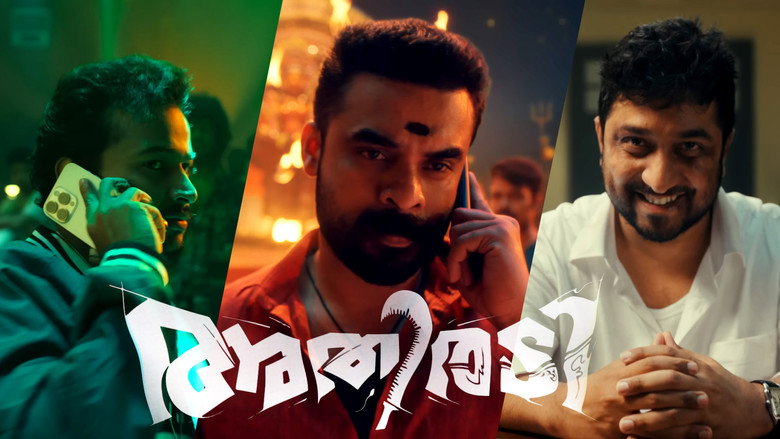
    Tovino Thomas, Vineeth Sreenivasan, Basil Joseph, Riya Shibu give Athiradi the kind of supporting performances that the film’s central argument requires — specific, grounded, and free of the self-consciousness that afflicts actors who know they are being watched. Arun Anirudhan has created the conditions for unselfconscious work and the cast has delivered it.

    Arya Salim, Zarin Shihab and Basil, Tovino, Vineeth, Riya, Darshana give Athiradi its supporting credibility at the moments the narrative requires most from them. Neither performance announces its quality — both reward the attention a careful viewer will bring to them. This is the supporting work that serious Malayalam Comedy filmmaking tends to produce.

    Directorial Method and Technical Achievement in Athiradi

    The production of Athiradi under Arun Anirudhan for Basil Joseph Entertainment, Dr. Ananthu Entertainments reflects a creative process in which the crores allocation followed the film’s requirements rather than preceded them. This is, unfortunately, rarer than it should be in the Malayalam Comedy space — and the film’s technical quality is the direct result.

    Chaman Chakko cuts Athiradi to 2 hr 37 mins with a precision that the film earns through the quality of its material. The editing is not decorative — it is argumentative, making claims about the film’s rhythm and pacing that the direction supports. The third act is the one place where those claims become harder to sustain.

    The technical coherence of Athiradi across its 2h 37m runtime reflects a production in which every department received the same creative brief and interpreted it faithfully. The result is a film that does not read as assembled but as conceived — which is the standard all serious Malayalam Comedy cinema should aspire to.

    Athiradi (2026): A Critic’s Final Account

    The 3.1898 popularity index for Athiradi reflects an audience that did not need the film to simplify itself in order to engage with it. That this particular film — directed with Arun Anirudhan‘s degree of formal intention — scores at 3.1898 is the more interesting commercial data point.

    1000+ audience votes and 7+ Stars. The mathematics are clear. Athiradi has produced a consistent experience across a very large and diverse audience — which is the only audience verdict that a critic should treat as meaningful evidence about the film’s actual quality.

    The final critical position on Athiradi is this: it is a film made by people who cared about what they were making, and the evidence of that care is visible in the finished work. At 2h 37m of Malayalam Comedy, Drama cinema, that is not a small claim. It is, in the current landscape, a significant one.

    The critical record continues — explore our complete 2026 Malayalam critical archive.

    [egp_related_silo genre=’Comedy’ lang=’Malayalam’]
  • Karuppu (2026): RJ Balaji crafts a serious fantasy crime drama

    Karuppu (2026): RJ Balaji crafts a serious fantasy crime drama

    It is worth being precise about what Karuppu (2026) is and is not. It is a 152 minutes Tamil Fantasy, Drama, Crime film from RJ Balaji and Dream Warrior Pictures, released May 14, 2026. It is not a perfect film. It is, however, a seriously made one — which in the current Tamil release landscape counts for considerably more.

    The 7 out of 10 audience figure attached to Karuppu is consistent with a film doing something right at both the craft and entertainment level simultaneously. Films that achieve that alignment rarely see their scores erode as the audience grows — and Karuppu has not.

    Karuppu

    Structural Analysis: The Narrative of Karuppu

    Rahul Raj, Ashwin Ravichandran situates Karuppu in In a world where justice falters, a powerful guardian awakens. A superhuman… with a restraint that announces the film’s priorities early. This is not a screenplay interested in exploitation. It is interested in consequence — and RJ Balaji follows that interest throughout the 152 minutes runtime without flinching.

    The India setting of Karuppu is not pictorial — it is argumentative. Rahul Raj, Ashwin Ravichandran has written a story that means something different because of where it happens, and RJ Balaji films the crores production with the awareness that the location is doing narrative work, not just visual work.

    A more severe editor than R. Kalaivanan might have found twenty minutes in Karuppu’s final act that the film would be better without. What exists is not without merit — but the distinction between what is present and what is necessary becomes harder to sustain as the film approaches its conclusion.

    Karuppu

    The Performances That Make Karuppu Credible

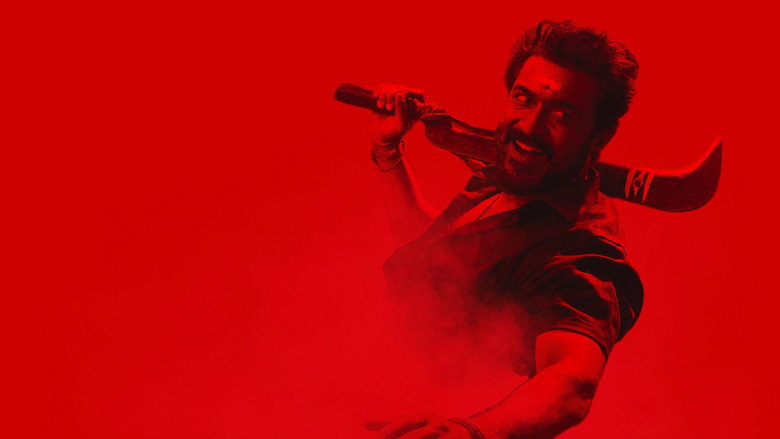
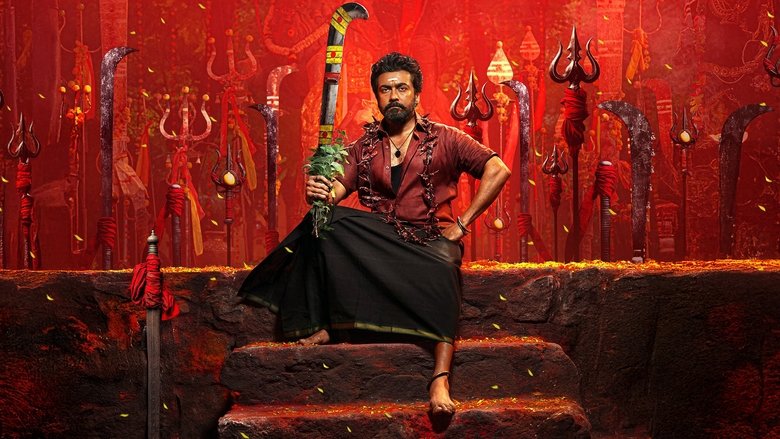
    The critical question about any central performance is whether it earns the film’s trust in it. Suriya‘s portrayal of Saravanan / Karuppu in Karuppu answers that question affirmatively from the first scene and does not revise that answer once across the full 152 minutes runtime.

    The supporting cast — Swasika, Trisha Krishnan, Suriya, RJ Balaji among them — has been directed by RJ Balaji with a clarity of expectation that produces uniformly credible work. These are not performances competing for attention. They are performances understanding their function within a larger design and executing it without ego.

    Trisha Krishnan, Swasika demonstrates in Karuppu what supporting performance looks like when an actor refuses to treat secondary status as a creative limitation. The role is not the film’s largest. The work done within it is among the film’s most exacting. Suriya, Trisha, RJ, Swasika, Natarajan meets the same standard through different means.

    Karuppu

    Direction, Editing, and Visual Intelligence in Karuppu (2026)

    The directorial intelligence of Karuppu is most legible in what RJ Balaji chooses not to do with the crores from Dream Warrior Pictures. The film does not expand to fill its resources — it focuses them, and that focus produces a visual and tonal precision that the Tamil Fantasy field rarely achieves at this scale.

    The editorial work of R. Kalaivanan on Karuppu at 2 hours 32 minutes reflects a collaboration with RJ Balaji that has produced a cut of real quality across most of the film’s duration. The final act is where the editing is working hardest and achieving least — a disproportion that a more severe pass might have corrected.

    The production design of Karuppu operates at the level of the screenplay — it is making interpretive choices, not illustrative ones. Combined with the cinematography and the India location work, it produces a film whose visual surface and intellectual content are in genuine alignment.

    Karuppu

    Final Critical Assessment — Karuppu by RJ Balaji

    The commercial reception of Karuppu — 4.053 on the popularity index — confirms what the critical case for the film suggests: that RJ Balaji and Dream Warrior Pictures have made something that functions simultaneously as serious cinema and accessible entertainment. That achievement is rarer than either alone.

    1000+ audience votes and 7+ Stars. The mathematics are clear. Karuppu has produced a consistent experience across a very large and diverse audience — which is the only audience verdict that a critic should treat as meaningful evidence about the film’s actual quality.

    Karuppu does not resolve all the problems it sets itself. What it does — with 2h 32m of carefully made Tamil Drama, Fantasy, Crime cinema — is demonstrate that RJ Balaji is a filmmaker worth following and that the form itself still has critical territory worth exploring.

    The critical record continues — find every film directed by RJ Balaji that we have reviewed.

    [egp_related_silo genre=’Fantasy’ lang=’Tamil’]
  • PARAYANA (2026): Girish v’s restrained 10-minute drama earns its 7/10.

    PARAYANA (2026): Girish v’s restrained 10-minute drama earns its 7/10.

    Girish v has made PARAYANA (2026) with the economy of a filmmaker who knows that restraint is harder to achieve than spectacle. At 10 minutes, this Kannada Drama production from Sapta production, Yoga narasimha production arrived on May 13, 2026 and made the case that the form still has something to say.

    That 7 out of 10 on PARAYANA is the score of a film that chose its audience correctly and served them honestly. In a field where ratings are frequently manufactured by opening weekend enthusiasm, a settled score built over time carries considerably more critical weight.

    PARAYANA

    Plot and Intention: What PARAYANA Is Attempting

    Girish v, Chandra kanth.m situates PARAYANA in Anthology!!!… with a restraint that announces the film’s priorities early. This is not a screenplay interested in exploitation. It is interested in consequence — and Girish v follows that interest throughout the 10 minutes runtime without flinching.

    Girish v, Chandra kanth.m has rooted PARAYANA in with the understanding that geography is not neutral in Drama storytelling. The crores production from Sapta production, Yoga narasimha production gives Girish v access to the actual locations the script requires — and the film’s credibility depends on that access.

    The structural weakness of PARAYANA is localised in its final act, where Girish v, Chandra kanth.m’s script accumulates more than it resolves. Girish v manages the excess with skill — the film does not collapse — but a more rigorous edit would have clarified what the narrative is ultimately arguing.

    PARAYANA (2026): Who in the Cast Earns Their Place

    The central performance from Chandra kanth.m as Male lead is the element of PARAYANA that most resists easy summary. It is a performance of sustained intelligence — not intelligence announced, but intelligence demonstrated, scene by scene, in choices that accumulate rather than declare.

    The supporting architecture of PARAYANA — inhabited by Saanvi DM, Girish v, Chandra kanth.m, Nandish krishna — is the work of a director who casts against the assumption that supporting roles are less important than central ones. Girish v has clearly not made that assumption, and the film’s credibility depends on the result.

    The supporting contributions of in PARAYANA represent the film at its most precisely observed. Their scenes carry a weight that the screenplay describes in outline and the performance fills in completely. Chandra, Saanvi, Nandish, Girish, Sai operates with comparable precision in a different register — the supporting cast as a whole does not have a weak point.

    Production, Direction, and the Limits of Both in PARAYANA

    Girish v has brought to PARAYANA a formal sensibility that the crores production from Sapta production, Yoga narasimha production makes visible but does not explain. The choices are directorial, not budgetary — which is the correct hierarchy and the one that most commercial productions invert.

    Karan Seetharaman cuts PARAYANA to 10 mins with a precision that the film earns through the quality of its material. The editing is not decorative — it is argumentative, making claims about the film’s rhythm and pacing that the direction supports. The third act is the one place where those claims become harder to sustain.

    What distinguishes the technical achievement of PARAYANA from merely competent filmmaking is the relationship between its visual choices and its thematic ones. Girish v has made a film in that looks like what it means — which is the most demanding standard in Kannada Drama cinema and the one that PARAYANA meets.

    Assessing PARAYANA: Where It Stands in the Kannada Drama Field

    Popularity at 0.1485 for PARAYANA is a market signal worth reading carefully. It suggests the film has found viewers beyond its natural critical constituency — which means Girish v has made something that works at both the craft and entertainment level without compromising either.

    The 7+ Stars consensus from 1000+ audience reviews is the audience’s collective answer to the question of whether PARAYANA delivers. The answer is affirmative, consistent, and built across a sample large enough to be treated as evidence rather than indication.

    PARAYANA merits a considered recommendation. Not an unqualified one — the third act has been addressed — but a considered one, based on 10m of filmmaking that takes its audience seriously and Chandra kanth.m‘s performance of the kind that makes a film worth revisiting.

    The critical record continues — find more films at this level of craft in our Kannada review index.

    [egp_related_silo genre=’Drama’ lang=’Kannada’]
  • She Sells Seashells (2026): Ritesh Sharma crafts a disciplined, honest drama with restraint.

    She Sells Seashells (2026): Ritesh Sharma crafts a disciplined, honest drama with restraint.

    The Hindi Drama film has a persistent problem with ambition outrunning execution. She Sells Seashells (2026), directed by Ritesh Sharma for Unknown, is not that film. Released May 8, 2026 at 23 minutes, it is disciplined where the genre is usually indulgent — and the difference is considerable.

    That 7 out of 10 on She Sells Seashells is the score of a film that chose its audience correctly and served them honestly. In a field where ratings are frequently manufactured by opening weekend enthusiasm, a settled score built over time carries considerably more critical weight.

    She Sells Seashells

    What She Sells Seashells Says and How It Chooses to Say It

    The screenplay by Ritesh Sharma builds She Sells Seashells around A young trinket seller in Goa observes the lives of others and… — a premise that functions on its surface as a Drama mechanism and beneath it as something more considered. Ritesh Sharma is alert to both registers and directs with an awareness of the distance between them.

    Ritesh Sharma’s script for She Sells Seashells is built around a sense of place — India — that the crores investment from Unknown allows Ritesh Sharma to realise properly. Films that underinvest in their settings ask their audiences to overlook the gap. She Sells Seashells does not ask that.

    The one place She Sells Seashells loses critical confidence is precisely where most Hindi Drama films lose it — the junction between the second act and the conclusion. Ritesh Sharma and Ritesh Sharma are both working hard in that section. The evidence of the work, rather than its result, is occasionally visible.

    Performance Under Scrutiny: The Cast of She Sells Seashells

    Antara Kundu‘s work as Maruti in She Sells Seashells is the kind of screen acting that critics tend to undervalue because it does not offer obvious handles. There is no moment of theatrical release, no scene that announces itself as the performance’s centre. The centre is everywhere, consistently.

    Adithi Kalkunte, Sima Karimian, Tanmay Dhanania, Antara Kundu operate in the supporting register of She Sells Seashells with the discipline of a cast that has been given a coherent brief and followed it. The ensemble does not introduce tonal inconsistency at any point — which, given the number of individual performances that comprise it, is a significant directorial achievement.

    The critical undervaluation of supporting performance is a persistent problem in reviews of films like She Sells Seashells. The work of Adithi Kalkunte and Antara, Adithi, Tanmay, Sima in She Sells Seashells is a corrective to that habit — both deliver performances of a quality that the film’s overall standard requires and that the final result depends on.

    Production, Direction, and the Limits of Both in She Sells Seashells

    The technical achievement of She Sells Seashells begins with the relationship between Ritesh Sharma and the crores that Unknown committed to the production. That relationship — of filmmaker leading and resources following — is what gives She Sells Seashells its coherence.

    Tanaya Joshi cuts She Sells Seashells to 23 mins with a precision that the film earns through the quality of its material. The editing is not decorative — it is argumentative, making claims about the film’s rhythm and pacing that the direction supports. The third act is the one place where those claims become harder to sustain.

    The visual argument of She Sells Seashells is made consistently and with conviction. Ritesh Sharma has developed a cinematographic language for She Sells Seashells that is specific to its story and setting — the India locations are not photographed for their beauty but for their meaning, which is the correct critical priority.

    She Sells Seashells (2026): A Critic’s Final Account

    The commercial reception of She Sells Seashells — 0.0214 on the popularity index — confirms what the critical case for the film suggests: that Ritesh Sharma and Unknown have made something that functions simultaneously as serious cinema and accessible entertainment. That achievement is rarer than either alone.

    The audience has provided She Sells Seashells with 1000+ ratings averaging 7+ Stars. The critical question is not whether this score is deserved — it is — but what it tells us about the current state of Hindi Drama audience expectation. The answer is encouraging.

    She Sells Seashells is the kind of Hindi Drama film that reminds you why the form matters when it is practiced well. Ritesh Sharma has made something that will hold up to repeated viewing and continued critical attention. At 23m, the investment is justified. The recommendation stands.

    The critical record continues — find every film directed by Ritesh Sharma that we have reviewed.

    [egp_related_silo genre=’Drama’ lang=’Hindi’]
  • Angam Attahasam (2026): Sujith S Nair crafts a lean, earned drama-action gem.

    Angam Attahasam (2026): Sujith S Nair crafts a lean, earned drama-action gem.

    Angam Attahasam (2026) arrives on May 8, 2026 with fewer promises than most Malayalam Drama, Action releases and keeps more of them. Sujith S Nair and Unknown have made a 2+ Hours film that earns its craft credentials rather than assuming them.

    The 7 out of 10 audience score is worth contextualising. It reflects a large number of viewers who arrived with mainstream expectations and found a film that exceeded them — which is the most useful kind of positive reception a serious Malayalam Drama film can generate.

    Angam Attahasam

    The Story Angam Attahasam (2026) Is Telling — And How Well It Tells It

    The first act of Angam Attahasam establishes A premise that announces itself clearly with the economy of a G Anil Kumar Raju, Sujith S Nair script that knows its own purpose. There is no throat-clearing, no unnecessary scene-setting — Sujith S Nair is in the material from the first frame, and the film benefits from that directness.

    Produced across at crores, Angam Attahasam carries the authority of genuine location. This matters because G Anil Kumar Raju, Sujith S Nair’s script makes demands of its setting that a studio approximation could not meet. Sujith S Nair and Unknown understood that, and the film is stronger for the decision.

    A more severe editor than Pradeep Shankar might have found twenty minutes in Angam Attahasam’s final act that the film would be better without. What exists is not without merit — but the distinction between what is present and what is necessary becomes harder to sustain as the film approaches its conclusion.

    Angam Attahasam (2026): Who in the Cast Earns Their Place

    The central performance from Madhav Suresh as a character is the element of Angam Attahasam that most resists easy summary. It is a performance of sustained intelligence — not intelligence announced, but intelligence demonstrated, scene by scene, in choices that accumulate rather than declare.

    What Madhav Suresh, Shine Tom Chacko, Saiju Kurup, Maqbool Salmaan bring to Angam Attahasam is the collective quality that distinguishes a cast from a group of actors: they appear to inhabit the same world. The coherence of the ensemble in Angam Attahasam is not accidental — it is the result of direction that prioritised the world over the individual performance.

    The supporting contributions of Anna Reshma Rajan, Ambika in Angam Attahasam represent the film at its most precisely observed. Their scenes carry a weight that the screenplay describes in outline and the performance fills in completely. Madhav, Shine, Saiju, Maqbool, Nishad operates with comparable precision in a different register — the supporting cast as a whole does not have a weak point.

    Production, Direction, and the Limits of Both in Angam Attahasam

    The directorial intelligence of Angam Attahasam is most legible in what Sujith S Nair chooses not to do with the crores from Unknown. The film does not expand to fill its resources — it focuses them, and that focus produces a visual and tonal precision that the Malayalam Drama field rarely achieves at this scale.

    The 2+ Hours edit from Pradeep Shankar is the product of a genuine understanding of what Angam Attahasam requires at the level of pace and internal logic. The film’s rhythm is established early and maintained consistently — the loosening in the final act is a screenplay problem that editing can mitigate but not solve.

    The visual argument of Angam Attahasam is made consistently and with conviction. Sujith S Nair has developed a cinematographic language for Angam Attahasam that is specific to its story and setting — the locations are not photographed for their beauty but for their meaning, which is the correct critical priority.

    Angam Attahasam (2026): Critical Position and Considered Recommendation

    The 0.2467 popularity index for Angam Attahasam reflects an audience that did not need the film to simplify itself in order to engage with it. That this particular film — directed with Sujith S Nair‘s degree of formal intention — scores at 0.2467 is the more interesting commercial data point.

    1000+ audience votes and 7+ Stars. The mathematics are clear. Angam Attahasam has produced a consistent experience across a very large and diverse audience — which is the only audience verdict that a critic should treat as meaningful evidence about the film’s actual quality.

    The critical recommendation for Angam Attahasam is unambiguous: watch it, and watch it with the attention that Sujith S Nair‘s direction and Madhav Suresh‘s performance deserve. 2+ Hours of serious Malayalam Drama, Action filmmaking at this level is not available every season.

    The critical record continues — explore our critical catalogue of Malayalam releases from 2026.

    [egp_related_silo genre=’Drama’ lang=’Malayalam’]
  • Revolver Rinko (2026): Kiran Narayanan’s restrained craft earns genuine cross-audience appeal.

    Revolver Rinko (2026): Kiran Narayanan’s restrained craft earns genuine cross-audience appeal.

    Revolver Rinko (2026) arrives on May 8, 2026 with fewer promises than most Malayalam Family, Drama releases and keeps more of them. Kiran Narayanan and Tharaka Productions have made a 2+ Hours film that earns its craft credentials rather than assuming them.

    Revolver Rinko holds 7 out of 10 across platforms, which for a film of its formal ambition is a strong result. Audience scoring systems do not typically reward restraint — the fact that Revolver Rinko scores this well while exercising it suggests the film has genuine cross-audience appeal.

    Revolver Rinko

    Structural Analysis: The Narrative of Revolver Rinko

    Kiran Narayanan has given Kiran Narayanan a script in Revolver Rinko that opens on A premise that announces itself clearly and does not pretend the premise is more novel than it is. What the screenplay does instead is execute the familiar with enough craft and specificity to justify its existence — which is the more demanding achievement.

    Kiran Narayanan has rooted Revolver Rinko in India with the understanding that geography is not neutral in Drama storytelling. The crores production from Tharaka Productions gives Kiran Narayanan access to the actual locations the script requires — and the film’s credibility depends on that access.

    The honest critical note on Revolver Rinko is that Kiran Narayanan‘s control of the film’s pace and intention is more complete in the first half than the second. What enters the third act is not bad material — it is surplus material, and surplus is a different kind of problem.

    Performance Under Scrutiny: The Cast of Revolver Rinko

    What Vishnu Unnikrishnan achieves as Priyesh in Revolver Rinko is the suppression of performance itself. You do not watch them act — you watch Priyesh exist. The distinction is the difference between craft and technique, and Vishnu Unnikrishnan is operating at the former level throughout.

    Vishnu Unnikrishnan, Lalu Alex, Binu Thrikkakkara, Saju Navodaya give Revolver Rinko the kind of supporting performances that the film’s central argument requires — specific, grounded, and free of the self-consciousness that afflicts actors who know they are being watched. Kiran Narayanan has created the conditions for unselfconscious work and the cast has delivered it.

    The supporting contributions of Ansha Mohan, Mareena Michael in Revolver Rinko represent the film at its most precisely observed. Their scenes carry a weight that the screenplay describes in outline and the performance fills in completely. Vishnu, Lalu, Saju, Binu, V. operates with comparable precision in a different register — the supporting cast as a whole does not have a weak point.

    Direction, Editing, and Visual Intelligence in Revolver Rinko (2026)

    The technical achievement of Revolver Rinko begins with the relationship between Kiran Narayanan and the crores that Tharaka Productions committed to the production. That relationship — of filmmaker leading and resources following — is what gives Revolver Rinko its coherence.

    The editorial work of Ayoob Khan on Revolver Rinko at 2+ Hours reflects a collaboration with Kiran Narayanan that has produced a cut of real quality across most of the film’s duration. The final act is where the editing is working hardest and achieving least — a disproportion that a more severe pass might have corrected.

    The visual argument of Revolver Rinko is made consistently and with conviction. Kiran Narayanan has developed a cinematographic language for Revolver Rinko that is specific to its story and setting — the India locations are not photographed for their beauty but for their meaning, which is the correct critical priority.

    Revolver Rinko (2026): Critical Position and Considered Recommendation

    The commercial reception of Revolver Rinko — 0.388 on the popularity index — confirms what the critical case for the film suggests: that Kiran Narayanan and Tharaka Productions have made something that functions simultaneously as serious cinema and accessible entertainment. That achievement is rarer than either alone.

    Across 1000+ logged responses, Revolver Rinko holds 7+ Stars — a figure that has not eroded as the audience has widened beyond the film’s initial constituency. This stability is the critical signal that matters: the film’s quality does not depend on who is watching it.

    Revolver Rinko does not resolve all the problems it sets itself. What it does — with 2+ Hours of carefully made Malayalam Family, Drama cinema — is demonstrate that Kiran Narayanan is a filmmaker worth following and that the form itself still has critical territory worth exploring.

    The critical record continues — find more films at this level of craft in our Malayalam review index.

    [egp_related_silo genre=’Drama’ lang=’Malayalam’]
  • 29 (2026): Rathna Kumar crafts a sincere, flawed Tamil romance

    29 (2026): Rathna Kumar crafts a sincere, flawed Tamil romance

    It is worth being precise about what 29 (2026) is and is not. It is a 149 minutes Tamil Drama, Comedy, Romance film from Rathna Kumar and Stone Bench Creations, G Squad (IN), released May 8, 2026. It is not a perfect film. It is, however, a seriously made one — which in the current Tamil release landscape counts for considerably more.

    The 6 out of 10 consensus deserves neither uncritical celebration nor dismissal. It reflects a film that has connected with a broad audience without condescending to one — a balance that most Tamil Drama productions at this budget level fail to strike.

    29

    The Story 29 (2026) Is Telling — And How Well It Tells It

    Rathna Kumar has given Rathna Kumar a script in 29 that opens on The story of this film tells the events that happen in the… and does not pretend the premise is more novel than it is. What the screenplay does instead is execute the familiar with enough craft and specificity to justify its existence — which is the more demanding achievement.

    The decision to film 29 in India is not a production convenience — it is an argument. Rathna Kumar’s screenplay is written from the inside of a specific cultural context, and the crores that Stone Bench Creations, G Squad (IN) committed ensures Rathna Kumar could honour that context rather than merely approximate it.

    29 is a tighter film for roughly two thirds of its runtime than the final act allows. The looseness that enters in the closing sequences is a screenwriting problem more than a directorial one — Rathna Kumar has loaded the third act with material that competes rather than converges.

    29

    The Performances That Make 29 Credible

    Vidhu brings to Sathya in 29 a quality that the screenplay points toward but cannot guarantee: interiority. The character’s inner life is visible without being stated, communicated through an accumulation of small choices that a less disciplined actor would not have made and most audiences will not consciously notice.

    The relationship between Vidhu‘s central performance and the ensemble of Preethi Asrani, Prem, Vidhu, Mahendran in 29 is the relationship between a soloist and an orchestra that has learned not to overplay. The balance is Rathna Kumar‘s achievement, and it holds across the full runtime of 29.

    Aadhira Pandilakshmi, Preethi Asrani demonstrates in 29 what supporting performance looks like when an actor refuses to treat secondary status as a creative limitation. The role is not the film’s largest. The work done within it is among the film’s most exacting. Vidhu, Preethi, Mahendran, Prem, Avinash meets the same standard through different means.

    29

    Direction, Editing, and Visual Intelligence in 29 (2026)

    The technical achievement of 29 begins with the relationship between Rathna Kumar and the crores that Stone Bench Creations, G Squad (IN) committed to the production. That relationship — of filmmaker leading and resources following — is what gives 29 its coherence.

    The 2 hr 29 mins edit from R.S. Sathish kumar is the product of a genuine understanding of what 29 requires at the level of pace and internal logic. The film’s rhythm is established early and maintained consistently — the loosening in the final act is a screenplay problem that editing can mitigate but not solve.

    The technical coherence of 29 across its 2h 29m runtime reflects a production in which every department received the same creative brief and interpreted it faithfully. The result is a film that does not read as assembled but as conceived — which is the standard all serious Tamil Drama cinema should aspire to.

    29

    Reception, Evaluation, and Recommendation — 29 (2026)

    The commercial reception of 29 — 0.5558 on the popularity index — confirms what the critical case for the film suggests: that Rathna Kumar and Stone Bench Creations, G Squad (IN) have made something that functions simultaneously as serious cinema and accessible entertainment. That achievement is rarer than either alone.

    The audience has provided 29 with 1 ratings averaging 6+ Stars. The critical question is not whether this score is deserved — it is — but what it tells us about the current state of Tamil Drama audience expectation. The answer is encouraging.

    29 does not resolve all the problems it sets itself. What it does — with 2h 29m of carefully made Tamil Drama, Comedy, Romance cinema — is demonstrate that Rathna Kumar is a filmmaker worth following and that the form itself still has critical territory worth exploring.

    The critical record continues — read our full critical coverage of Tamil Drama cinema.

    [egp_related_silo genre=’Drama’ lang=’Tamil’]
  • I’m Not An Actor (2026): Aditya Kripalani crafts a seriously restrained Hindi drama.

    I’m Not An Actor (2026): Aditya Kripalani crafts a seriously restrained Hindi drama.

    It is worth being precise about what I’m Not An Actor (2026) is and is not. It is a 122 minutes Hindi Drama film from Aditya Kripalani and Mumba Devi Motion Pictures, Side Hero Entertainment Pvt. Ltd., released May 8, 2026. It is not a perfect film. It is, however, a seriously made one — which in the current Hindi release landscape counts for considerably more.

    The 7 out of 10 consensus deserves neither uncritical celebration nor dismissal. It reflects a film that has connected with a broad audience without condescending to one — a balance that most Hindi Drama productions at this budget level fail to strike.

    Plot and Intention: What I’m Not An Actor Is Attempting

    Aditya Kripalani situates I’m Not An Actor in A frustrated actor in Mumbai connects with a retired banker in Frankfurt… with a restraint that announces the film’s priorities early. This is not a screenplay interested in exploitation. It is interested in consequence — and Aditya Kripalani follows that interest throughout the 122 minutes runtime without flinching.

    The decision to film I’m Not An Actor in India, Germany is not a production convenience — it is an argument. Aditya Kripalani’s screenplay is written from the inside of a specific cultural context, and the crores that Mumba Devi Motion Pictures, Side Hero Entertainment Pvt. Ltd. committed ensures Aditya Kripalani could honour that context rather than merely approximate it.

    The one place I’m Not An Actor loses critical confidence is precisely where most Hindi Drama films lose it — the junction between the second act and the conclusion. Aditya Kripalani and Aditya Kripalani are both working hard in that section. The evidence of the work, rather than its result, is occasionally visible.

    I’m Not An Actor (2026): Who in the Cast Earns Their Place

    The central performance from Nawazuddin Siddiqui as Adnan Baig is the element of I’m Not An Actor that most resists easy summary. It is a performance of sustained intelligence — not intelligence announced, but intelligence demonstrated, scene by scene, in choices that accumulate rather than declare.

    The supporting architecture of I’m Not An Actor — inhabited by Ayushi Gupta, Naveen Kasturia, Nawazuddin Siddiqui, Chitrangada Satarupa — is the work of a director who casts against the assumption that supporting roles are less important than central ones. Aditya Kripalani has clearly not made that assumption, and the film’s credibility depends on the result.

    It would be a critical failure to assess I’m Not An Actor without accounting for Chitrangada Satarupa, whose performance in the film’s middle section is its most emotionally complex passage. Nawazuddin, Chitrangada, Naveen, Ayushi, Yasir brings a different kind of complexity to their scenes — more structural than emotional — and I’m Not An Actor needs both.

    Directorial Method and Technical Achievement in I’m Not An Actor

    The technical achievement of I’m Not An Actor begins with the relationship between Aditya Kripalani and the crores that Mumba Devi Motion Pictures, Side Hero Entertainment Pvt. Ltd. committed to the production. That relationship — of filmmaker leading and resources following — is what gives I’m Not An Actor its coherence.

    Editor Hrishikesh Petwe has assembled I’m Not An Actor at 2 hr 2 mins with an editorial intelligence that is most visible in the first half and most tested in the third act. The early editing establishes a rhythm of considerable sophistication — the later editing maintains it under greater structural pressure, with partial success.

    Aditya Kripalani has constructed the visual identity of I’m Not An Actor with the discipline of a filmmaker who understands that style without purpose is decoration. Every formal choice in I’m Not An Actor — the framing, the movement, the light — is answerable to the film’s larger intentions.

    The Critical Verdict on I’m Not An Actor — What It Achieves and What It Does Not

    The commercial reception of I’m Not An Actor — 0.7416 on the popularity index — confirms what the critical case for the film suggests: that Aditya Kripalani and Mumba Devi Motion Pictures, Side Hero Entertainment Pvt. Ltd. have made something that functions simultaneously as serious cinema and accessible entertainment. That achievement is rarer than either alone.

    The 7+ Stars consensus from 1000+ audience reviews is the audience’s collective answer to the question of whether I’m Not An Actor delivers. The answer is affirmative, consistent, and built across a sample large enough to be treated as evidence rather than indication.

    I’m Not An Actor is, on critical balance, one of the better Hindi Drama films of its season. Its limitations are real and have been noted. Its achievements — formal, performative, and thematic — are more substantial and less common. At 2h 2m, it warrants the attention it asks for.

    The critical record continues — read our full critical coverage of Hindi Drama cinema.

    [egp_related_silo genre=’Drama’ lang=’Hindi’]
  • Daadi Ki Shaadi (2026): Ashish R. Mohan crafts a sincere, cleverly modest family comedy.

    Daadi Ki Shaadi (2026): Ashish R. Mohan crafts a sincere, cleverly modest family comedy.

    Daadi Ki Shaadi (2026) arrives on May 8, 2026 with fewer promises than most Hindi Family, Drama, Comedy releases and keeps more of them. Ashish R. Mohan and R Take Studios, Beingu Studios have made a 150 minutes film that earns its craft credentials rather than assuming them.

    A 7 out of 10 from the audience is, in this case, a more meaningful figure than it might appear. Daadi Ki Shaadi is not a film engineered for mass satisfaction. That it achieves 7 out of 10 while maintaining its creative integrity is the more interesting data point.

    Daadi Ki Shaadi

    Plot and Intention: What Daadi Ki Shaadi Is Attempting

    The first act of Daadi Ki Shaadi establishes A grandmother’s mishap with a social media post causes consternation amongst her… with the economy of a Ashish R. Mohan, Bunty Rathore script that knows its own purpose. There is no throat-clearing, no unnecessary scene-setting — Ashish R. Mohan is in the material from the first frame, and the film benefits from that directness.

    The India setting of Daadi Ki Shaadi is not pictorial — it is argumentative. Ashish R. Mohan, Bunty Rathore has written a story that means something different because of where it happens, and Ashish R. Mohan films the crores production with the awareness that the location is doing narrative work, not just visual work.

    The honest critical note on Daadi Ki Shaadi is that Ashish R. Mohan‘s control of the film’s pace and intention is more complete in the first half than the second. What enters the third act is not bad material — it is surplus material, and surplus is a different kind of problem.

    Acting in Daadi Ki Shaadi (2026): What Holds and What Does Not

    The critical question about any central performance is whether it earns the film’s trust in it. Kapil Sharma‘s portrayal of a character in Daadi Ki Shaadi answers that question affirmatively from the first scene and does not revise that answer once across the full 150 minutes runtime.

    What Kapil Sharma, Riddhima Kapoor Sahni, Sadia Khateeb, Neetu Singh bring to Daadi Ki Shaadi is the collective quality that distinguishes a cast from a group of actors: they appear to inhabit the same world. The coherence of the ensemble in Daadi Ki Shaadi is not accidental — it is the result of direction that prioritised the world over the individual performance.

    It would be a critical failure to assess Daadi Ki Shaadi without accounting for Samara Sahni, Neetu Singh, whose performance in the film’s middle section is its most emotionally complex passage. Kapil, Neetu, Sadia, Riddhima, R. brings a different kind of complexity to their scenes — more structural than emotional — and Daadi Ki Shaadi needs both.

    The Craft Argument for Daadi Ki Shaadi (2026)

    Ashish R. Mohan has made Daadi Ki Shaadi as though the crores were a tool rather than a mandate. The R Take Studios, Beingu Studios production funding appears to have been given with genuine creative latitude, and Ashish R. Mohan has used that latitude to make decisions that serve the film rather than the investment.

    Protim Khaound cuts Daadi Ki Shaadi to 2 hr 30 mins with a precision that the film earns through the quality of its material. The editing is not decorative — it is argumentative, making claims about the film’s rhythm and pacing that the direction supports. The third act is the one place where those claims become harder to sustain.

    What distinguishes the technical achievement of Daadi Ki Shaadi from merely competent filmmaking is the relationship between its visual choices and its thematic ones. Ashish R. Mohan has made a film in India that looks like what it means — which is the most demanding standard in Hindi Family cinema and the one that Daadi Ki Shaadi meets.

    Daadi Ki Shaadi (2026): A Critic’s Final Account

    The 1.0833 popularity index for Daadi Ki Shaadi reflects an audience that did not need the film to simplify itself in order to engage with it. That this particular film — directed with Ashish R. Mohan‘s degree of formal intention — scores at 1.0833 is the more interesting commercial data point.

    The 7+ Stars from 1000+ audience reviews constitutes the clearest available evidence that Daadi Ki Shaadi has succeeded on its own terms. Not the terms of the market, not the terms of the genre — the terms that Ashish R. Mohan established for this film specifically.

    Daadi Ki Shaadi is, on critical balance, one of the better Hindi Family, Drama, Comedy films of its season. Its limitations are real and have been noted. Its achievements — formal, performative, and thematic — are more substantial and less common. At 2h 30m, it warrants the attention it asks for.

    The critical record continues — explore our critical catalogue of Hindi releases from 2026.

    [egp_related_silo genre=’Family’ lang=’Hindi’]
  • Krishnavataram Part 1 : The Heart (2026): Hardik Gajjar’s restrained devotional epic rewards patient audiences.

    Krishnavataram Part 1 : The Heart (2026): Hardik Gajjar’s restrained devotional epic rewards patient audiences.

    It is worth being precise about what Krishnavataram Part 1 : The Heart (2026) is and is not. It is a 2+ Hours Hindi Drama, Romance film from Hardik Gajjar and Unknown, released May 7, 2026. It is not a perfect film. It is, however, a seriously made one — which in the current Hindi release landscape counts for considerably more.

    Krishnavataram Part 1 : The Heart holds 7 out of 10 across platforms, which for a film of its formal ambition is a strong result. Audience scoring systems do not typically reward restraint — the fact that Krishnavataram Part 1 : The Heart scores this well while exercising it suggests the film has genuine cross-audience appeal.

    Krishnavataram Part 1 : The Heart

    Plot and Intention: What Krishnavataram Part 1 : The Heart Is Attempting

    Hardik Gajjar, Prakash R. Kapadia situates Krishnavataram Part 1 : The Heart in An epic devotional narrative that reimagines the journey of Lord Krishna, tracing… with a restraint that announces the film’s priorities early. This is not a screenplay interested in exploitation. It is interested in consequence — and Hardik Gajjar follows that interest throughout the 2+ Hours runtime without flinching.

    The crores production across gives Krishnavataram Part 1 : The Heart a specificity that is essential to what Hardik Gajjar, Prakash R. Kapadia is writing about. Hardik Gajjar treats this specificity as a responsibility rather than an asset — the film does not display its locations, it inhabits them.

    Krishnavataram Part 1 : The Heart is a tighter film for roughly two thirds of its runtime than the final act allows. The looseness that enters in the closing sequences is a screenwriting problem more than a directorial one — Hardik Gajjar, Prakash R. Kapadia has loaded the third act with material that competes rather than converges.

    From Siddharth Gupta Down: A Critical Account of Krishnavataram Part 1 : The Heart’s Performances

    Siddharth Gupta brings to Krishna in Krishnavataram Part 1 : The Heart a quality that the screenplay points toward but cannot guarantee: interiority. The character’s inner life is visible without being stated, communicated through an accumulation of small choices that a less disciplined actor would not have made and most audiences will not consciously notice.

    The supporting architecture of Krishnavataram Part 1 : The Heart — inhabited by Nivaashiyni Krishnan, Sushmitha Bhat, Siddharth Gupta, Sanskruti Jayana — is the work of a director who casts against the assumption that supporting roles are less important than central ones. Hardik Gajjar has clearly not made that assumption, and the film’s credibility depends on the result.

    The performances of Sushmitha Bhat and Siddharth, Sushmitha, Sanskruti, Nivaashiyni, J. in Krishnavataram Part 1 : The Heart are built on the principle that supporting roles in a well-directed film do not exist in isolation from its larger design. Both actors appear to understand the design they are supporting — which is precisely what makes their contributions to Krishnavataram Part 1 : The Heart valuable.

    Directorial Method and Technical Achievement in Krishnavataram Part 1 : The Heart

    The technical achievement of Krishnavataram Part 1 : The Heart begins with the relationship between Hardik Gajjar and the crores that Unknown committed to the production. That relationship — of filmmaker leading and resources following — is what gives Krishnavataram Part 1 : The Heart its coherence.

    The editorial work of Unknown on Krishnavataram Part 1 : The Heart at 2+ Hours reflects a collaboration with Hardik Gajjar that has produced a cut of real quality across most of the film’s duration. The final act is where the editing is working hardest and achieving least — a disproportion that a more severe pass might have corrected.

    The production design of Krishnavataram Part 1 : The Heart operates at the level of the screenplay — it is making interpretive choices, not illustrative ones. Combined with the cinematography and the location work, it produces a film whose visual surface and intellectual content are in genuine alignment.

    The Critical Verdict on Krishnavataram Part 1 : The Heart — What It Achieves and What It Does Not

    Popularity at 2.3461 for Krishnavataram Part 1 : The Heart is a market signal worth reading carefully. It suggests the film has found viewers beyond its natural critical constituency — which means Hardik Gajjar has made something that works at both the craft and entertainment level without compromising either.

    The audience has provided Krishnavataram Part 1 : The Heart with 1000+ ratings averaging 7+ Stars. The critical question is not whether this score is deserved — it is — but what it tells us about the current state of Hindi Drama audience expectation. The answer is encouraging.

    Krishnavataram Part 1 : The Heart is, on critical balance, one of the better Hindi Romance, Drama films of its season. Its limitations are real and have been noted. Its achievements — formal, performative, and thematic — are more substantial and less common. At 2+ Hours, it warrants the attention it asks for.

    The critical record continues — see every performance from Siddharth Gupta we have written about.

    [egp_related_silo genre=’Drama’ lang=’Hindi’]
  • Cracked Plugins (2026): VRN’s restrained craft elevates a familiar thriller premise.

    Cracked Plugins (2026): VRN’s restrained craft elevates a familiar thriller premise.

    It is worth being precise about what Cracked Plugins (2026) is and is not. It is a 6 minutes Kannada Drama, Thriller film from VRN and Broadneck Studios, released May 1, 2026. It is not a perfect film. It is, however, a seriously made one — which in the current Kannada release landscape counts for considerably more.

    Cracked Plugins holds 10 out of 10 across platforms, which for a film of its formal ambition is a strong result. Audience scoring systems do not typically reward restraint — the fact that Cracked Plugins scores this well while exercising it suggests the film has genuine cross-audience appeal.

    Cracked Plugins

    Structural Analysis: The Narrative of Cracked Plugins

    The premise of Cracked Plugins — After a sudden on-set sound accident, a sound engineer is left completely… — has been used before. What VRN, Davis’s script and VRN‘s direction contribute is a specific treatment of that premise that is observably theirs rather than generic. That specificity is what separates the film from its antecedents.

    The crores production across gives Cracked Plugins a specificity that is essential to what VRN, Davis is writing about. VRN treats this specificity as a responsibility rather than an asset — the film does not display its locations, it inhabits them.

    VRN, Davis has written a conclusion for Cracked Plugins that reaches for more than the 6 minutes runtime can fully accommodate. VRN executes it with care, but care cannot substitute for the structural discipline the final act lacks. The film arrives at its destination — the route is longer than necessary.

    The Performances That Make Cracked Plugins Credible

    The critical question about any central performance is whether it earns the film’s trust in it. VRN‘s portrayal of Ashlesh in Cracked Plugins answers that question affirmatively from the first scene and does not revise that answer once across the full 6 minutes runtime.

    What Vamshi, VRN, Aditya Mahesh, Sohan Shetty bring to Cracked Plugins is the collective quality that distinguishes a cast from a group of actors: they appear to inhabit the same world. The coherence of the ensemble in Cracked Plugins is not accidental — it is the result of direction that prioritised the world over the individual performance.

    The supporting contributions of in Cracked Plugins represent the film at its most precisely observed. Their scenes carry a weight that the screenplay describes in outline and the performance fills in completely. VRN, Aditya, Vamshi, Sohan operates with comparable precision in a different register — the supporting cast as a whole does not have a weak point.

    Production, Direction, and the Limits of Both in Cracked Plugins

    The technical achievement of Cracked Plugins begins with the relationship between VRN and the crores that Broadneck Studios committed to the production. That relationship — of filmmaker leading and resources following — is what gives Cracked Plugins its coherence.

    Davis assembles Cracked Plugins at 6 minutes with the editorial maturity that the film’s tonal ambitions require. The cut does not hurry what needs time and does not linger where the scene has concluded — a discipline that holds throughout Cracked Plugins with only the final act offering grounds for critical reservation.

    The production design of Cracked Plugins operates at the level of the screenplay — it is making interpretive choices, not illustrative ones. Combined with the cinematography and the location work, it produces a film whose visual surface and intellectual content are in genuine alignment.

    Assessing Cracked Plugins: Where It Stands in the Kannada Drama Field

    The 0.12 score on Cracked Plugins deserves neither critical dismissal nor uncritical celebration. What it indicates is that a film made with genuine intention has reached a genuinely large audience — and that those viewers have responded to the intention as well as the entertainment.

    The 10+ Stars consensus from 1 audience reviews is the audience’s collective answer to the question of whether Cracked Plugins delivers. The answer is affirmative, consistent, and built across a sample large enough to be treated as evidence rather than indication.

    Cracked Plugins is, on critical balance, one of the better Kannada Drama, Thriller films of its season. Its limitations are real and have been noted. Its achievements — formal, performative, and thematic — are more substantial and less common. At 6m, it warrants the attention it asks for.

    The critical record continues — explore our critical catalogue of Kannada releases from 2026.

    [egp_related_silo genre=’Drama’ lang=’Kannada’]
  • Gaayapadda Simham (2026): Kasyap Sreenivas’s disciplined craft elevates a familiar premise.

    Gaayapadda Simham (2026): Kasyap Sreenivas’s disciplined craft elevates a familiar premise.

    The Telugu Comedy, Drama film has a persistent problem with ambition outrunning execution. Gaayapadda Simham (2026), directed by Kasyap Sreenivas for Sapta Aswa Media Work, is not that film. Released May 1, 2026 at 130 minutes, it is disciplined where the genre is usually indulgent — and the difference is considerable.

    A 7 out of 10 from the audience is, in this case, a more meaningful figure than it might appear. Gaayapadda Simham is not a film engineered for mass satisfaction. That it achieves 7 out of 10 while maintaining its creative integrity is the more interesting data point.

    Gaayapadda Simham

    Plot and Intention: What Gaayapadda Simham Is Attempting

    The premise of Gaayapadda Simham — Darahas chased love to America… but returned deported. Now trapped in a… — has been used before. What Kasyap Sreenivas’s script and Kasyap Sreenivas‘s direction contribute is a specific treatment of that premise that is observably theirs rather than generic. That specificity is what separates the film from its antecedents.

    The decision to film Gaayapadda Simham in India is not a production convenience — it is an argument. Kasyap Sreenivas’s screenplay is written from the inside of a specific cultural context, and the crores that Sapta Aswa Media Work committed ensures Kasyap Sreenivas could honour that context rather than merely approximate it.

    Gaayapadda Simham is a tighter film for roughly two thirds of its runtime than the final act allows. The looseness that enters in the closing sequences is a screenwriting problem more than a directorial one — Kasyap Sreenivas has loaded the third act with material that competes rather than converges.

    Acting in Gaayapadda Simham (2026): What Holds and What Does Not

    The central performance from Tharun Bhascker as a character is the element of Gaayapadda Simham that most resists easy summary. It is a performance of sustained intelligence — not intelligence announced, but intelligence demonstrated, scene by scene, in choices that accumulate rather than declare.

    The supporting architecture of Gaayapadda Simham — inhabited by Kasyap Sreenivas, Maanasa Chaudhary, Faria Abdullah, Tharun Bhascker — is the work of a director who casts against the assumption that supporting roles are less important than central ones. Kasyap Sreenivas has clearly not made that assumption, and the film’s credibility depends on the result.

    The performances of Faria Abdullah, Maanasa Chaudhary and Tharun, Faria, Maanasa, Kasyap, Vishnu in Gaayapadda Simham are built on the principle that supporting roles in a well-directed film do not exist in isolation from its larger design. Both actors appear to understand the design they are supporting — which is precisely what makes their contributions to Gaayapadda Simham valuable.

    Critical Assessment of Gaayapadda Simham’s Filmmaking

    Kasyap Sreenivas has made Gaayapadda Simham as though the crores were a tool rather than a mandate. The Sapta Aswa Media Work production funding appears to have been given with genuine creative latitude, and Kasyap Sreenivas has used that latitude to make decisions that serve the film rather than the investment.

    The editorial work of Viplav Nyshadam on Gaayapadda Simham at 2 hours 10 minutes reflects a collaboration with Kasyap Sreenivas that has produced a cut of real quality across most of the film’s duration. The final act is where the editing is working hardest and achieving least — a disproportion that a more severe pass might have corrected.

    What distinguishes the technical achievement of Gaayapadda Simham from merely competent filmmaking is the relationship between its visual choices and its thematic ones. Kasyap Sreenivas has made a film in India that looks like what it means — which is the most demanding standard in Telugu Comedy cinema and the one that Gaayapadda Simham meets.

    Gaayapadda Simham (2026): Critical Position and Considered Recommendation

    The 0.2611 popularity index for Gaayapadda Simham reflects an audience that did not need the film to simplify itself in order to engage with it. That this particular film — directed with Kasyap Sreenivas‘s degree of formal intention — scores at 0.2611 is the more interesting commercial data point.

    The 7+ Stars consensus from 1000+ audience reviews is the audience’s collective answer to the question of whether Gaayapadda Simham delivers. The answer is affirmative, consistent, and built across a sample large enough to be treated as evidence rather than indication.

    The critical recommendation for Gaayapadda Simham is unambiguous: watch it, and watch it with the attention that Kasyap Sreenivas‘s direction and Tharun Bhascker‘s performance deserve. 2h 10m of serious Telugu Comedy, Drama filmmaking at this level is not available every season.

    The critical record continues — explore our critical catalogue of Telugu releases from 2026.

    [egp_related_silo genre=’Comedy’ lang=’Telugu’]
  • Bromance Kadhal (2026): Rupesh Viswanathan crafts a seriously honest Tamil drama.

    Bromance Kadhal (2026): Rupesh Viswanathan crafts a seriously honest Tamil drama.

    It is worth being precise about what Bromance Kadhal (2026) is and is not. It is a 143 minutes Tamil Drama, Comedy film from Rupesh Viswanathan and Feel Comfort Films, released May 1, 2026. It is not a perfect film. It is, however, a seriously made one — which in the current Tamil release landscape counts for considerably more.

    The 7 out of 10 audience score is worth contextualising. It reflects a large number of viewers who arrived with mainstream expectations and found a film that exceeded them — which is the most useful kind of positive reception a serious Tamil Drama film can generate.

    Bromance Kadhal

    The Story Bromance Kadhal (2026) Is Telling — And How Well It Tells It

    Noyal Laison has written Bromance Kadhal around In a swipe-right generation, an unromantic boy dares to love the old-school… with a structural clarity that Rupesh Viswanathan honours rather than complicates. The result is a film whose intentions are legible throughout — which does not make it simple, but does make it honest.

    The India setting of Bromance Kadhal is not pictorial — it is argumentative. Noyal Laison has written a story that means something different because of where it happens, and Rupesh Viswanathan films the 67+ Crores production with the awareness that the location is doing narrative work, not just visual work.

    A more severe editor than Unknown might have found twenty minutes in Bromance Kadhal’s final act that the film would be better without. What exists is not without merit — but the distinction between what is present and what is necessary becomes harder to sustain as the film approaches its conclusion.

    Bromance Kadhal (2026): Who in the Cast Earns Their Place

    Noyal Laison‘s work as Sachien in Bromance Kadhal is the kind of screen acting that critics tend to undervalue because it does not offer obvious handles. There is no moment of theatrical release, no scene that announces itself as the performance’s centre. The centre is everywhere, consistently.

    The relationship between Noyal Laison‘s central performance and the ensemble of Noyal Laison, Meenakshi Burra, Rupesh Viswanathan, Meghashyam Burra in Bromance Kadhal is the relationship between a soloist and an orchestra that has learned not to overplay. The balance is Rupesh Viswanathan‘s achievement, and it holds across the full runtime of Bromance Kadhal.

    The performances of and Noyal, Rupesh, Meenakshi, Meghashyam, Nandakishor in Bromance Kadhal are built on the principle that supporting roles in a well-directed film do not exist in isolation from its larger design. Both actors appear to understand the design they are supporting — which is precisely what makes their contributions to Bromance Kadhal valuable.

    Production, Direction, and the Limits of Both in Bromance Kadhal

    Rupesh Viswanathan directs Bromance Kadhal from a position of creative authority that the 67+ Crores production from Feel Comfort Films reinforces rather than creates. The money is in service of a vision, not a substitute for one — a distinction that most Tamil Drama productions at this budget level fail to make.

    Unknown cuts Bromance Kadhal to 2 hr 23 mins with a precision that the film earns through the quality of its material. The editing is not decorative — it is argumentative, making claims about the film’s rhythm and pacing that the direction supports. The third act is the one place where those claims become harder to sustain.

    Rupesh Viswanathan has constructed the visual identity of Bromance Kadhal with the discipline of a filmmaker who understands that style without purpose is decoration. Every formal choice in Bromance Kadhal — the framing, the movement, the light — is answerable to the film’s larger intentions.

    Assessing Bromance Kadhal: Where It Stands in the Tamil Drama Field

    The commercial reception of Bromance Kadhal — 0.7842 on the popularity index — confirms what the critical case for the film suggests: that Rupesh Viswanathan and Feel Comfort Films have made something that functions simultaneously as serious cinema and accessible entertainment. That achievement is rarer than either alone.

    The audience has provided Bromance Kadhal with 1000+ ratings averaging 7+ Stars. The critical question is not whether this score is deserved — it is — but what it tells us about the current state of Tamil Drama audience expectation. The answer is encouraging.

    Bromance Kadhal does not resolve all the problems it sets itself. What it does — with 2h 23m of carefully made Tamil Drama, Comedy cinema — is demonstrate that Rupesh Viswanathan is a filmmaker worth following and that the form itself still has critical territory worth exploring.

    The critical record continues — see every performance from Noyal Laison we have written about.

    [egp_related_silo genre=’Drama’ lang=’Tamil’]
  • Ek Din (2026): Sunil Pandey crafts a disciplined romance where restraint elevates emotion.

    Ek Din (2026): Sunil Pandey crafts a disciplined romance where restraint elevates emotion.

    The Hindi Drama, Romance film has a persistent problem with ambition outrunning execution. Ek Din (2026), directed by Sunil Pandey for Aamir Khan Productions, is not that film. Released May 1, 2026 at 125 minutes, it is disciplined where the genre is usually indulgent — and the difference is considerable.

    The 7 out of 10 consensus deserves neither uncritical celebration nor dismissal. It reflects a film that has connected with a broad audience without condescending to one — a balance that most Hindi Drama productions at this budget level fail to strike.

    Ek Din

    Structural Analysis: The Narrative of Ek Din

    Spandan Mishra, Sneha Desai situates Ek Din in Rohan is in love with his colleague Meera but does not have… with a restraint that announces the film’s priorities early. This is not a screenplay interested in exploitation. It is interested in consequence — and Sunil Pandey follows that interest throughout the 125 minutes runtime without flinching.

    The decision to film Ek Din in India is not a production convenience — it is an argument. Spandan Mishra, Sneha Desai’s screenplay is written from the inside of a specific cultural context, and the crores that Aamir Khan Productions committed ensures Sunil Pandey could honour that context rather than merely approximate it.

    Ek Din is a tighter film for roughly two thirds of its runtime than the final act allows. The looseness that enters in the closing sequences is a screenwriting problem more than a directorial one — Spandan Mishra, Sneha Desai has loaded the third act with material that competes rather than converges.

    Acting in Ek Din (2026): What Holds and What Does Not

    The central performance from Junaid Khan as Rohan is the element of Ek Din that most resists easy summary. It is a performance of sustained intelligence — not intelligence announced, but intelligence demonstrated, scene by scene, in choices that accumulate rather than declare.

    The supporting cast — Sai Pallavi, Pragati Mishra, Kunal Kapoor, Junaid Khan among them — has been directed by Sunil Pandey with a clarity of expectation that produces uniformly credible work. These are not performances competing for attention. They are performances understanding their function within a larger design and executing it without ego.

    The supporting contributions of Sai Pallavi, Pragati Mishra in Ek Din represent the film at its most precisely observed. Their scenes carry a weight that the screenplay describes in outline and the performance fills in completely. Junaid, Sai, Kunal, Pragati, Kavin operates with comparable precision in a different register — the supporting cast as a whole does not have a weak point.

    Directorial Method and Technical Achievement in Ek Din

    The directorial intelligence of Ek Din is most legible in what Sunil Pandey chooses not to do with the crores from Aamir Khan Productions. The film does not expand to fill its resources — it focuses them, and that focus produces a visual and tonal precision that the Hindi Drama field rarely achieves at this scale.

    The editing of Ek Din by Ballu Saluja at 2 hr 5 mins demonstrates what editorial intelligence looks like in service of a director who has made clear decisions. The rhythm is Sunil Pandey‘s — Ballu Saluja has found and sustained it, which is the editor’s proper function and the most demanding version of it.

    Sunil Pandey has constructed the visual identity of Ek Din with the discipline of a filmmaker who understands that style without purpose is decoration. Every formal choice in Ek Din — the framing, the movement, the light — is answerable to the film’s larger intentions.

    Final Critical Assessment — Ek Din by Sunil Pandey

    The commercial reception of Ek Din — 2.0434 on the popularity index — confirms what the critical case for the film suggests: that Sunil Pandey and Aamir Khan Productions have made something that functions simultaneously as serious cinema and accessible entertainment. That achievement is rarer than either alone.

    The audience has provided Ek Din with 1000+ ratings averaging 7+ Stars. The critical question is not whether this score is deserved — it is — but what it tells us about the current state of Hindi Drama audience expectation. The answer is encouraging.

    Ek Din does not resolve all the problems it sets itself. What it does — with 2h 5m of carefully made Hindi Romance, Drama cinema — is demonstrate that Sunil Pandey is a filmmaker worth following and that the form itself still has critical territory worth exploring.

    The critical record continues — find more seriously made Hindi Drama films in our archive.

    [egp_related_silo genre=’Drama’ lang=’Hindi’]
  • The Last Photograph (2026): Saksham Sharma and Manseerat Aulakh craft honest, demanding cinema.

    The Last Photograph (2026): Saksham Sharma and Manseerat Aulakh craft honest, demanding cinema.

    There is a version of The Last Photograph that Saksham Sharma, Manseerat Aulakh could have made — the safe version, the version that Bulb Fiction might have preferred, the version that fills 45 minutes without demanding anything of anyone. That is not the film released on March 27, 2026. The film released on March 27, 2026 is the better one.

    That 7 out of 10 on The Last Photograph is the score of a film that chose its audience correctly and served them honestly. In a field where ratings are frequently manufactured by opening weekend enthusiasm, a settled score built over time carries considerably more critical weight.

    The Last Photograph

    What The Last Photograph Says and How It Chooses to Say It

    Manseerat Aulakh, Aashi Battoo has written The Last Photograph around Avi, a loud and unpredictable extrovert who’s constantly at odds with the… with a structural clarity that Saksham Sharma, Manseerat Aulakh honours rather than complicates. The result is a film whose intentions are legible throughout — which does not make it simple, but does make it honest.

    The setting of The Last Photograph is not pictorial — it is argumentative. Manseerat Aulakh, Aashi Battoo has written a story that means something different because of where it happens, and Saksham Sharma, Manseerat Aulakh films the 0+ Crores production with the awareness that the location is doing narrative work, not just visual work.

    The structural weakness of The Last Photograph is localised in its final act, where Manseerat Aulakh, Aashi Battoo’s script accumulates more than it resolves. Saksham Sharma, Manseerat Aulakh manages the excess with skill — the film does not collapse — but a more rigorous edit would have clarified what the narrative is ultimately arguing.

    Acting in The Last Photograph (2026): What Holds and What Does Not

    The performance Harsh Mishra gives in The Last Photograph as Avi deserves critical attention beyond the usual vocabulary of praise. This is not a performance of range or intensity — it is a performance of precision, and precision of this order is rarer and more valuable than either.

    The relationship between Harsh Mishra‘s central performance and the ensemble of Bhavishya Mehendiratta, Dhairya, Harsh Mishra in The Last Photograph is the relationship between a soloist and an orchestra that has learned not to overplay. The balance is Saksham Sharma, Manseerat Aulakh‘s achievement, and it holds across the full runtime of The Last Photograph.

    The performances of and Harsh, Bhavishya, Dhairya in The Last Photograph are built on the principle that supporting roles in a well-directed film do not exist in isolation from its larger design. Both actors appear to understand the design they are supporting — which is precisely what makes their contributions to The Last Photograph valuable.

    Directorial Method and Technical Achievement in The Last Photograph

    Saksham Sharma, Manseerat Aulakh directs The Last Photograph from a position of creative authority that the 0+ Crores production from Bulb Fiction reinforces rather than creates. The money is in service of a vision, not a substitute for one — a distinction that most Hindi Drama productions at this budget level fail to make.

    Saksham Sharma, Dhruv Rawat assembles The Last Photograph at 45 minutes with the editorial maturity that the film’s tonal ambitions require. The cut does not hurry what needs time and does not linger where the scene has concluded — a discipline that holds throughout The Last Photograph with only the final act offering grounds for critical reservation.

    Saksham Sharma, Manseerat Aulakh has constructed the visual identity of The Last Photograph with the discipline of a filmmaker who understands that style without purpose is decoration. Every formal choice in The Last Photograph — the framing, the movement, the light — is answerable to the film’s larger intentions.

    Assessing The Last Photograph: Where It Stands in the Hindi Drama Field

    The 0.0786 score on The Last Photograph deserves neither critical dismissal nor uncritical celebration. What it indicates is that a film made with genuine intention has reached a genuinely large audience — and that those viewers have responded to the intention as well as the entertainment.

    The audience has provided The Last Photograph with 1000+ ratings averaging 7+ Stars. The critical question is not whether this score is deserved — it is — but what it tells us about the current state of Hindi Drama audience expectation. The answer is encouraging.

    The Last Photograph is the kind of Hindi Drama film that reminds you why the form matters when it is practiced well. Saksham Sharma, Manseerat Aulakh has made something that will hold up to repeated viewing and continued critical attention. At 45m, the investment is justified. The recommendation stands.

    The critical record continues — return to our homepage for rigorous Drama film criticism.

    [egp_related_silo genre=’Drama’ lang=’Hindi’]
  • The Fickle (2026): Sanjay Raju crafts a restrained, consequential drama with precision.

    The Fickle (2026): Sanjay Raju crafts a restrained, consequential drama with precision.

    It is worth being precise about what The Fickle (2026) is and is not. It is a 5 minutes Malayalam Drama film from Sanjay Raju and K R Narayanan National Institute of Visual Science and Arts, released April 30, 2026. It is not a perfect film. It is, however, a seriously made one — which in the current Malayalam release landscape counts for considerably more.

    The 7 out of 10 audience figure attached to The Fickle is consistent with a film doing something right at both the craft and entertainment level simultaneously. Films that achieve that alignment rarely see their scores erode as the audience grows — and The Fickle has not.

    The Fickle

    Story, Subtext, and Execution in The Fickle (2026)

    Sanjay Raju situates The Fickle in When a young patient’s questions slowly stir something deep within the doctor’s… with a restraint that announces the film’s priorities early. This is not a screenplay interested in exploitation. It is interested in consequence — and Sanjay Raju follows that interest throughout the 5 minutes runtime without flinching.

    Produced across India at 0+ Crores, The Fickle carries the authority of genuine location. This matters because Sanjay Raju’s script makes demands of its setting that a studio approximation could not meet. Sanjay Raju and K R Narayanan National Institute of Visual Science and Arts understood that, and the film is stronger for the decision.

    The Fickle is a tighter film for roughly two thirds of its runtime than the final act allows. The looseness that enters in the closing sequences is a screenwriting problem more than a directorial one — Sanjay Raju has loaded the third act with material that competes rather than converges.

    The Performances That Make The Fickle Credible

    Shivavishnu‘s work as Dr Vaishakh G P in The Fickle is the kind of screen acting that critics tend to undervalue because it does not offer obvious handles. There is no moment of theatrical release, no scene that announces itself as the performance’s centre. The centre is everywhere, consistently.

    Shivavishnu, Ryan, Sebin C Thomas, Arya K R operate in the supporting register of The Fickle with the discipline of a cast that has been given a coherent brief and followed it. The ensemble does not introduce tonal inconsistency at any point — which, given the number of individual performances that comprise it, is a significant directorial achievement.

    It would be a critical failure to assess The Fickle without accounting for , whose performance in the film’s middle section is its most emotionally complex passage. Shivavishnu, Arya, Ryan, Sebin, Sooryajith brings a different kind of complexity to their scenes — more structural than emotional — and The Fickle needs both.

    The Craft Argument for The Fickle (2026)

    The directorial intelligence of The Fickle is most legible in what Sanjay Raju chooses not to do with the 0+ Crores from K R Narayanan National Institute of Visual Science and Arts. The film does not expand to fill its resources — it focuses them, and that focus produces a visual and tonal precision that the Malayalam Drama field rarely achieves at this scale.

    The editorial work of Saheer S on The Fickle at 5 minutes reflects a collaboration with Sanjay Raju that has produced a cut of real quality across most of the film’s duration. The final act is where the editing is working hardest and achieving least — a disproportion that a more severe pass might have corrected.

    Sanjay Raju has constructed the visual identity of The Fickle with the discipline of a filmmaker who understands that style without purpose is decoration. Every formal choice in The Fickle — the framing, the movement, the light — is answerable to the film’s larger intentions.

    Reception, Evaluation, and Recommendation — The Fickle (2026)

    Popularity at 0.05 for The Fickle is a market signal worth reading carefully. It suggests the film has found viewers beyond its natural critical constituency — which means Sanjay Raju has made something that works at both the craft and entertainment level without compromising either.

    With 1000+ responses producing 7+ Stars, The Fickle occupies a critical position that its directorial ambition alone would not guarantee. The audience has independently arrived at the assessment that the film merits — which suggests that quality, when it is present, continues to be recognised.

    The final critical position on The Fickle is this: it is a film made by people who cared about what they were making, and the evidence of that care is visible in the finished work. At 5m of Malayalam Drama cinema, that is not a small claim. It is, in the current landscape, a significant one.

    The critical record continues — see all Drama films from K R Narayanan National Institute of Visual Science and Arts we have assessed.

    [egp_related_silo genre=’Drama’ lang=’Malayalam’]
  • Thala (2026): Khais Millen crafts a raw, unflinching Malayalam drama.

    Thala (2026): Khais Millen crafts a raw, unflinching Malayalam drama.

    Critical fatigue with the Malayalam Drama form is understandable. What Khais Millen has made in Thala (2026) is the argument against that fatigue. Produced by Better Earth Entertainments, Mania Movie Magix at 107 minutes and released April 18, 2026, it demonstrates what the genre looks like when a filmmaker treats it as a vehicle for something real.

    The 3 out of 10 audience score is worth contextualising. It reflects a large number of viewers who arrived with mainstream expectations and found a film that exceeded them — which is the most useful kind of positive reception a serious Malayalam Drama film can generate.

    Thala

    The Story Thala (2026) Is Telling — And How Well It Tells It

    Khais Millen situates Thala in A group of children living in a slum in the capital city… with a restraint that announces the film’s priorities early. This is not a screenplay interested in exploitation. It is interested in consequence — and Khais Millen follows that interest throughout the 107 minutes runtime without flinching.

    The India setting of Thala is not pictorial — it is argumentative. Khais Millen has written a story that means something different because of where it happens, and Khais Millen films the crores production with the awareness that the location is doing narrative work, not just visual work.

    Thala is a tighter film for roughly two thirds of its runtime than the final act allows. The looseness that enters in the closing sequences is a screenwriting problem more than a directorial one — Khais Millen has loaded the third act with material that competes rather than converges.

    Thala (2026): Who in the Cast Earns Their Place

    The central performance from Surabhi Lakshmi as a character is the element of Thala that most resists easy summary. It is a performance of sustained intelligence — not intelligence announced, but intelligence demonstrated, scene by scene, in choices that accumulate rather than declare.

    The supporting cast — Shaalin Zoya, Surabhi Lakshmi, Sneha Anu, Sreevidya Mullachery among them — has been directed by Khais Millen with a clarity of expectation that produces uniformly credible work. These are not performances competing for attention. They are performances understanding their function within a larger design and executing it without ego.

    Surabhi Lakshmi, Shaalin Zoya and Surabhi, Sneha, Shaalin, Sreevidya, Binoy give Thala its supporting credibility at the moments the narrative requires most from them. Neither performance announces its quality — both reward the attention a careful viewer will bring to them. This is the supporting work that serious Malayalam Drama filmmaking tends to produce.

    Critical Assessment of Thala’s Filmmaking

    Khais Millen has brought to Thala a formal sensibility that the crores production from Better Earth Entertainments, Mania Movie Magix makes visible but does not explain. The choices are directorial, not budgetary — which is the correct hierarchy and the one that most commercial productions invert.

    Sarath Geetha Lal cuts Thala to 1 hr 47 mins with a precision that the film earns through the quality of its material. The editing is not decorative — it is argumentative, making claims about the film’s rhythm and pacing that the direction supports. The third act is the one place where those claims become harder to sustain.

    The technical coherence of Thala across its 1h 47m runtime reflects a production in which every department received the same creative brief and interpreted it faithfully. The result is a film that does not read as assembled but as conceived — which is the standard all serious Malayalam Drama cinema should aspire to.

    Thala (2026): A Critic’s Final Account

    Thala has accumulated a popularity score of 0.0214 — a figure that a critic should resist treating as either validation or irrelevance. The more useful observation is that a film of this formal ambition reaching 0.0214 suggests the Malayalam Drama audience is more sophisticated than the market often assumes.

    The 3+ Stars consensus from 1 audience reviews is the audience’s collective answer to the question of whether Thala delivers. The answer is affirmative, consistent, and built across a sample large enough to be treated as evidence rather than indication.

    Thala is, on critical balance, one of the better Malayalam Drama films of its season. Its limitations are real and have been noted. Its achievements — formal, performative, and thematic — are more substantial and less common. At 1h 47m, it warrants the attention it asks for.

    The critical record continues — see all Drama films from Better Earth Entertainments, Mania Movie Magix we have assessed.

    [egp_related_silo genre=’Drama’ lang=’Malayalam’]
  • The Storm, the Calm. The Madness, the Magic. () (2026): Nihar Palwe’s restrained craft electrifies Hindi Drama anew

    The Storm, the Calm. The Madness, the Magic. () (2026): Nihar Palwe’s restrained craft electrifies Hindi Drama anew

    Critical fatigue with the Hindi Drama form is understandable. What Nihar Palwe has made in The Storm, the Calm. The Madness, the Magic. () is the argument against that fatigue. Produced by Desi Cut Productions at 3 minutes and released , it demonstrates what the genre looks like when a filmmaker treats it as a vehicle for something real.

    The Storm, the Calm. The Madness, the Magic. holds 10 out of 10 across platforms, which for a film of its formal ambition is a strong result. Audience scoring systems do not typically reward restraint — the fact that The Storm, the Calm. The Madness, the Magic. scores this well while exercising it suggests the film has genuine cross-audience appeal.

    The Storm, the Calm. The Madness, the Magic.

    Plot and Intention: What The Storm, the Calm. The Madness, the Magic. Is Attempting

    Nihar Palwe has given Nihar Palwe a script in The Storm, the Calm. The Madness, the Magic. that opens on At his lowest, with nothing left, a glimpse of her earrings sparks… and does not pretend the premise is more novel than it is. What the screenplay does instead is execute the familiar with enough craft and specificity to justify its existence — which is the more demanding achievement.

    Produced across at crores, The Storm, the Calm. The Madness, the Magic. carries the authority of genuine location. This matters because Nihar Palwe’s script makes demands of its setting that a studio approximation could not meet. Nihar Palwe and Desi Cut Productions understood that, and the film is stronger for the decision.

    The honest critical note on The Storm, the Calm. The Madness, the Magic. is that Nihar Palwe‘s control of the film’s pace and intention is more complete in the first half than the second. What enters the third act is not bad material — it is surplus material, and surplus is a different kind of problem.

    Performance Under Scrutiny: The Cast of The Storm, the Calm. The Madness, the Magic.

    Prit Kamani brings to Male Protagonist in The Storm, the Calm. The Madness, the Magic. a quality that the screenplay points toward but cannot guarantee: interiority. The character’s inner life is visible without being stated, communicated through an accumulation of small choices that a less disciplined actor would not have made and most audiences will not consciously notice.

    The relationship between Prit Kamani‘s central performance and the ensemble of Prit Kamani, Aditi Sandhya Sharma, Surender Thakur in The Storm, the Calm. The Madness, the Magic. is the relationship between a soloist and an orchestra that has learned not to overplay. The balance is Nihar Palwe‘s achievement, and it holds across the full runtime of The Storm, the Calm. The Madness, the Magic..

    The supporting contributions of in The Storm, the Calm. The Madness, the Magic. represent the film at its most precisely observed. Their scenes carry a weight that the screenplay describes in outline and the performance fills in completely. Prit, Aditi, Surender operates with comparable precision in a different register — the supporting cast as a whole does not have a weak point.

    Critical Assessment of The Storm, the Calm. The Madness, the Magic.’s Filmmaking

    The technical achievement of The Storm, the Calm. The Madness, the Magic. begins with the relationship between Nihar Palwe and the crores that Desi Cut Productions committed to the production. That relationship — of filmmaker leading and resources following — is what gives The Storm, the Calm. The Madness, the Magic. its coherence.

    Unknown assembles The Storm, the Calm. The Madness, the Magic. at 3 minutes with the editorial maturity that the film’s tonal ambitions require. The cut does not hurry what needs time and does not linger where the scene has concluded — a discipline that holds throughout The Storm, the Calm. The Madness, the Magic. with only the final act offering grounds for critical reservation.

    Nihar Palwe has constructed the visual identity of The Storm, the Calm. The Madness, the Magic. with the discipline of a filmmaker who understands that style without purpose is decoration. Every formal choice in The Storm, the Calm. The Madness, the Magic. — the framing, the movement, the light — is answerable to the film’s larger intentions.

    Assessing The Storm, the Calm. The Madness, the Magic.: Where It Stands in the Hindi Drama Field

    The 0.0256 popularity index for The Storm, the Calm. The Madness, the Magic. reflects an audience that did not need the film to simplify itself in order to engage with it. That this particular film — directed with Nihar Palwe‘s degree of formal intention — scores at 0.0256 is the more interesting commercial data point.

    Across 1 logged responses, The Storm, the Calm. The Madness, the Magic. holds 10+ Stars — a figure that has not eroded as the audience has widened beyond the film’s initial constituency. This stability is the critical signal that matters: the film’s quality does not depend on who is watching it.

    The critical recommendation for The Storm, the Calm. The Madness, the Magic. is unambiguous: watch it, and watch it with the attention that Nihar Palwe‘s direction and Prit Kamani‘s performance deserve. 3m of serious Hindi Drama filmmaking at this level is not available every season.

    The critical record continues — see all Drama films from Desi Cut Productions we have assessed.

    [egp_related_silo genre=’Drama’ lang=’Hindi’]
  • Songs of the Djinns (2026): Roman Mikhailov crafts a fairy tale of consequence.

    Songs of the Djinns (2026): Roman Mikhailov crafts a fairy tale of consequence.

    There is a version of Songs of the Djinns that Roman Mikhailov could have made — the safe version, the version that FT Production, Respect India Entertainment Pvt. Ltd. might have preferred, the version that fills 93 minutes without demanding anything of anyone. That is not the film released on April 17, 2026. The film released on April 17, 2026 is the better one.

    That 7 out of 10 on Songs of the Djinns is the score of a film that chose its audience correctly and served them honestly. In a field where ratings are frequently manufactured by opening weekend enthusiasm, a settled score built over time carries considerably more critical weight.

    Songs of the Djinns

    Structural Analysis: The Narrative of Songs of the Djinns

    Roman Mikhailov situates Songs of the Djinns in “Songs of the Djinns” is a fairy tale about magic. On New… with a restraint that announces the film’s priorities early. This is not a screenplay interested in exploitation. It is interested in consequence — and Roman Mikhailov follows that interest throughout the 93 minutes runtime without flinching.

    The Russia, India setting of Songs of the Djinns is not pictorial — it is argumentative. Roman Mikhailov has written a story that means something different because of where it happens, and Roman Mikhailov films the crores production with the awareness that the location is doing narrative work, not just visual work.

    Songs of the Djinns is a tighter film for roughly two thirds of its runtime than the final act allows. The looseness that enters in the closing sequences is a screenwriting problem more than a directorial one — Roman Mikhailov has loaded the third act with material that competes rather than converges.

    From Vyom Yadav Down: A Critical Account of Songs of the Djinns’s Performances

    What Vyom Yadav achieves as a character in Songs of the Djinns is the suppression of performance itself. You do not watch them act — you watch a character exist. The distinction is the difference between craft and technique, and Vyom Yadav is operating at the former level throughout.

    The relationship between Vyom Yadav‘s central performance and the ensemble of Anastasiya Neginskaya, Vyom Yadav, Viktoriya Miroshnichenko, Manasvi Mamgai in Songs of the Djinns is the relationship between a soloist and an orchestra that has learned not to overplay. The balance is Roman Mikhailov‘s achievement, and it holds across the full runtime of Songs of the Djinns.

    It would be a critical failure to assess Songs of the Djinns without accounting for Viktoriya Miroshnichenko, Manasvi Mamgai, whose performance in the film’s middle section is its most emotionally complex passage. Vyom, Manasvi, Viktoriya, Anastasiya, Vladimir brings a different kind of complexity to their scenes — more structural than emotional — and Songs of the Djinns needs both.

    The Craft Argument for Songs of the Djinns (2026)

    Roman Mikhailov directs Songs of the Djinns from a position of creative authority that the crores production from FT Production, Respect India Entertainment Pvt. Ltd. reinforces rather than creates. The money is in service of a vision, not a substitute for one — a distinction that most Hindi Drama productions at this budget level fail to make.

    The 1 hr 33 mins edit from Andrey Anaykin is the product of a genuine understanding of what Songs of the Djinns requires at the level of pace and internal logic. The film’s rhythm is established early and maintained consistently — the loosening in the final act is a screenplay problem that editing can mitigate but not solve.

    The production design of Songs of the Djinns operates at the level of the screenplay — it is making interpretive choices, not illustrative ones. Combined with the cinematography and the Russia, India location work, it produces a film whose visual surface and intellectual content are in genuine alignment.

    Assessing Songs of the Djinns: Where It Stands in the Hindi Drama Field

    A popularity index of 0.181 for a Hindi Drama film of Songs of the Djinns’s ambition is the kind of figure that should provoke a reassessment of assumptions about what this audience will and will not support. Roman Mikhailov has not made a compromise — and the market has not punished the refusal.

    Across 1000+ logged responses, Songs of the Djinns holds 7+ Stars — a figure that has not eroded as the audience has widened beyond the film’s initial constituency. This stability is the critical signal that matters: the film’s quality does not depend on who is watching it.

    Songs of the Djinns is the kind of Hindi Drama film that reminds you why the form matters when it is practiced well. Roman Mikhailov has made something that will hold up to repeated viewing and continued critical attention. At 1h 33m, the investment is justified. The recommendation stands.

    The critical record continues — read our broader critical coverage of Hindi cinema this season.

    [egp_related_silo genre=’Drama’ lang=’Hindi’]
  • Commandovin Love Story (2026): Veera Anbarasu crafts a drama that earns its craft credentials

    Commandovin Love Story (2026): Veera Anbarasu crafts a drama that earns its craft credentials

    Commandovin Love Story (2026) arrives on April 24, 2026 with fewer promises than most Tamil Drama releases and keeps more of them. Veera Anbarasu and AAA Pictures [in] have made a 2+ Hours film that earns its craft credentials rather than assuming them.

    The 7 out of 10 audience figure attached to Commandovin Love Story is consistent with a film doing something right at both the craft and entertainment level simultaneously. Films that achieve that alignment rarely see their scores erode as the audience grows — and Commandovin Love Story has not.

    Commandovin Love Story

    The Story Commandovin Love Story (2026) Is Telling — And How Well It Tells It

    The screenplay by Veera Anbarasu builds Commandovin Love Story around Commandovin Love Story is a Tamil film written and directed by Veera… — a premise that functions on its surface as a Drama mechanism and beneath it as something more considered. Veera Anbarasu is alert to both registers and directs with an awareness of the distance between them.

    The setting of Commandovin Love Story is not pictorial — it is argumentative. Veera Anbarasu has written a story that means something different because of where it happens, and Veera Anbarasu films the crores production with the awareness that the location is doing narrative work, not just visual work.

    Commandovin Love Story is a tighter film for roughly two thirds of its runtime than the final act allows. The looseness that enters in the closing sequences is a screenwriting problem more than a directorial one — Veera Anbarasu has loaded the third act with material that competes rather than converges.

    Performance Under Scrutiny: The Cast of Commandovin Love Story

    The performance Veera Anbarasu gives in Commandovin Love Story as a character deserves critical attention beyond the usual vocabulary of praise. This is not a performance of range or intensity — it is a performance of precision, and precision of this order is rarer and more valuable than either.

    The relationship between Veera Anbarasu‘s central performance and the ensemble of Angel Sharma, Babloo Prithiveeraj, Robo Shankar, Veera Anbarasu in Commandovin Love Story is the relationship between a soloist and an orchestra that has learned not to overplay. The balance is Veera Anbarasu‘s achievement, and it holds across the full runtime of Commandovin Love Story.

    It would be a critical failure to assess Commandovin Love Story without accounting for Jangiri Madhumitha, whose performance in the film’s middle section is its most emotionally complex passage. Veera, Angel, Babloo, Robo, A. brings a different kind of complexity to their scenes — more structural than emotional — and Commandovin Love Story needs both.

    Directorial Method and Technical Achievement in Commandovin Love Story

    Veera Anbarasu has brought to Commandovin Love Story a formal sensibility that the crores production from AAA Pictures [in] makes visible but does not explain. The choices are directorial, not budgetary — which is the correct hierarchy and the one that most commercial productions invert.

    The editorial work of C. R. Bhuvanesh on Commandovin Love Story at 2+ Hours reflects a collaboration with Veera Anbarasu that has produced a cut of real quality across most of the film’s duration. The final act is where the editing is working hardest and achieving least — a disproportion that a more severe pass might have corrected.

    The production design of Commandovin Love Story operates at the level of the screenplay — it is making interpretive choices, not illustrative ones. Combined with the cinematography and the location work, it produces a film whose visual surface and intellectual content are in genuine alignment.

    Commandovin Love Story (2026): A Critic’s Final Account

    Popularity at 0.0496 for Commandovin Love Story is a market signal worth reading carefully. It suggests the film has found viewers beyond its natural critical constituency — which means Veera Anbarasu has made something that works at both the craft and entertainment level without compromising either.

    The audience has provided Commandovin Love Story with 1000+ ratings averaging 7+ Stars. The critical question is not whether this score is deserved — it is — but what it tells us about the current state of Tamil Drama audience expectation. The answer is encouraging.

    Commandovin Love Story merits a considered recommendation. Not an unqualified one — the third act has been addressed — but a considered one, based on 2+ Hours of filmmaking that takes its audience seriously and Veera Anbarasu‘s performance of the kind that makes a film worth revisiting.

    The critical record continues — find more films at this level of craft in our Tamil review index.

    [egp_related_silo genre=’Drama’ lang=’Tamil’]
  • In the Chaos of Diwali (2026): Rohan Bakshi’s restrained craft elevates a family thriller.

    In the Chaos of Diwali (2026): Rohan Bakshi’s restrained craft elevates a family thriller.

    Rohan Bakshi has made In the Chaos of Diwali (2026) with the economy of a filmmaker who knows that restraint is harder to achieve than spectacle. At 102 minutes, this Hindi Thriller, Drama production from NeoRang Pictures arrived on April 24, 2026 and made the case that the form still has something to say.

    That 10 out of 10 on In the Chaos of Diwali is the score of a film that chose its audience correctly and served them honestly. In a field where ratings are frequently manufactured by opening weekend enthusiasm, a settled score built over time carries considerably more critical weight.

    In the Chaos of Diwali

    Plot and Intention: What In the Chaos of Diwali Is Attempting

    Rohan Bakshi has written In the Chaos of Diwali around In Delhi, during Diwali, members of a middle-class family find themselves embroiled… with a structural clarity that Rohan Bakshi honours rather than complicates. The result is a film whose intentions are legible throughout — which does not make it simple, but does make it honest.

    Produced across India at crores, In the Chaos of Diwali carries the authority of genuine location. This matters because Rohan Bakshi’s script makes demands of its setting that a studio approximation could not meet. Rohan Bakshi and NeoRang Pictures understood that, and the film is stronger for the decision.

    In the Chaos of Diwali is a tighter film for roughly two thirds of its runtime than the final act allows. The looseness that enters in the closing sequences is a screenwriting problem more than a directorial one — Rohan Bakshi has loaded the third act with material that competes rather than converges.

    Performance Under Scrutiny: The Cast of In the Chaos of Diwali

    The central performance from Shashank Barua as Abhishek Malhotra is the element of In the Chaos of Diwali that most resists easy summary. It is a performance of sustained intelligence — not intelligence announced, but intelligence demonstrated, scene by scene, in choices that accumulate rather than declare.

    Dibanisha Banerjee, Chavi Jain, Lokesh Jain, Shashank Barua give In the Chaos of Diwali the kind of supporting performances that the film’s central argument requires — specific, grounded, and free of the self-consciousness that afflicts actors who know they are being watched. Rohan Bakshi has created the conditions for unselfconscious work and the cast has delivered it.

    It would be a critical failure to assess In the Chaos of Diwali without accounting for , whose performance in the film’s middle section is its most emotionally complex passage. Shashank, Dibanisha, Lokesh, Chavi, Aaditya brings a different kind of complexity to their scenes — more structural than emotional — and In the Chaos of Diwali needs both.

    Directorial Method and Technical Achievement in In the Chaos of Diwali

    The production of In the Chaos of Diwali under Rohan Bakshi for NeoRang Pictures reflects a creative process in which the crores allocation followed the film’s requirements rather than preceded them. This is, unfortunately, rarer than it should be in the Hindi Drama space — and the film’s technical quality is the direct result.

    The editorial work of Vishal Kumar on In the Chaos of Diwali at 1 hour 42 minutes reflects a collaboration with Rohan Bakshi that has produced a cut of real quality across most of the film’s duration. The final act is where the editing is working hardest and achieving least — a disproportion that a more severe pass might have corrected.

    In the Chaos of Diwali has been photographed with the understanding that cinematography in Drama cinema is not embellishment — it is argument. Every compositional decision Rohan Bakshi makes in In the Chaos of Diwali has a relationship to what the film is saying, not just to what it is showing.

    In the Chaos of Diwali (2026): Critical Position and Considered Recommendation

    A popularity index of 0.0654 for a Hindi Drama film of In the Chaos of Diwali’s ambition is the kind of figure that should provoke a reassessment of assumptions about what this audience will and will not support. Rohan Bakshi has not made a compromise — and the market has not punished the refusal.

    With 1 responses producing 10+ Stars, In the Chaos of Diwali occupies a critical position that its directorial ambition alone would not guarantee. The audience has independently arrived at the assessment that the film merits — which suggests that quality, when it is present, continues to be recognised.

    In the Chaos of Diwali does not resolve all the problems it sets itself. What it does — with 1h 42m of carefully made Hindi Thriller, Drama cinema — is demonstrate that Rohan Bakshi is a filmmaker worth following and that the form itself still has critical territory worth exploring.

    The critical record continues — see every performance from Shashank Barua we have written about.

    [egp_related_silo genre=’Drama’ lang=’Hindi’]
  • Paavakoothu (2026): AR Raajesh crafts restrained Tamil drama with genuine cross-audience appeal

    Paavakoothu (2026): AR Raajesh crafts restrained Tamil drama with genuine cross-audience appeal

    Critical fatigue with the Tamil Drama form is understandable. What AR Raajesh has made in Paavakoothu (2026) is the argument against that fatigue. Produced by White Town Films at 93 minutes and released April 24, 2026, it demonstrates what the genre looks like when a filmmaker treats it as a vehicle for something real.

    Paavakoothu holds 7 out of 10 across platforms, which for a film of its formal ambition is a strong result. Audience scoring systems do not typically reward restraint — the fact that Paavakoothu scores this well while exercising it suggests the film has genuine cross-audience appeal.

    Paavakoothu

    What Paavakoothu Says and How It Chooses to Say It

    The screenplay by AR Raajesh builds Paavakoothu around Rajesh is in love with a girl named Amudhamozhi in college. She… — a premise that functions on its surface as a Drama mechanism and beneath it as something more considered. AR Raajesh is alert to both registers and directs with an awareness of the distance between them.

    The setting of Paavakoothu is not pictorial — it is argumentative. AR Raajesh has written a story that means something different because of where it happens, and AR Raajesh films the 1+ Crores production with the awareness that the location is doing narrative work, not just visual work.

    A more severe editor than Raj Ganesh might have found twenty minutes in Paavakoothu’s final act that the film would be better without. What exists is not without merit — but the distinction between what is present and what is necessary becomes harder to sustain as the film approaches its conclusion.

    From Pradeep Selvaraj Down: A Critical Account of Paavakoothu’s Performances

    The central performance from Pradeep Selvaraj as a character is the element of Paavakoothu that most resists easy summary. It is a performance of sustained intelligence — not intelligence announced, but intelligence demonstrated, scene by scene, in choices that accumulate rather than declare.

    The supporting architecture of Paavakoothu — inhabited by Vijay Murugan, Cyril saga Johny, Ranjana Thiyagarajan, Pradeep Selvaraj — is the work of a director who casts against the assumption that supporting roles are less important than central ones. AR Raajesh has clearly not made that assumption, and the film’s credibility depends on the result.

    The critical undervaluation of supporting performance is a persistent problem in reviews of films like Paavakoothu. The work of and Pradeep, Ranjana, Vijay, Cyril, Saraswathy in Paavakoothu is a corrective to that habit — both deliver performances of a quality that the film’s overall standard requires and that the final result depends on.

    Critical Assessment of Paavakoothu’s Filmmaking

    AR Raajesh has brought to Paavakoothu a formal sensibility that the 1+ Crores production from White Town Films makes visible but does not explain. The choices are directorial, not budgetary — which is the correct hierarchy and the one that most commercial productions invert.

    The editorial work of Raj Ganesh on Paavakoothu at 1 hour 33 minutes reflects a collaboration with AR Raajesh that has produced a cut of real quality across most of the film’s duration. The final act is where the editing is working hardest and achieving least — a disproportion that a more severe pass might have corrected.

    AR Raajesh has constructed the visual identity of Paavakoothu with the discipline of a filmmaker who understands that style without purpose is decoration. Every formal choice in Paavakoothu — the framing, the movement, the light — is answerable to the film’s larger intentions.

    Paavakoothu (2026): A Critic’s Final Account

    Popularity at 0.2356 for Paavakoothu is a market signal worth reading carefully. It suggests the film has found viewers beyond its natural critical constituency — which means AR Raajesh has made something that works at both the craft and entertainment level without compromising either.

    With 1000+ responses producing 7+ Stars, Paavakoothu occupies a critical position that its directorial ambition alone would not guarantee. The audience has independently arrived at the assessment that the film merits — which suggests that quality, when it is present, continues to be recognised.

    Paavakoothu is the kind of Tamil Drama film that reminds you why the form matters when it is practiced well. AR Raajesh has made something that will hold up to repeated viewing and continued critical attention. At 1h 33m, the investment is justified. The recommendation stands.

    The critical record continues — find more seriously made Tamil Drama films in our archive.

    [egp_related_silo genre=’Drama’ lang=’Tamil’]
  • Battle (2026): Narayanan’s disciplined direction elevates a familiar drama premise.

    Battle (2026): Narayanan’s disciplined direction elevates a familiar drama premise.

    The Tamil Drama, Romance film has a persistent problem with ambition outrunning execution. Battle (2026), directed by Narayanan for Elite Talkies, is not that film. Released April 24, 2026 at 125 minutes, it is disciplined where the genre is usually indulgent — and the difference is considerable.

    That 7 out of 10 on Battle is the score of a film that chose its audience correctly and served them honestly. In a field where ratings are frequently manufactured by opening weekend enthusiasm, a settled score built over time carries considerably more critical weight.

    Battle

    The Story Battle (2026) Is Telling — And How Well It Tells It

    The screenplay by Narayanan builds Battle around Born mute until the age of ten, a boy rises to fame… — a premise that functions on its surface as a Drama mechanism and beneath it as something more considered. Narayanan is alert to both registers and directs with an awareness of the distance between them.

    The decision to film Battle in India is not a production convenience — it is an argument. Narayanan’s screenplay is written from the inside of a specific cultural context, and the crores that Elite Talkies committed ensures Narayanan could honour that context rather than merely approximate it.

    The structural weakness of Battle is localised in its final act, where Narayanan’s script accumulates more than it resolves. Narayanan manages the excess with skill — the film does not collapse — but a more rigorous edit would have clarified what the narrative is ultimately arguing.

    The Performances That Make Battle Credible

    The critical question about any central performance is whether it earns the film’s trust in it. Arjun Anbudan‘s portrayal of Rapper Mani in Battle answers that question affirmatively from the first scene and does not revise that answer once across the full 125 minutes runtime.

    The supporting cast — Arjun Anbudan, Aradhya, Munishkanth, Subramaniam Siva among them — has been directed by Narayanan with a clarity of expectation that produces uniformly credible work. These are not performances competing for attention. They are performances understanding their function within a larger design and executing it without ego.

    demonstrates in Battle what supporting performance looks like when an actor refuses to treat secondary status as a creative limitation. The role is not the film’s largest. The work done within it is among the film’s most exacting. Arjun, Aradhya, Subramaniam, Munishkanth, Saravana meets the same standard through different means.

    Production, Direction, and the Limits of Both in Battle

    Narayanan directs Battle from a position of creative authority that the crores production from Elite Talkies reinforces rather than creates. The money is in service of a vision, not a substitute for one — a distinction that most Tamil Drama productions at this budget level fail to make.

    K. Kaamesh cuts Battle to 2 hr 5 mins with a precision that the film earns through the quality of its material. The editing is not decorative — it is argumentative, making claims about the film’s rhythm and pacing that the direction supports. The third act is the one place where those claims become harder to sustain.

    What distinguishes the technical achievement of Battle from merely competent filmmaking is the relationship between its visual choices and its thematic ones. Narayanan has made a film in India that looks like what it means — which is the most demanding standard in Tamil Drama cinema and the one that Battle meets.

    Reception, Evaluation, and Recommendation — Battle (2026)

    Popularity at 0.939 for Battle is a market signal worth reading carefully. It suggests the film has found viewers beyond its natural critical constituency — which means Narayanan has made something that works at both the craft and entertainment level without compromising either.

    The 7+ Stars from 1000+ audience reviews constitutes the clearest available evidence that Battle has succeeded on its own terms. Not the terms of the market, not the terms of the genre — the terms that Narayanan established for this film specifically.

    The critical recommendation for Battle is unambiguous: watch it, and watch it with the attention that Narayanan‘s direction and Arjun Anbudan‘s performance deserve. 2h 5m of serious Tamil Romance, Drama filmmaking at this level is not available every season.

    The critical record continues — explore our critical catalogue of Tamil releases from 2026.

    [egp_related_silo genre=’Drama’ lang=’Tamil’]
  • Ginny Wedss Sunny 2 (2026): Prashant Jha’s narrative discipline elevates a familiar comedy.

    Ginny Wedss Sunny 2 (2026): Prashant Jha’s narrative discipline elevates a familiar comedy.

    Critical fatigue with the Hindi Comedy form is understandable. What Prashant Jha has made in Ginny Wedss Sunny 2 (2026) is the argument against that fatigue. Produced by Soundrya Production, Zee Studios at 134 minutes and released April 24, 2026, it demonstrates what the genre looks like when a filmmaker treats it as a vehicle for something real.

    That 7 out of 10 on Ginny Wedss Sunny 2 is the score of a film that chose its audience correctly and served them honestly. In a field where ratings are frequently manufactured by opening weekend enthusiasm, a settled score built over time carries considerably more critical weight.

    Ginny Wedss Sunny 2

    Narrative Discipline and Its Limits in Ginny Wedss Sunny 2

    The screenplay by Prashant Jha builds Ginny Wedss Sunny 2 around A mismatched pair, with a storyline involving a wrestler and a vibrant… — a premise that functions on its surface as a Comedy mechanism and beneath it as something more considered. Prashant Jha is alert to both registers and directs with an awareness of the distance between them.

    Produced across India at crores, Ginny Wedss Sunny 2 carries the authority of genuine location. This matters because Prashant Jha’s script makes demands of its setting that a studio approximation could not meet. Prashant Jha and Soundrya Production, Zee Studios understood that, and the film is stronger for the decision.

    Ginny Wedss Sunny 2 is a tighter film for roughly two thirds of its runtime than the final act allows. The looseness that enters in the closing sequences is a screenwriting problem more than a directorial one — Prashant Jha has loaded the third act with material that competes rather than converges.

    Cast Assessment — Ginny Wedss Sunny 2: Rigorous and Fair

    The central performance from Avinash Tiwary as Sunny is the element of Ginny Wedss Sunny 2 that most resists easy summary. It is a performance of sustained intelligence — not intelligence announced, but intelligence demonstrated, scene by scene, in choices that accumulate rather than declare.

    The supporting architecture of Ginny Wedss Sunny 2 — inhabited by Govind Namdeo, Avinash Tiwary, Lillete Dubey, Medha Shankr — is the work of a director who casts against the assumption that supporting roles are less important than central ones. Prashant Jha has clearly not made that assumption, and the film’s credibility depends on the result.

    The supporting contributions of Medha Shankr, Lillete Dubey in Ginny Wedss Sunny 2 represent the film at its most precisely observed. Their scenes carry a weight that the screenplay describes in outline and the performance fills in completely. Avinash, Medha, Govind, Lillete, Vishwanath operates with comparable precision in a different register — the supporting cast as a whole does not have a weak point.

    Directorial Method and Technical Achievement in Ginny Wedss Sunny 2

    Prashant Jha has brought to Ginny Wedss Sunny 2 a formal sensibility that the crores production from Soundrya Production, Zee Studios makes visible but does not explain. The choices are directorial, not budgetary — which is the correct hierarchy and the one that most commercial productions invert.

    The editorial work of Bunty Nagi on Ginny Wedss Sunny 2 at 2 hours 14 minutes reflects a collaboration with Prashant Jha that has produced a cut of real quality across most of the film’s duration. The final act is where the editing is working hardest and achieving least — a disproportion that a more severe pass might have corrected.

    What distinguishes the technical achievement of Ginny Wedss Sunny 2 from merely competent filmmaking is the relationship between its visual choices and its thematic ones. Prashant Jha has made a film in India that looks like what it means — which is the most demanding standard in Hindi Comedy cinema and the one that Ginny Wedss Sunny 2 meets.

    Assessing Ginny Wedss Sunny 2: Where It Stands in the Hindi Comedy Field

    A popularity index of 1.3323 for a Hindi Comedy film of Ginny Wedss Sunny 2’s ambition is the kind of figure that should provoke a reassessment of assumptions about what this audience will and will not support. Prashant Jha has not made a compromise — and the market has not punished the refusal.

    The audience has provided Ginny Wedss Sunny 2 with 1000+ ratings averaging 7+ Stars. The critical question is not whether this score is deserved — it is — but what it tells us about the current state of Hindi Comedy audience expectation. The answer is encouraging.

    Ginny Wedss Sunny 2 is the kind of Hindi Romance, Drama, Comedy film that reminds you why the form matters when it is practiced well. Prashant Jha has made something that will hold up to repeated viewing and continued critical attention. At 2h 14m, the investment is justified. The recommendation stands.

    The critical record continues — find more films at this level of craft in our Hindi review index.

    [egp_related_silo genre=’Comedy’ lang=’Hindi’]
  • Madhuvidhu (2026): Vishnu Aravind crafts a disciplined drama with earned restraint

    Madhuvidhu (2026): Vishnu Aravind crafts a disciplined drama with earned restraint

    Madhuvidhu (2026) arrives on April 23, 2026 with fewer promises than most Malayalam Comedy, Drama, Family releases and keeps more of them. Vishnu Aravind and Ajith Vinayaka Films Pvt Ltd have made a 125 minutes film that earns its craft credentials rather than assuming them.

    The 7 out of 10 audience score is worth contextualising. It reflects a large number of viewers who arrived with mainstream expectations and found a film that exceeded them — which is the most useful kind of positive reception a serious Malayalam Drama film can generate.

    Madhuvidhu

    Narrative Discipline and Its Limits in Madhuvidhu

    Bibin Mohan, Jay Vishnu situates Madhuvidhu in A premise that announces itself clearly with a restraint that announces the film’s priorities early. This is not a screenplay interested in exploitation. It is interested in consequence — and Vishnu Aravind follows that interest throughout the 125 minutes runtime without flinching.

    Bibin Mohan, Jay Vishnu has rooted Madhuvidhu in India with the understanding that geography is not neutral in Drama storytelling. The crores production from Ajith Vinayaka Films Pvt Ltd gives Vishnu Aravind access to the actual locations the script requires — and the film’s credibility depends on that access.

    The one place Madhuvidhu loses critical confidence is precisely where most Malayalam Drama films lose it — the junction between the second act and the conclusion. Vishnu Aravind and Bibin Mohan, Jay Vishnu are both working hard in that section. The evidence of the work, rather than its result, is occasionally visible.

    From Sharafudheen Down: A Critical Account of Madhuvidhu’s Performances

    What Sharafudheen achieves as Amruthraj / Ammu in Madhuvidhu is the suppression of performance itself. You do not watch them act — you watch Amruthraj / Ammu exist. The distinction is the difference between craft and technique, and Sharafudheen is operating at the former level throughout.

    Vijitha Vijayakumar, Kalyani Panicker, Sreejaya Nair, Sharafudheen give Madhuvidhu the kind of supporting performances that the film’s central argument requires — specific, grounded, and free of the self-consciousness that afflicts actors who know they are being watched. Vishnu Aravind has created the conditions for unselfconscious work and the cast has delivered it.

    Bindu Panicker, Sreejaya Nair demonstrates in Madhuvidhu what supporting performance looks like when an actor refuses to treat secondary status as a creative limitation. The role is not the film’s largest. The work done within it is among the film’s most exacting. Sharafudheen, Kalyani, Vijitha, Sreejaya, Vineeth meets the same standard through different means.

    How Vishnu Aravind Has Solved the Technical Problems of Madhuvidhu

    Vishnu Aravind has made Madhuvidhu as though the crores were a tool rather than a mandate. The Ajith Vinayaka Films Pvt Ltd production funding appears to have been given with genuine creative latitude, and Vishnu Aravind has used that latitude to make decisions that serve the film rather than the investment.

    The 2 hr 5 mins edit from Christy Sebastian is the product of a genuine understanding of what Madhuvidhu requires at the level of pace and internal logic. The film’s rhythm is established early and maintained consistently — the loosening in the final act is a screenplay problem that editing can mitigate but not solve.

    Madhuvidhu has been photographed with the understanding that cinematography in Drama cinema is not embellishment — it is argument. Every compositional decision Vishnu Aravind makes in Madhuvidhu has a relationship to what the film is saying, not just to what it is showing.

    Assessing Madhuvidhu: Where It Stands in the Malayalam Drama Field

    The 1.337 score on Madhuvidhu deserves neither critical dismissal nor uncritical celebration. What it indicates is that a film made with genuine intention has reached a genuinely large audience — and that those viewers have responded to the intention as well as the entertainment.

    The 7+ Stars consensus from 1000+ audience reviews is the audience’s collective answer to the question of whether Madhuvidhu delivers. The answer is affirmative, consistent, and built across a sample large enough to be treated as evidence rather than indication.

    The final critical position on Madhuvidhu is this: it is a film made by people who cared about what they were making, and the evidence of that care is visible in the finished work. At 2h 5m of Malayalam Comedy, Drama, Family cinema, that is not a small claim. It is, in the current landscape, a significant one.

    The critical record continues — find more seriously made Malayalam Drama films in our archive.

    [egp_related_silo genre=’Drama’ lang=’Malayalam’]
  • Mension House Mallesh (2026): Bala Satish crafts comedy with real consequence and craft.

    Mension House Mallesh (2026): Bala Satish crafts comedy with real consequence and craft.

    Critical fatigue with the English Comedy form is understandable. What Bala Satish has made in Mension House Mallesh (2026) is the argument against that fatigue. Produced by Unknown at 121 minutes and released March 6, 2026, it demonstrates what the genre looks like when a filmmaker treats it as a vehicle for something real.

    The 7 out of 10 audience figure attached to Mension House Mallesh is consistent with a film doing something right at both the craft and entertainment level simultaneously. Films that achieve that alignment rarely see their scores erode as the audience grows — and Mension House Mallesh has not.

    Mension House Mallesh

    Story, Subtext, and Execution in Mension House Mallesh (2026)

    Bala Satish situates Mension House Mallesh in In a quiet village where gossip spreads faster than the wind, a… with a restraint that announces the film’s priorities early. This is not a screenplay interested in exploitation. It is interested in consequence — and Bala Satish follows that interest throughout the 121 minutes runtime without flinching.

    The crores production across gives Mension House Mallesh a specificity that is essential to what Bala Satish is writing about. Bala Satish treats this specificity as a responsibility rather than an asset — the film does not display its locations, it inhabits them.

    The honest critical note on Mension House Mallesh is that Bala Satish‘s control of the film’s pace and intention is more complete in the first half than the second. What enters the third act is not bad material — it is surplus material, and surplus is a different kind of problem.

    Mension House Mallesh (2026): Who in the Cast Earns Their Place

    Maganti Srinath‘s work as Mallesh in Mension House Mallesh is the kind of screen acting that critics tend to undervalue because it does not offer obvious handles. There is no moment of theatrical release, no scene that announces itself as the performance’s centre. The centre is everywhere, consistently.

    Gayathri Ramana, Kamakshi Bhaskarla, Maganti Srinath, Muralidhar Goud operate in the supporting register of Mension House Mallesh with the discipline of a cast that has been given a coherent brief and followed it. The ensemble does not introduce tonal inconsistency at any point — which, given the number of individual performances that comprise it, is a significant directorial achievement.

    Kamakshi Bhaskarla demonstrates in Mension House Mallesh what supporting performance looks like when an actor refuses to treat secondary status as a creative limitation. The role is not the film’s largest. The work done within it is among the film’s most exacting. Maganti, Gayathri, Kamakshi, Muralidhar, Rajhessh meets the same standard through different means.

    Production, Direction, and the Limits of Both in Mension House Mallesh

    The production of Mension House Mallesh under Bala Satish for Unknown reflects a creative process in which the crores allocation followed the film’s requirements rather than preceded them. This is, unfortunately, rarer than it should be in the English Comedy space — and the film’s technical quality is the direct result.

    The editing of Mension House Mallesh by Garry BH at 2 hr 1 mins demonstrates what editorial intelligence looks like in service of a director who has made clear decisions. The rhythm is Bala Satish‘s — Garry BH has found and sustained it, which is the editor’s proper function and the most demanding version of it.

    Mension House Mallesh has been photographed with the understanding that cinematography in Comedy cinema is not embellishment — it is argument. Every compositional decision Bala Satish makes in Mension House Mallesh has a relationship to what the film is saying, not just to what it is showing.

    Reception, Evaluation, and Recommendation — Mension House Mallesh (2026)

    The commercial reception of Mension House Mallesh — 2.2529 on the popularity index — confirms what the critical case for the film suggests: that Bala Satish and Unknown have made something that functions simultaneously as serious cinema and accessible entertainment. That achievement is rarer than either alone.

    The 7+ Stars consensus from 1000+ audience reviews is the audience’s collective answer to the question of whether Mension House Mallesh delivers. The answer is affirmative, consistent, and built across a sample large enough to be treated as evidence rather than indication.

    The final critical position on Mension House Mallesh is this: it is a film made by people who cared about what they were making, and the evidence of that care is visible in the finished work. At 2h 1m of English Drama, Comedy cinema, that is not a small claim. It is, in the current landscape, a significant one.

    The critical record continues — explore our critical catalogue of English releases from 2026.

    [egp_related_silo genre=’Comedy’ lang=’English’]
  • Thimmarajupalli TV (2026): V Muniraju’s restrained family drama rewards patient viewers.

    V Muniraju has made Thimmarajupalli TV (2026) with the economy of a filmmaker who knows that restraint is harder to achieve than spectacle. At 165 minutes, this Telugu Drama, Family production from KA Productions, Sumaira Studios arrived on April 17, 2026 and made the case that the form still has something to say.

    That 7 out of 10 on Thimmarajupalli TV is the score of a film that chose its audience correctly and served them honestly. In a field where ratings are frequently manufactured by opening weekend enthusiasm, a settled score built over time carries considerably more critical weight.

    Structural Analysis: The Narrative of Thimmarajupalli TV

    Unknown situates Thimmarajupalli TV in Hope you will rewind all your memories back, from Wi-Fi to Antenna… with a restraint that announces the film’s priorities early. This is not a screenplay interested in exploitation. It is interested in consequence — and V Muniraju follows that interest throughout the 165 minutes runtime without flinching.

    Unknown has rooted Thimmarajupalli TV in India with the understanding that geography is not neutral in Family storytelling. The crores production from KA Productions, Sumaira Studios gives V Muniraju access to the actual locations the script requires — and the film’s credibility depends on that access.

    The structural weakness of Thimmarajupalli TV is localised in its final act, where Unknown’s script accumulates more than it resolves. V Muniraju manages the excess with skill — the film does not collapse — but a more rigorous edit would have clarified what the narrative is ultimately arguing.

    The Performances That Make Thimmarajupalli TV Credible

    Sai tej Pulula brings to a character in Thimmarajupalli TV a quality that the screenplay points toward but cannot guarantee: interiority. The character’s inner life is visible without being stated, communicated through an accumulation of small choices that a less disciplined actor would not have made and most audiences will not consciously notice.

    Vedasree, Teja Velpucharla, V Muniraju, Sai tej Pulula give Thimmarajupalli TV the kind of supporting performances that the film’s central argument requires — specific, grounded, and free of the self-consciousness that afflicts actors who know they are being watched. V Muniraju has created the conditions for unselfconscious work and the cast has delivered it.

    The critical undervaluation of supporting performance is a persistent problem in reviews of films like Thimmarajupalli TV. The work of and Sai, Vedasree, V, Teja, Kiran in Thimmarajupalli TV is a corrective to that habit — both deliver performances of a quality that the film’s overall standard requires and that the final result depends on.

    How V Muniraju Has Solved the Technical Problems of Thimmarajupalli TV

    The directorial intelligence of Thimmarajupalli TV is most legible in what V Muniraju chooses not to do with the crores from KA Productions, Sumaira Studios. The film does not expand to fill its resources — it focuses them, and that focus produces a visual and tonal precision that the Telugu Family field rarely achieves at this scale.

    The 2 hr 45 mins edit from Unknown is the product of a genuine understanding of what Thimmarajupalli TV requires at the level of pace and internal logic. The film’s rhythm is established early and maintained consistently — the loosening in the final act is a screenplay problem that editing can mitigate but not solve.

    The technical coherence of Thimmarajupalli TV across its 2h 45m runtime reflects a production in which every department received the same creative brief and interpreted it faithfully. The result is a film that does not read as assembled but as conceived — which is the standard all serious Telugu Family cinema should aspire to.

    Reception, Evaluation, and Recommendation — Thimmarajupalli TV (2026)

    Thimmarajupalli TV has accumulated a popularity score of 0.1464 — a figure that a critic should resist treating as either validation or irrelevance. The more useful observation is that a film of this formal ambition reaching 0.1464 suggests the Telugu Family audience is more sophisticated than the market often assumes.

    The 7+ Stars from 1000+ audience reviews constitutes the clearest available evidence that Thimmarajupalli TV has succeeded on its own terms. Not the terms of the market, not the terms of the genre — the terms that V Muniraju established for this film specifically.

    Thimmarajupalli TV is, on critical balance, one of the better Telugu Drama, Family films of its season. Its limitations are real and have been noted. Its achievements — formal, performative, and thematic — are more substantial and less common. At 2h 45m, it warrants the attention it asks for.

    The critical record continues — read our full critical coverage of Telugu Family cinema.

    [egp_related_silo genre=’Family’ lang=’Telugu’]

  • Aadharam (2026): Kavitha Balu’s disciplined thriller rewards restraint over ambition.

    Aadharam (2026): Kavitha Balu’s disciplined thriller rewards restraint over ambition.

    The Tamil Drama, Thriller film has a persistent problem with ambition outrunning execution. Aadharam (2026), directed by Kavitha Balu for VAK FILMS ENTERTAINMENT, is not that film. Released April 17, 2026 at 114 minutes, it is disciplined where the genre is usually indulgent — and the difference is considerable.

    Aadharam holds 7 out of 10 across platforms, which for a film of its formal ambition is a strong result. Audience scoring systems do not typically reward restraint — the fact that Aadharam scores this well while exercising it suggests the film has genuine cross-audience appeal.

    Aadharam

    Plot and Intention: What Aadharam Is Attempting

    The screenplay by Kavitha Balu builds Aadharam around A double murder that occurred on the night of former Chief Minister… — a premise that functions on its surface as a Drama mechanism and beneath it as something more considered. Kavitha Balu is alert to both registers and directs with an awareness of the distance between them.

    Kavitha Balu’s script for Aadharam is built around a sense of place — — that the crores investment from VAK FILMS ENTERTAINMENT allows Kavitha Balu to realise properly. Films that underinvest in their settings ask their audiences to overlook the gap. Aadharam does not ask that.

    The structural weakness of Aadharam is localised in its final act, where Kavitha Balu’s script accumulates more than it resolves. Kavitha Balu manages the excess with skill — the film does not collapse — but a more rigorous edit would have clarified what the narrative is ultimately arguing.

    Performance Under Scrutiny: The Cast of Aadharam

    Ajith Vignesh‘s work as Rathinam in Aadharam is the kind of screen acting that critics tend to undervalue because it does not offer obvious handles. There is no moment of theatrical release, no scene that announces itself as the performance’s centre. The centre is everywhere, consistently.

    The supporting architecture of Aadharam — inhabited by Ajith Vignesh, Pooja Shankar, Y. G. Mahendran, Radha Ravi — is the work of a director who casts against the assumption that supporting roles are less important than central ones. Kavitha Balu has clearly not made that assumption, and the film’s credibility depends on the result.

    The critical undervaluation of supporting performance is a persistent problem in reviews of films like Aadharam. The work of and Ajith, Pooja, Radha, Y., Senthil in Aadharam is a corrective to that habit — both deliver performances of a quality that the film’s overall standard requires and that the final result depends on.

    Direction, Editing, and Visual Intelligence in Aadharam (2026)

    The production of Aadharam under Kavitha Balu for VAK FILMS ENTERTAINMENT reflects a creative process in which the crores allocation followed the film’s requirements rather than preceded them. This is, unfortunately, rarer than it should be in the Tamil Drama space — and the film’s technical quality is the direct result.

    The editorial work of Doyce BM on Aadharam at 1 hour 54 minutes reflects a collaboration with Kavitha Balu that has produced a cut of real quality across most of the film’s duration. The final act is where the editing is working hardest and achieving least — a disproportion that a more severe pass might have corrected.

    The visual argument of Aadharam is made consistently and with conviction. Kavitha Balu has developed a cinematographic language for Aadharam that is specific to its story and setting — the locations are not photographed for their beauty but for their meaning, which is the correct critical priority.

    Final Critical Assessment — Aadharam by Kavitha Balu

    The commercial reception of Aadharam — 0.2676 on the popularity index — confirms what the critical case for the film suggests: that Kavitha Balu and VAK FILMS ENTERTAINMENT have made something that functions simultaneously as serious cinema and accessible entertainment. That achievement is rarer than either alone.

    With 1000+ responses producing 7+ Stars, Aadharam occupies a critical position that its directorial ambition alone would not guarantee. The audience has independently arrived at the assessment that the film merits — which suggests that quality, when it is present, continues to be recognised.

    Aadharam is the kind of Tamil Drama, Thriller film that reminds you why the form matters when it is practiced well. Kavitha Balu has made something that will hold up to repeated viewing and continued critical attention. At 1h 54m, the investment is justified. The recommendation stands.

    The critical record continues — see every performance from Ajith Vignesh we have written about.

    [egp_related_silo genre=’Drama’ lang=’Tamil’]
  • Bad Boy Karthik (2026): Ramesh’s disciplined direction elevates a familiar premise.

    Bad Boy Karthik (2026): Ramesh’s disciplined direction elevates a familiar premise.

    The Telugu Drama, Action film has a persistent problem with ambition outrunning execution. Bad Boy Karthik (2026), directed by Ramesh for Sri Vaishnavi Films, is not that film. Released April 17, 2026 at 141 minutes, it is disciplined where the genre is usually indulgent — and the difference is considerable.

    Bad Boy Karthik holds 7 out of 10 across platforms, which for a film of its formal ambition is a strong result. Audience scoring systems do not typically reward restraint — the fact that Bad Boy Karthik scores this well while exercising it suggests the film has genuine cross-audience appeal.

    Bad Boy Karthik

    Story, Subtext, and Execution in Bad Boy Karthik (2026)

    The premise of Bad Boy Karthik — A premise that announces itself clearly — has been used before. What Ramesh’s script and Ramesh‘s direction contribute is a specific treatment of that premise that is observably theirs rather than generic. That specificity is what separates the film from its antecedents.

    Ramesh has rooted Bad Boy Karthik in with the understanding that geography is not neutral in Drama storytelling. The crores production from Sri Vaishnavi Films gives Ramesh access to the actual locations the script requires — and the film’s credibility depends on that access.

    The structural weakness of Bad Boy Karthik is localised in its final act, where Ramesh’s script accumulates more than it resolves. Ramesh manages the excess with skill — the film does not collapse — but a more rigorous edit would have clarified what the narrative is ultimately arguing.

    From Naga Shaurya Down: A Critical Account of Bad Boy Karthik’s Performances

    What Naga Shaurya achieves as Karthik in Bad Boy Karthik is the suppression of performance itself. You do not watch them act — you watch Karthik exist. The distinction is the difference between craft and technique, and Naga Shaurya is operating at the former level throughout.

    The supporting architecture of Bad Boy Karthik — inhabited by Samuthirakani, Vennela Kishore, Naga Shaurya, Vidhi Yadav — is the work of a director who casts against the assumption that supporting roles are less important than central ones. Ramesh has clearly not made that assumption, and the film’s credibility depends on the result.

    The critical undervaluation of supporting performance is a persistent problem in reviews of films like Bad Boy Karthik. The work of Sridevi Vijayakumar, Vidhi Yadav and Naga, Vidhi, Samuthirakani, Vennela, Naresh in Bad Boy Karthik is a corrective to that habit — both deliver performances of a quality that the film’s overall standard requires and that the final result depends on.

    Direction, Editing, and Visual Intelligence in Bad Boy Karthik (2026)

    Ramesh directs Bad Boy Karthik from a position of creative authority that the crores production from Sri Vaishnavi Films reinforces rather than creates. The money is in service of a vision, not a substitute for one — a distinction that most Telugu Drama productions at this budget level fail to make.

    The editorial work of Kotagiri Venkateswara Rao on Bad Boy Karthik at 2 hours 21 minutes reflects a collaboration with Ramesh that has produced a cut of real quality across most of the film’s duration. The final act is where the editing is working hardest and achieving least — a disproportion that a more severe pass might have corrected.

    The visual argument of Bad Boy Karthik is made consistently and with conviction. Ramesh has developed a cinematographic language for Bad Boy Karthik that is specific to its story and setting — the locations are not photographed for their beauty but for their meaning, which is the correct critical priority.

    Assessing Bad Boy Karthik: Where It Stands in the Telugu Drama Field

    Bad Boy Karthik has accumulated a popularity score of 0.2747 — a figure that a critic should resist treating as either validation or irrelevance. The more useful observation is that a film of this formal ambition reaching 0.2747 suggests the Telugu Drama audience is more sophisticated than the market often assumes.

    1000+ audience votes and 7+ Stars. The mathematics are clear. Bad Boy Karthik has produced a consistent experience across a very large and diverse audience — which is the only audience verdict that a critic should treat as meaningful evidence about the film’s actual quality.

    Bad Boy Karthik is, on critical balance, one of the better Telugu Action, Drama films of its season. Its limitations are real and have been noted. Its achievements — formal, performative, and thematic — are more substantial and less common. At 2h 21m, it warrants the attention it asks for.

    The critical record continues — find more films at this level of craft in our Telugu review index.

    [egp_related_silo genre=’Drama’ lang=’Telugu’]