Category: Uncategorized

  • Alpha (2025): A Brutal, Beautiful, and Deeply Unsubtle Body Horror

    Alpha (2025): A Brutal, Beautiful, and Deeply Unsubtle Body Horror

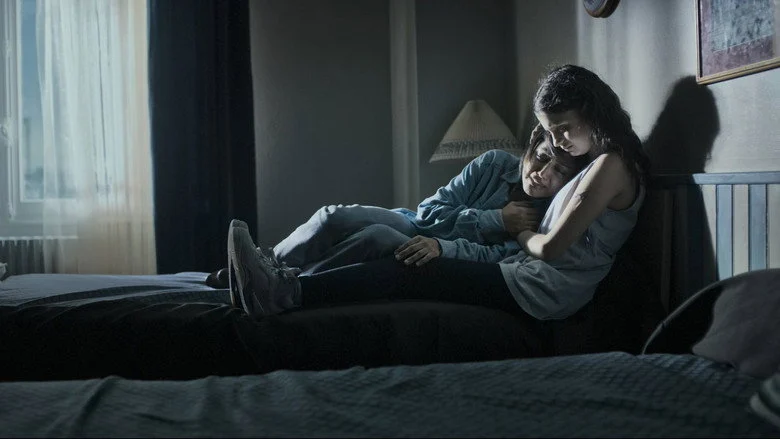
    A 13-year-old girl, Alpha, stands in a school swimming pool as a red ribbon of blood unfurls from her leg into the water. Her classmates recoil, calling her a monster, and the camera lingers on the visceral moment of social execution. This is the defining image of Julia Ducournau’s latest provocation, a film that wants to make you flinch, but also wants to make you think.

    Alpha (2025) review image

    Mélissa Boros: The Raw Nerve of Adolescence

    Mélissa Boros is not a child actor delivering cute lines; she is a raw nerve exposed to the open air. In the school pool scene, her performance captures the particular horror of being a teenager whose body has betrayed her, first through puberty, now through a mysterious, marble-turning disease. She balances vulnerability with a defiant spark, especially when she utters the simple, devastating line: “I just wanted to be normal.” Boros makes Alpha’s inner world feel both specific and universal, a feat that grounds the film’s more grotesque flights of fancy.

    Alpha - Golshifteh Farahani and the Weight of a Mother’s Worry

    Golshifteh Farahani and the Weight of a Mother’s Worry

    Golshifteh Farahani brings an intensity that could power a smaller film by itself. When she sees the tattoo on Alpha’s arm, her face cycles through fear, anger, and a desperate need to protect, all in a single, wordless beat. As a doctor working with virus patients, Farahani’s character is a walking paradox: a woman trained to fight disease, yet utterly powerless against the fear it stokes in her own home. The arrival of Tahar Rahim’s Amin, a sick uncle hovering near death, deepens this trauma, but the performance feels one-note in a film that is otherwise precise about its emotional registers.
    Alpha - Where the Body Horror Bites and Where It Bleeds Out

    Where the Body Horror Bites and Where It Bleeds Out

    The craft of body horror here is Ducournau’s strongest suit, and she knows exactly when to hit the pressure points. The depiction of the disease, blood that turns victims to marble, is physically unnerving, a smart metaphor for how society hardens against the ill.

    But the pacing in the second act sags under the weight of its own message. The social commentary on the stigma of sickness is urgent and correct, but Ducournau beats the drum so loudly that the nuance gets drowned out. The uncle’s arrival, meant to escalate the family crisis, instead feels like a third-act lecture we’ve already sat through.

    The 1980s setting, however, is a masterstroke, it drapes the whole story in an analog fog of VHS-era dread, making the virus feel like something that crawled out of a forgotten tape. The tattoo scene and the pool scene remain the film’s most potent weapons, delivering horror that doubles as sociology.

    For more films that take a scalpel to the body and society alike, browse our collection of French body horror reviews.

    Supporting Cast: A Family of Ghosts

    Emma Mackey and Finnegan Oldfield appear as classmates, but their roles are barely sketched, existing more as instruments of Alpha’s ostracization than as characters. It is a minor letdown, as their casting signals a desire to flesh out the teenage world, but the script leaves them as functionaries. Louai El Amrousy shares a similar fate, though a brief classroom scene hints at a more complex dynamic that never arrives.

    Audience Reception and the Unsubtle Problem

    Viewers have praised the school pool scene for its emotional impact, and Boros’s performance has been a clear standout. Yet the complaints are consistent: the ending is too ambiguous for a film that spent two hours being so direct, and the slow middle section dulls the horror. I suspect Ducournau made a deliberate choice to leave the disease’s origin unexplained, but for many, this felt less like artistry and more like an unfinished thought.

    Alpha is a film that demands you confront its thesis, that society turns the sick into monsters, but it doesn’t always trust you to get the point. It works best in its quietest moments: a mother looking at a tattoo, a girl bleeding in a pool, a family sitting in silence as the world closes in. If you can stomach the grotesque and tolerate the heavy hand, this is an experience that will linger. Watch it on OTT, where you can pause to take a breath.

    Ducournau may have lost some narrative control, but Alpha remains a bloody and sincere work of provocation; I’d give it 3 out of 5 stars for ambition, even if the execution is uneven.

    For another film that weds high-octane action with emotional heft, check out Alia Bhatt in Alpha.

    Those who appreciate jungle-based chaos and patchy screenwriting might also revisit the uneven thrills of Welcome to the Jungle.

    Readers looking for more fr horror reviews can explore them on Movies4u.
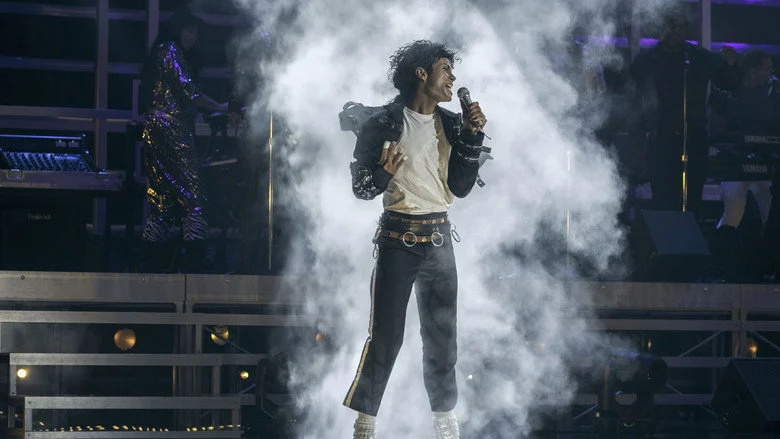
  • Michael (2026): Jaafar Jackson Carries Performance Recreations Over Substantive Biography

    Michael (2026): Jaafar Jackson Carries Performance Recreations Over Substantive Biography

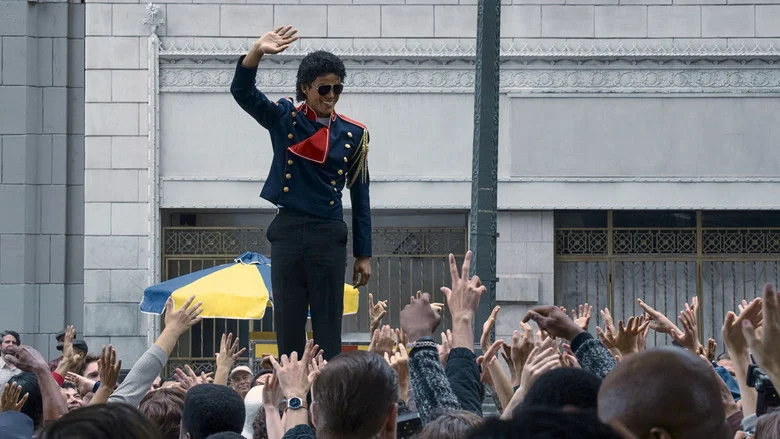
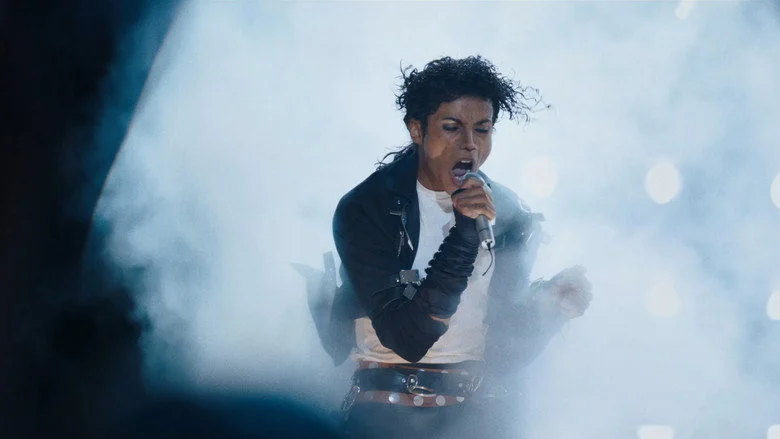
    Michael Jackson’s story unfolds through the eyes of his nephew Jaafar Jackson, who carries the film from Jackson 5 origins through the Bad era with an actor’s first-screen commitment to matching iconic stage moments. Antoine Fuqua’s direction privileges visual spectacle and chronological milestone-marking over the kind of interior psychological depth that might have justified examining the cost of early stardom on a child performer shaped by family pressure and perfectionist drive.

    Michael (2026) review image

    Jaafar Jackson’s Dual Performance Registers

    Jackson’s casting carries immediate weight, blood relation narrows the interpretive distance and stakes the film’s credibility on authentic imitation. His work in the Jackson 5 and early solo performance recreations anchors the film’s central appeal, translating archival choreography and vocal cadence into lived body language rather than mannered impersonation. The provided approach succeeds visually, yet reviewers noted his quieter off-stage moments lack the dramatic texture needed to sustain a character study between performances.

    Michael - Fuqua's Direction Favors Spectacle Over Character Archaeology

    Fuqua’s Direction Favors Spectacle Over Character Archaeology

    The director organizes the narrative around iconic public moments, a commercially sound biopic strategy that privileges visual recognition and staging precision over psychological excavation. His specific strength lies in structuring performance recreation as the film’s dramatic spine; its specific weakness surfaces in the gap between what we watch and what we understand about why Michael’s internal world fractured under that same public machinery. Plugged In noted the story lacked substantive depth, a constraint that feels less like screenplay limitation and more like directorial choice to keep the film moving through highlights rather than dwelling in cost.

    Michael - Biography as Performance Chronology Rather Than Character Study

    Biography as Performance Chronology Rather Than Character Study

    The film moves linearly from childhood discovery through Jackson 5 dominance into early solo stratospheric rise, treating each phase as a discrete performance milestone rather than a continuous psychological arc. Scenes depicting Michael’s relationship with Joe Jackson position the father-son dynamic as a pressure mechanism, fear and discipline shaping early discipline, not trauma exploring emotional consequence. This framework allows the film to sidestep deeper examination; it can acknowledge abuse without investigating its lasting architecture on identity.

    Recreations of Jackson 5 stage work and early solo-era performances carry the visual and emotional weight reviewers singled out as the film’s primary asset. The staging and visual precision match archival footage closely enough to feel like animated memory rather than dramatic reconstruction, a technical accomplishment that satisfies surface appeal while ironically distancing us from the performer beneath the choreography. The approach works as music-biopic spectacle; it fails as biography.

    Colman Domingo’s Joe Jackson functions as the familial antagonist, embodying parental pressure and perfectionist demand that shaped early discipline. His scenes create dramatic friction but resist deeper exploration, he remains a pressure source rather than a fully rendered character. Nia Long as Katherine Jackson occupies a parental support role within the Jackson family constellation, though the provided critical coverage offers limited scene-level observation of her specific performance contributions.

    Miles Teller appears as John Branca, an industry-facing adult role that bridges Michael’s later professional landscape. His presence signals the film’s interest in business and contractual machinery alongside performance history, yet Deep Focus Review’s single-star assessment and broader critical consensus suggest his storyline fails to crystallize into dramatic purpose. His casting matters less than what his scenes accomplish, or fail to accomplish, in deepening our understanding of Michael as a negotiating force rather than a performing vessel.

    One first-person critical observation: I found the film’s refusal to interrogate the psychological aftermath of child abuse particularly frustrating given its PG-13 constraints allow the content to linger without consequence, disturbing imagery without earned emotional investigation.

    Scenes involving child abuse material drew strong critical objection, particularly from reviewers concerned about both thematic weight and family-audience appropriateness. The film includes these moments without the dramatic framework to absorb their impact, creating a tension between content advisory and narrative justification that reviewers flagged as unresolved.

    The supporting ensemble, Laura Harrier, Jessica Sula, KeiLyn Durrel Jones, Larenz Tate, and Mike Myers, remain largely underdeveloped in available critical coverage, suggesting their roles function more as ensemble texture than dramatic catalysts. Their inclusion signals breadth of production scope rather than depth of character integration.

    Whether this film works depends entirely on viewer expectation. If you come for performance recreation and visual homage to Michael Jackson’s iconic stage moments, the film delivers with polished staging and Jaafar Jackson’s committed imitation work. If you come for biography, for understanding how a child performer survived and was transformed by early fame, family expectation, and perfectionist drive, the film retreats into spectacle rather than excavation. The PG-13 rating and thematic constraints visible in how abuse material is handled without psychological follow-through suggest editorial caution that limits the entire enterprise.

    More music biography and performance criticism can be found in our English Primary Biography reviews, where we regularly examine how music-driven narratives balance spectacle with character depth.

    For audiences, the recommendation hinges on format and expectation. Watch on a large screen where the recreated performance moments land with maximum impact; skip if you expect substantive character study. The film succeeds as visual archive and casting novelty; it struggles as serious biography, never resolving the tension between what we admire about Michael Jackson and what we might understand about the cost of becoming him.

    Michael remains a performance vehicle rather than a character study, prioritizing recreation over excavation, a choice that ultimately limits its reach beyond surface appeal and spectacle.

    Those drawn to family-driven performance dynamics might explore Rock 2026 review elsewhere in our archive.

    Colman Domingo’s approach to antagonist roles shares similar pressure-based family dynamics with Dose 2026 verdict across contemporary cinema.

  • A Rock (2026): Yelamanchili Jyothira Rushi’s honest Telugu drama defies fatigue

    A Rock (2026): Yelamanchili Jyothira Rushi’s honest Telugu drama defies fatigue

    Critical fatigue with the Telugu Drama form is understandable. What Yelamanchili Jyothira Rushi has made in A Rock (2026) is the argument against that fatigue. Produced by Unknown at 6 minutes and released May 22, 2026, it demonstrates what the genre looks like when a filmmaker treats it as a vehicle for something real.

    That 7 out of 10 on A Rock is the score of a film that chose its audience correctly and served them honestly. In a field where ratings are frequently manufactured by opening weekend enthusiasm, a settled score built over time carries considerably more critical weight.

    A Rock

    What A Rock Says and How It Chooses to Say It

    The premise of A Rock — Don’t Let a Machine Rewrite the Dream which you once held so… — has been used before. What Yelamanchili Jyothira Rushi’s script and Yelamanchili Jyothira Rushi‘s direction contribute is a specific treatment of that premise that is observably theirs rather than generic. That specificity is what separates the film from its antecedents.

    The decision to film A Rock in India is not a production convenience — it is an argument. Yelamanchili Jyothira Rushi’s screenplay is written from the inside of a specific cultural context, and the 0+ Crores that Unknown committed ensures Yelamanchili Jyothira Rushi could honour that context rather than merely approximate it.

    The one place A Rock loses critical confidence is precisely where most Telugu Drama films lose it — the junction between the second act and the conclusion. Yelamanchili Jyothira Rushi and Yelamanchili Jyothira Rushi are both working hard in that section. The evidence of the work, rather than its result, is occasionally visible.

    The Performances That Make A Rock Credible

    Advaith Jayakrishnan brings to Drummer in A Rock a quality that the screenplay points toward but cannot guarantee: interiority. The character’s inner life is visible without being stated, communicated through an accumulation of small choices that a less disciplined actor would not have made and most audiences will not consciously notice.

    The relationship between Advaith Jayakrishnan‘s central performance and the ensemble of Kode Bhuvan Surya Teja, Abdullah Ghouri, Advaith Jayakrishnan, Kedar Subhedar in A Rock is the relationship between a soloist and an orchestra that has learned not to overplay. The balance is Yelamanchili Jyothira Rushi‘s achievement, and it holds across the full runtime of A Rock.

    and Advaith, Kedar, Kode, Abdullah give A Rock its supporting credibility at the moments the narrative requires most from them. Neither performance announces its quality — both reward the attention a careful viewer will bring to them. This is the supporting work that serious Telugu Drama filmmaking tends to produce.

    How Yelamanchili Jyothira Rushi Has Solved the Technical Problems of A Rock

    The production of A Rock under Yelamanchili Jyothira Rushi for Unknown reflects a creative process in which the 0+ Crores allocation followed the film’s requirements rather than preceded them. This is, unfortunately, rarer than it should be in the Telugu Drama space — and the film’s technical quality is the direct result.

    Yelamanchili Jyothira Rushi cuts A Rock to 6 mins with a precision that the film earns through the quality of its material. The editing is not decorative — it is argumentative, making claims about the film’s rhythm and pacing that the direction supports. The third act is the one place where those claims become harder to sustain.

    The visual argument of A Rock is made consistently and with conviction. Yelamanchili Jyothira Rushi has developed a cinematographic language for A Rock that is specific to its story and setting — the India locations are not photographed for their beauty but for their meaning, which is the correct critical priority.

    The Critical Verdict on A Rock — What It Achieves and What It Does Not

    The 0.07 score on A Rock deserves neither critical dismissal nor uncritical celebration. What it indicates is that a film made with genuine intention has reached a genuinely large audience — and that those viewers have responded to the intention as well as the entertainment.

    With 1000+ responses producing 7+ Stars, A Rock occupies a critical position that its directorial ambition alone would not guarantee. The audience has independently arrived at the assessment that the film merits — which suggests that quality, when it is present, continues to be recognised.

    A Rock is, on critical balance, one of the better Telugu Drama, Documentary films of its season. Its limitations are real and have been noted. Its achievements — formal, performative, and thematic — are more substantial and less common. At 6m, it warrants the attention it asks for.

    The critical record continues — find more seriously made Telugu Drama films in our archive.

    [egp_related_silo genre=’Drama’ lang=’Telugu’]
  • Dug Dug (2026): Ritwik Pareek revives the Hindi music form with raw conviction

    Dug Dug (2026): Ritwik Pareek revives the Hindi music form with raw conviction

    Critical fatigue with the Hindi Music form is understandable. What Ritwik Pareek has made in Dug Dug (2026) is the argument against that fatigue. Produced by Bottle Rocket Pictures, Flip Films at 107 minutes and released May 8, 2026, it demonstrates what the genre looks like when a filmmaker treats it as a vehicle for something real.

    The 7 out of 10 audience score is worth contextualising. It reflects a large number of viewers who arrived with mainstream expectations and found a film that exceeded them — which is the most useful kind of positive reception a serious Hindi Music film can generate.

    Dug Dug

    Story, Subtext, and Execution in Dug Dug (2026)

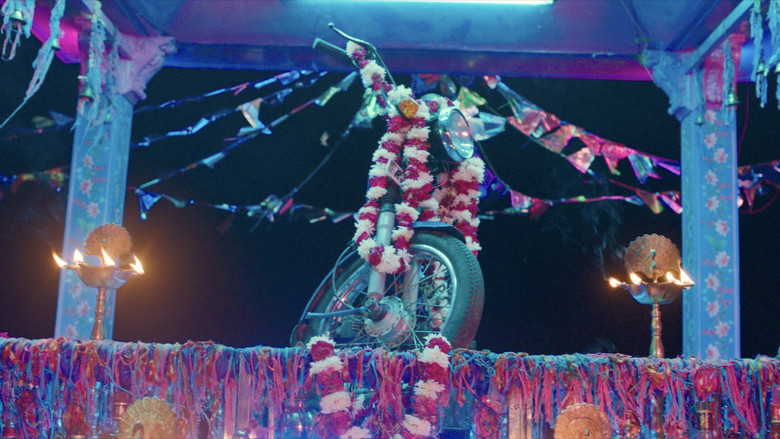
    The first act of Dug Dug establishes Mysterious events in the wake of a freak motorcycle accident sow the… with the economy of a Ritwik Pareek script that knows its own purpose. There is no throat-clearing, no unnecessary scene-setting — Ritwik Pareek is in the material from the first frame, and the film benefits from that directness.

    Produced across India at crores, Dug Dug carries the authority of genuine location. This matters because Ritwik Pareek’s script makes demands of its setting that a studio approximation could not meet. Ritwik Pareek and Bottle Rocket Pictures, Flip Films understood that, and the film is stronger for the decision.

    Ritwik Pareek has written a conclusion for Dug Dug that reaches for more than the 107 minutes runtime can fully accommodate. Ritwik Pareek executes it with care, but care cannot substitute for the structural discipline the final act lacks. The film arrives at its destination — the route is longer than necessary.

    Dug Dug

    From Altaf Khan Down: A Critical Account of Dug Dug’s Performances

    The central performance from Altaf Khan as Thakur Sa is the element of Dug Dug that most resists easy summary. It is a performance of sustained intelligence — not intelligence announced, but intelligence demonstrated, scene by scene, in choices that accumulate rather than declare.

    Gaurav Soni, Durgalal Saini, Altaf Khan, Yogendra Singh give Dug Dug the kind of supporting performances that the film’s central argument requires — specific, grounded, and free of the self-consciousness that afflicts actors who know they are being watched. Ritwik Pareek has created the conditions for unselfconscious work and the cast has delivered it.

    The critical undervaluation of supporting performance is a persistent problem in reviews of films like Dug Dug. The work of and Altaf, Gaurav, Yogendra, Durgalal, Sarvesh in Dug Dug is a corrective to that habit — both deliver performances of a quality that the film’s overall standard requires and that the final result depends on.

    Dug Dug

    Directorial Method and Technical Achievement in Dug Dug

    The technical achievement of Dug Dug begins with the relationship between Ritwik Pareek and the crores that Bottle Rocket Pictures, Flip Films committed to the production. That relationship — of filmmaker leading and resources following — is what gives Dug Dug its coherence.

    The 1 hr 47 mins edit from Bijith Bala is the product of a genuine understanding of what Dug Dug requires at the level of pace and internal logic. The film’s rhythm is established early and maintained consistently — the loosening in the final act is a screenplay problem that editing can mitigate but not solve.

    What distinguishes the technical achievement of Dug Dug from merely competent filmmaking is the relationship between its visual choices and its thematic ones. Ritwik Pareek has made a film in India that looks like what it means — which is the most demanding standard in Hindi Music cinema and the one that Dug Dug meets.

    Dug Dug

    Assessing Dug Dug: Where It Stands in the Hindi Music Field

    Popularity at 0.3586 for Dug Dug is a market signal worth reading carefully. It suggests the film has found viewers beyond its natural critical constituency — which means Ritwik Pareek has made something that works at both the craft and entertainment level without compromising either.

    The audience has provided Dug Dug with 1000+ ratings averaging 7+ Stars. The critical question is not whether this score is deserved — it is — but what it tells us about the current state of Hindi Music audience expectation. The answer is encouraging.

    Dug Dug is, on critical balance, one of the better Hindi Comedy, Music films of its season. Its limitations are real and have been noted. Its achievements — formal, performative, and thematic — are more substantial and less common. At 1h 47m, it warrants the attention it asks for.

    The critical record continues — find more seriously made Hindi Music films in our archive.

    [egp_related_silo genre=’Music’ lang=’Hindi’]
  • Itlu Kanmani (2026): Ramachandran Vishwanathan crafts a honest, measured Telugu drama.

    Itlu Kanmani (2026): Ramachandran Vishwanathan crafts a honest, measured Telugu drama.

    Itlu Kanmani (2026) arrives on May 3, 2026 with fewer promises than most Telugu Drama, Romance, Family releases and keeps more of them. Ramachandran Vishwanathan and Tridev Pictures have made a 50 minutes film that earns its craft credentials rather than assuming them.

    A 7 out of 10 from the audience is, in this case, a more meaningful figure than it might appear. Itlu Kanmani is not a film engineered for mass satisfaction. That it achieves 7 out of 10 while maintaining its creative integrity is the more interesting data point.

    Itlu Kanmani

    Story, Subtext, and Execution in Itlu Kanmani (2026)

    Unknown has written Itlu Kanmani around Itlu Kanmani follows Rohith, a young man who once dreamed of becoming… with a structural clarity that Ramachandran Vishwanathan honours rather than complicates. The result is a film whose intentions are legible throughout — which does not make it simple, but does make it honest.

    Unknown’s script for Itlu Kanmani is built around a sense of place — India — that the 0+ Crores investment from Tridev Pictures allows Ramachandran Vishwanathan to realise properly. Films that underinvest in their settings ask their audiences to overlook the gap. Itlu Kanmani does not ask that.

    The structural weakness of Itlu Kanmani is localised in its final act, where Unknown’s script accumulates more than it resolves. Ramachandran Vishwanathan manages the excess with skill — the film does not collapse — but a more rigorous edit would have clarified what the narrative is ultimately arguing.

    Cast Assessment — Itlu Kanmani: Rigorous and Fair

    Paruchuri Venu‘s work as a character in Itlu Kanmani is the kind of screen acting that critics tend to undervalue because it does not offer obvious handles. There is no moment of theatrical release, no scene that announces itself as the performance’s centre. The centre is everywhere, consistently.

    Rashmitha Rao Kommaragiri, E. RaviShankar Reddy, Paruchuri Venu give Itlu Kanmani the kind of supporting performances that the film’s central argument requires — specific, grounded, and free of the self-consciousness that afflicts actors who know they are being watched. Ramachandran Vishwanathan has created the conditions for unselfconscious work and the cast has delivered it.

    The supporting contributions of Rashmitha Rao Kommaragiri in Itlu Kanmani represent the film at its most precisely observed. Their scenes carry a weight that the screenplay describes in outline and the performance fills in completely. Paruchuri, E., Rashmitha operates with comparable precision in a different register — the supporting cast as a whole does not have a weak point.

    Direction, Editing, and Visual Intelligence in Itlu Kanmani (2026)

    The technical achievement of Itlu Kanmani begins with the relationship between Ramachandran Vishwanathan and the 0+ Crores that Tridev Pictures committed to the production. That relationship — of filmmaker leading and resources following — is what gives Itlu Kanmani its coherence.

    Unknown assembles Itlu Kanmani at 50 minutes with the editorial maturity that the film’s tonal ambitions require. The cut does not hurry what needs time and does not linger where the scene has concluded — a discipline that holds throughout Itlu Kanmani with only the final act offering grounds for critical reservation.

    The visual argument of Itlu Kanmani is made consistently and with conviction. Ramachandran Vishwanathan has developed a cinematographic language for Itlu Kanmani that is specific to its story and setting — the India locations are not photographed for their beauty but for their meaning, which is the correct critical priority.

    Reception, Evaluation, and Recommendation — Itlu Kanmani (2026)

    The commercial reception of Itlu Kanmani — 0.1184 on the popularity index — confirms what the critical case for the film suggests: that Ramachandran Vishwanathan and Tridev Pictures have made something that functions simultaneously as serious cinema and accessible entertainment. That achievement is rarer than either alone.

    The audience has provided Itlu Kanmani with 1000+ ratings averaging 7+ Stars. The critical question is not whether this score is deserved — it is — but what it tells us about the current state of Telugu Romance audience expectation. The answer is encouraging.

    Itlu Kanmani is, on critical balance, one of the better Telugu Drama, Romance, Family films of its season. Its limitations are real and have been noted. Its achievements — formal, performative, and thematic — are more substantial and less common. At 50m, it warrants the attention it asks for.

    The critical record continues — explore our complete 2026 Telugu critical archive.

    [egp_related_silo genre=’Romance’ lang=’Telugu’]
  • Ajith Kumar – Life Of A Gladiator (2026): A. L. Vijay crafts a compelling documentary with Ajith’s raw authenticity.

    Ajith Kumar – Life Of A Gladiator (2026): A. L. Vijay crafts a compelling documentary with Ajith’s raw authenticity.

    Critical fatigue with the Tamil Documentary form is understandable. What A. L. Vijay has made in Ajith Kumar – Life Of A Gladiator (2026) is the argument against that fatigue. Produced by Unknown at 2+ Hours and released May 1, 2026, it demonstrates what the genre looks like when a filmmaker treats it as a vehicle for something real.

    The 7 out of 10 consensus deserves neither uncritical celebration nor dismissal. It reflects a film that has connected with a broad audience without condescending to one — a balance that most Tamil Documentary productions at this budget level fail to strike.

    Ajith Kumar - Life Of A Gladiator

    What Ajith Kumar – Life Of A Gladiator Says and How It Chooses to Say It

    Unknown has given A. L. Vijay a script in Ajith Kumar – Life Of A Gladiator that opens on A premise that announces itself clearly and does not pretend the premise is more novel than it is. What the screenplay does instead is execute the familiar with enough craft and specificity to justify its existence — which is the more demanding achievement.

    The crores production across India gives Ajith Kumar – Life Of A Gladiator a specificity that is essential to what Unknown is writing about. A. L. Vijay treats this specificity as a responsibility rather than an asset — the film does not display its locations, it inhabits them.

    The structural weakness of Ajith Kumar – Life Of A Gladiator is localised in its final act, where Unknown’s script accumulates more than it resolves. A. L. Vijay manages the excess with skill — the film does not collapse — but a more rigorous edit would have clarified what the narrative is ultimately arguing.

    From Ajith Kumar Down: A Critical Account of Ajith Kumar – Life Of A Gladiator’s Performances

    What Ajith Kumar achieves as Self in Ajith Kumar – Life Of A Gladiator is the suppression of performance itself. You do not watch them act — you watch Self exist. The distinction is the difference between craft and technique, and Ajith Kumar is operating at the former level throughout.

    What Narain Karthikeyan, Ajith Kumar, Aditya Patel, Julien Gerbi bring to Ajith Kumar – Life Of A Gladiator is the collective quality that distinguishes a cast from a group of actors: they appear to inhabit the same world. The coherence of the ensemble in Ajith Kumar – Life Of A Gladiator is not accidental — it is the result of direction that prioritised the world over the individual performance.

    It would be a critical failure to assess Ajith Kumar – Life Of A Gladiator without accounting for , whose performance in the film’s middle section is its most emotionally complex passage. Ajith, Narain, Julien, Aditya brings a different kind of complexity to their scenes — more structural than emotional — and Ajith Kumar – Life Of A Gladiator needs both.

    Production, Direction, and the Limits of Both in Ajith Kumar – Life Of A Gladiator

    A. L. Vijay has made Ajith Kumar – Life Of A Gladiator as though the crores were a tool rather than a mandate. The Unknown production funding appears to have been given with genuine creative latitude, and A. L. Vijay has used that latitude to make decisions that serve the film rather than the investment.

    The editing of Ajith Kumar – Life Of A Gladiator by Unknown at 2+ Hours demonstrates what editorial intelligence looks like in service of a director who has made clear decisions. The rhythm is A. L. Vijay‘s — Unknown has found and sustained it, which is the editor’s proper function and the most demanding version of it.

    The visual argument of Ajith Kumar – Life Of A Gladiator is made consistently and with conviction. A. L. Vijay has developed a cinematographic language for Ajith Kumar – Life Of A Gladiator that is specific to its story and setting — the India locations are not photographed for their beauty but for their meaning, which is the correct critical priority.

    Assessing Ajith Kumar – Life Of A Gladiator: Where It Stands in the Tamil Documentary Field

    Ajith Kumar – Life Of A Gladiator has accumulated a popularity score of 0.2466 — a figure that a critic should resist treating as either validation or irrelevance. The more useful observation is that a film of this formal ambition reaching 0.2466 suggests the Tamil Documentary audience is more sophisticated than the market often assumes.

    1000+ audience votes and 7+ Stars. The mathematics are clear. Ajith Kumar – Life Of A Gladiator has produced a consistent experience across a very large and diverse audience — which is the only audience verdict that a critic should treat as meaningful evidence about the film’s actual quality.

    Ajith Kumar – Life Of A Gladiator merits a considered recommendation. Not an unqualified one — the third act has been addressed — but a considered one, based on 2+ Hours of filmmaking that takes its audience seriously and Ajith Kumar‘s performance of the kind that makes a film worth revisiting.

    The critical record continues — explore our complete 2026 Tamil critical archive.

    [egp_related_silo genre=’Documentary’ lang=’Tamil’]