Tag: Sharvari

  • Alpha (2026): Alia Bhatt Delivers a High-Octane Action Thriller with Emotional Heft

    Alpha (2026): Alia Bhatt Delivers a High-Octane Action Thriller with Emotional Heft

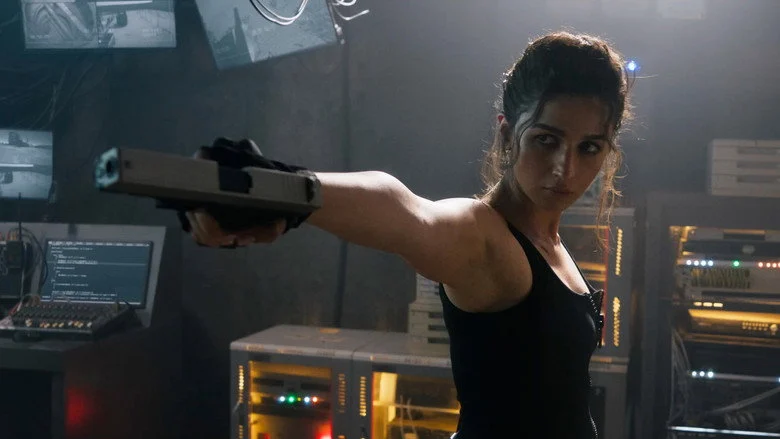
    Monsoon rain lashes across a Mumbai rooftop as two women circle each other. In Alpha, this duel, choreographed with ruthless precision, becomes the film’s beating heart. For audiences craving a sharp, female-led action thriller, this YRF entry delivers enough adrenaline to forgive its uneven climax.

    Alpha (2026) review image

    Alia Bhatt Shreds the Starlet Image with Raw Physicality

    Alia Bhatt emerges as a credible action lead. The rooftop face-off with Sharvari’s Kira requires stamina and menace, and she supplies both without blinking. Yet it is her quieter moment, an office confrontation with Anil Kapoor where she delivers “You built me to kill, but you never taught me why”, that hints at the emotional cost driving her vengeance. The performance earns the stretch, even if the script never fully explores that wound.

    Alpha - Shiv Rawail's Direction Finds Its Rhythm in the First Half

    Shiv Rawail’s Direction Finds Its Rhythm in the First Half

    Debutant director Shiv Rawail controls the geography of urban nightscapes and narrow corridors with rare confidence. The screenplay, however, splinters in its second half, Major Arjun’s motives remain scribbled in outline form, and the infiltration sequence loses all narrative tension once the heroics turn mechanical. One wonders how much sharper this could have been with a tighter third act.

    Alpha - Action and Genre Craft: Where the Film Earns Its Keep

    Action and Genre Craft: Where the Film Earns Its Keep

    The rooftop duel between Alpha and Kira is the film’s undisputed centrepiece. Shot during an actual monsoon storm, the wet concrete and flashing rain create a visceral texture that pure CGI cannot replicate. Every kick and parry carries a desperate, personal weight, these are not stunt doubles fighting; these are two women driven by loyalty and loss.

    The espionage mechanics of the illicit soldier program offer enough intrigue to push the mystery forward. When Alpha uncovers Vikram Singh’s true allegiance, the betrayal lands with appropriate dramatic weight. Yet the plot mechanics grow predictable; the second act’s twists are signposted well before they arrive.

    The underground base infiltration, however, collapses into a flood of unconvincing visual effects. Where the monsoon sequences felt alive, the final setpiece feels borrowed from a lesser video game. It is here that Alpha begins to run out of steam, trading character payoff for explosions that lack consequence.

    Sharvari and Anil Kapoor: Supporting Performances That Leave You Wanting More

    Sharvari matches Bhatt blow for blow as Kira, her cold physicality providing a credible foil. When she hisses, “We are the same. The only difference is who you choose to serve, ” it lands as the film’s most honest thesis. Anil Kapoor’s Vikram Singh is a masterclass in moral ambiguity, but his screen time is frustratingly thin. Bobby Deol’s Major Arjun, by contrast, projects cold authority without the emotional shading his role demands, leaving the final confrontation feeling like a sketch rather than a finished portrait.

    If this universe of high-octane action intrigues you, browse more Hindi Thriller reviews on our site.

    Audience Reception: A Solid Hit with Bumps Along the Way

    Box Office India reports an opening day net of ₹42.5 crore, and first-week worldwide figures hit ₹342.8 crore, numbers that confirm the YRF branding and Bhatt’s draw power. Yet the IMDb rating of 7.2/10 and a BookMyShow score of 8.1/10 tell a split story: fans thrilled by the lead performance, but vocal about the underdeveloped villain and rushed finale. The film is a hit, but one nursed on promise rather than execution.

    Trade analyst Anupama Chopra noted that Alpha‘s female-led action drove its success, though the climax may limit long-term appeal. She is right. The film earns its box office through sheer momentum, but the third act’s thin resolution keeps it from joining the front rank of YRF’s spy universe. On Rotten Tomatoes, the 6.8/10 average critic rating mirrors this ambivalence: respect for the craft, frustration at the shortcuts.

    Alpha is a confident debut for a female-led franchise that knows exactly when to hit and when to hesitate. For action fans and YRF loyalists, this is a clear ticket, especially in IMAX, where the sound design and monsoon visuals demand a big screen. But if you need your villains fleshed out and your climaxes earned, wait for the streaming release. It is a step forward for Hindi action, but one taken with a stumble at the finish line. Alpha earns a hard-fought 3 out of 5 stars.

    For another action thriller that struggles with a patchy screenplay, read our take on Welcome Jungle review.

    See how Main Vaapas verdict also grapples with an uneven narrative despite strong lead performances.

  • Main Vaapas Aaunga (2026): Naseeruddin Shah A stands out while the narrative loses grip

    Main Vaapas Aaunga (2026): Naseeruddin Shah A stands out while the narrative loses grip

    Naseeruddin Shah doesn’t just play Ishar Singh Grewal; he inhabits the shell of a 95-year-old man whose body has betrayed his will. The physical tremors, the vacant stares at a map of Pakistan, and the barely audible whisper of “Main vaapas aaunga” in the opening scene are disturbingly real. His performance relies on micro-expressions, a twitch of the lip, a glassy-eyed gaze, that communicate more than any monologue could.

    He reserves his full dramatic might for the climax. When Nirvair reveals that Afsana died waiting for him a decade ago, Shah’s face collapses into a silence that is louder than any wail. It is the rare kind of acting that reminds you why he is considered one of India’s finest.

    Main Vaapas Aaunga (2026) review image

    Diljit Dosanjh: The Frustrated Anchor of the Present

    Diljit Dosanjh, as grandson Nirvair, is tasked with being the bridge between a confused elder and a fragmented past. He carries the frustration of caring for a dementia patient without tipping into melodrama, using restrained facial cues rather than dialogue to express his helplessness. His chemistry with Shah is tender but never syrupy.

    However, the character remains underwritten as a mere plot conduit. Dosanjh does what he can, but the screenplay leaves him circling the same emotional well, exasperation followed by gentle compassion, without any arc of his own.

    Main Vaapas Aaunga - A.R. Rahman’s Score Carries the Emotional Weight

    A.R. Rahman’s Score Carries the Emotional Weight

    Rahman’s music is the film’s unsung protagonist. The background score during the 1947 Partition chaos, where Young Ishar and Afsana are violently separated by the crowd, pulses with a frantic, disorienting energy that matches the visual horror. The songs, with Irshad Kamil’s lyrics, deepen the ache of longing without ever feeling shoehorned.

    The warm, golden cinematography of the pre-Partition flashbacks contrasts starkly with the cold, desaturated present. This visual language does what the script sometimes fails to do: it makes you feel the distance between 1947 and 2026 without a single line of exposition.

    Main Vaapas Aaunga - Vedang Raina and Sharvari: A Promising, Underwritten Pair

    Vedang Raina and Sharvari: A Promising, Underwritten Pair

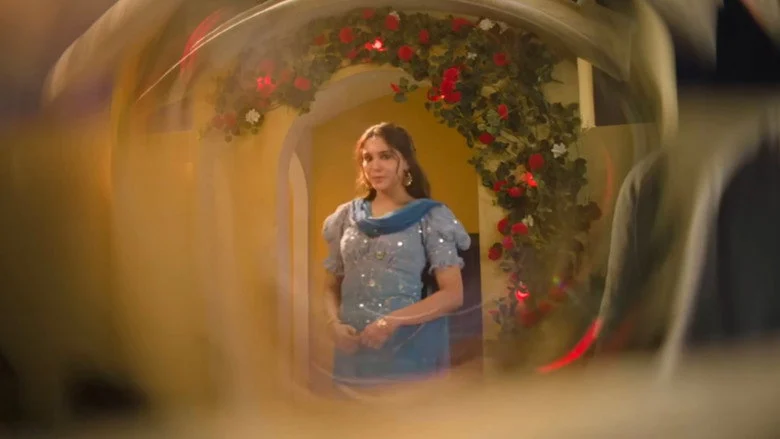
    Vedang Raina and Sharvari capture the giddy, stolen-glances innocence of young love in the flashback timeline. Their first meeting scene is shot with a painterly nostalgia that feels like a sepia photograph come alive. Yet the script gives them little more than a montage of bliss before ripping them apart.

    Sayani Gupta, in a brief supporting role, registers a quiet presence, but her character lacks any real texture or purpose. She exists to fill a frame rather than to deepen the story, a missed opportunity given the actor’s proven ability.

    Genre-Core Execution: Romance Thwarted by History

    Imtiaz Ali stages the genre-core romance with his signature yearning: a promise whispered in moonlight, a separation in a crowd, a lifetime of waiting. The 1947 crowd sequence is a masterclass in tragic-romance craft, every face in the chaos becomes a wall between the lovers. It is visceral and brutal, exactly the sort of setpiece that reminds you why partition stories still resonate.

    The problem lies in the “movie within a movie” device, Nirvair’s attempt to transport his grandfather back in time using music and visuals. It is conceptually clever but executed without narrative logic. How does the grandfather experience this movie? Is it a memory trigger or a literal time-travel? The ambiguity feels like a shortcut rather than art.

    The second half slows to a crawl, dwelling on the revelation of Afsana’s death for what feels like an eternity. The pacing is intentional, to sit with grief, but it also drains the film of dramatic momentum. I found myself wishing Ali had trimmed at least 20 minutes from the 166-minute runtime.

    For those drawn to the emotional register of this film, there is a wealth of similar storytelling waiting to be discovered in our Hindi Drama reviews.

    Controversy and Audience Reception: Soaring Praise, Quiet Complaints

    The film has received a stellar 92% on Rotten Tomatoes, with critics hailing Imtiaz Ali’s return to old-school romance. Fans have praised the emotional impact of the partition flashbacks, particularly the visual intensity of the separation scene. Naseeruddin Shah’s performance is universally cited as the film’s beating heart.

    Yet the audience has not been unanimously seduced. A notable complaint targets the ending: a resolution that is overwhelmingly tragic without offering a shred of hope. For a film about love and promises, the lack of catharsis has left some viewers frustrated. Another common grievance is the second-half pacing, which a segment of the audience found slogging rather than meditative.

    If you can sit with heartbreak without demanding a silver lining, this film will linger in your bones for days. Watch it on the largest screen you can find, the Immersive format amplifies the Partition setpiece into something close to trauma, but brace yourself for a two-hour-and-forty-six-minute emotional excavation that refuses to let you off easy.

    The narrative debt this owes to a more honest exploration of longing is clear for anyone who watches Cocktail 2 review.

    Main Vaapas Aaunga is an ambitious, deeply flawed, and occasionally transcendent film that earns a firm 3.5/5 for its acting and music, but loses points for its meandering script and questionable narrative mechanics.

    For a more grounded rural sports drama, Peddi verdict offers a different kind of gamble on high-stakes storytelling.