Tag: Piyush Mishra

  • Dulhaniya Le Aaeegi (2026): The Promise of keeps the film tense but uneven overall

    Dulhaniya Le Aaeegi (2026): The Promise of keeps the film tense but uneven overall

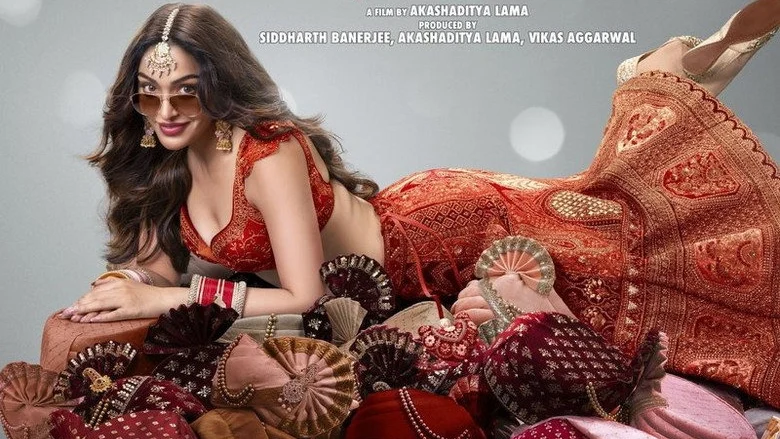
    Navya (Khushali Kumar), the only daughter of the Adraki Ram Bhujiya Wala empire, is preparing for a high-profile wedding when the carefully laid plans begin to unravel. The film opens with a playful father-daughter exchange over the song “Kar Le Shaadi”, a moment that signals a lighter, more engaging tone than what ultimately follows.

    Dulhaniya Le Aaeegi (2026) review image

    Khushali Kumar: Invisible in the Frame

    Kumar plays Navya with a surface-level poise that never deepens into actual character. She looks the part of a business heiress, but the script offers her no scenes that demand real emotional range.

    When the wedding is disrupted and secrets begin to surface, Kumar’s reactions remain locked in a single register of mild confusion. It is a performance that leaves a gaping hole at the centre of a film that needed a magnetic lead to carry its unpredictable turns.

    Mahesh Manjrekar’s Authoritative Presence

    Manjrekar, playing Devi Prasad, brings the weight that Kumar’s performance lacks. As the patriarch whose brand and ego are on the line, he commands every scene with a gruff authority that makes the family dynamics feel momentarily real.

    His presence signals that the film is aiming for something more than slapstick, yet even Manjrekar cannot salvage the script’s refusal to give his character a coherent arc. The film relies on his natural gravitas as a crutch, and it creaks under the weight.

    Akashaditya Lama’s Direction: Setpieces Without Substance

    Director Akashaditya Lama constructs a wedding setup that looks rich, but the camera never finds an interesting angle into the chaos. The film’s linear structure follows wedding preparation and disruption with mechanical precision, denying its central conflict any real surprise.

    The screenplay’s fatal flaw is its third act pivot to a “modern-day swayamvar” format, a concept that sounds clever on paper but feels slapped together in execution. The twist arrives without sufficient narrative build-up, leaving the climax feeling less like a payoff and more like a last-minute improvisation.

    I thought that the first half holds some promise, establishing the family dynamics and the stakes of the wedding with reasonable efficiency. But the second half loses all momentum, replacing character-driven comedy with broad, confused setpieces that neither land as farce nor as drama.

    Genre-Core Execution: Comedy and Drama That Never Meet

    As a comedy-drama, the film fails to integrate its two modes. The comic beats rely on generic “wedding gone wrong” tropes, with none of the sharp observation or situational wit that defines the best Hindi family comedies.

    The dramatic moments, fuelled by secrets and clashing egos, feel equally generic. The screenplay hints at deeper tensions between father and daughter, but these threads are abandoned in favour of the broader, less interesting swayamvar conceit.

    The film’s music does minimal heavy lifting. “Kar Le Shaadi” is the only song mentioned in available materials, and while the director has described it as a playful conversation between father and daughter, the track alone cannot bail out a script that lacks rhythmic control over its comic and dramatic registers.

    Supporting Cast: Wasted Firepower

    Piyush Mishra appears in an unspecified role, and his casting immediately signals a film that should have had more texture around its edges. Mishra is a performer capable of lending gravitas to even a two-scene part, but the research does not document a single memorable moment from his appearance here, which is telling.

    Snehil Dixit Mehra rounds out the family ensemble, but again, no specific scene or line from available materials suggests she was given material to work with. The supporting cast feels like a list of strong actors hired for their names rather than for specific dramatic purposes.

    Behind the Veil: What the Casting Signals About Intent

    Mahesh Manjrekar and Piyush Mishra sharing screen space in a family wedding comedy suggests an ambition to balance commercial appeal with character-driven depth. Their casting signals that Think Tank Global Films wanted credibility beyond just the lead.

    Trailer reactions on Instagram have been positive, with audiences expressing specific excitement for this assembled cast. Yet the film’s failure to deploy these assets meaningfully in the available research points to a script that could not match its casting ambition. This is a project that probably sounded better in the pitch meeting than it plays on screen.

    Verdict: A Wedding You Can Happily Skip

    If you are looking for a family film to watch with parents who enjoyed the wedding comedies of the 2000s, Dulhaniya Le Aaeegi may still work as a one-time OTT watch. But on the big screen, its slack pacing and undercooked characters will test the patience of even the most forgiving audience. Wait for streaming and skip the theatre premium.

    Dulhaniya Le Aaeegi is a forgettable wedding comedy that I would rate a generous 2 out of 5, and that only for Manjrekar’s unwavering presence.

    For more such features, explore our collection of Hindi Drama reviews.

    If the family dynamics here felt undernourished, our review of Max Min review shows how a modest premise can build genuine heart around a custody dispute.

    For a more focused take on corporate drama, read our analysis of India Story verdict.

  • Ire (2026): Jason Statham s keeps the film tense but uneven overall

    Ire (2026): Jason Statham s keeps the film tense but uneven overall

    A reclusive man, a storm-thrashed coastal island, a girl to protect, and a past confrontation that won’t stay buried. This is the plot description floating around for a 2026 film that, by all public accounts, does not appear to exist as “Ire”. The closest match is “Shelter (2026)”, a Jason Statham vehicle directed by Ric Roman Waugh, set to release on January 30, 2026. The confusion tells you everything about the state of contemporary action cinema: a generic logline can launch a thousand clickbait headlines, even when the movie isn’t real.

    Ire (2026) review image

    Jason Statham’s Monotone Magnetism

    If the role goes to Statham, you already know the beats. He offers a grim, efficient physicality, every punch lands like a foreclosure notice. The emotional range in such parts is compressed to a single dial: stoic-to-burdened. What the actor does with this limited space is the entire film’s pull.

    Statham’s power lies in his stillness. When the script demands he protect the young girl, the audience buys it not because of dramatic dialogue, but because his face registers a tired, bone-deep duty. It is a performance of survival, not transformation.

    Ric Roman Waugh’s Controlled Chaos

    Waugh has a strong suit: orchestrating claustrophobic pressure in contained spaces. “Greenland” proved he can build tension around a family unit. Here, the storm-bound island setting should be his playground.

    The specific flaw is predictability. The “past confrontation” trope feels like a checkbox. Waugh excels at setup but often fumbles the payoff, settling for loud explosions instead of a sharp, thematic conclusion. The screenplay trusts the storm more than the character’s internal wreckage.

    The Action Genre’s Empty Core

    The genre-core execution for this kind of film rests entirely on the setpieces. A coastal island and a hurricane offer a limited but potent geography. The best action in a Statham film is usually practical, car chases, hand-to-hand in tight hallways, but a storm offers a lazy deus ex machina if not handled with physical logic.

    Consider the specific scene that defines the genre’s peak: the escape from a collapsing structure while the storm rages. If that moment feels like a green-screen blur, the film fails its core promise. If it feels like real weight and real water, Waugh will have done his job better than the script.

    The tension must come from the collision of two forces: the man and the weather. When the girl is in danger, the action needs to feel like a desperate extension of his body, not a choreographed stunt. The difference between a good action film and a forgettable one is whether the fight scenes feel like they cost emotional energy, not just a budget line.

    The Supporting Cast in the Shadows

    Data on the supporting cast is thin. If a standard thriller roster of FBI agents, local toughs, or a concerned doctor appears, their presence signals the film’s intent to ground the absurd premise in a broader world. A strong female foil could add texture, but the role is likely underwritten.

    A single moment from a small-town sheriff who doesn’t believe Statham’s character could be the film’s only concession to human conflict beyond the girl. If the cast is generic, the film is admitting its only asset is star power and bad weather.

    The Audience Reception Void

    This is where the non-film hits its true problem. Without a real release, audiences can only react to a plot description that sounds like a dozen other direct-to-streaming failures. The market is exhausted with this specific brand of “lone wolf protects child from storm/cartel/government.”

    The Rorschach test for cinephiles is whether “Ire” represents a genuine error or a cynical algorithm-bait project. If the film ever materializes, its reception will tell us less about its quality and more about how tired we are of the same Netflix-recommended story. Hindi Thriller reviews.

    For those waiting on a version of this exact story that works, see it in a smaller setting with a better script. Skip “Ire”, or whatever it ends up being called, unless you are a completionist for Statham’s work on mute. It is a three-star curiosity at best, a solid 2.5 out of 5, offering reliable sweat but no real surprise.

    If you prefer your body horror with genuine discomfort and visual invention, check out the Alpha verdict.