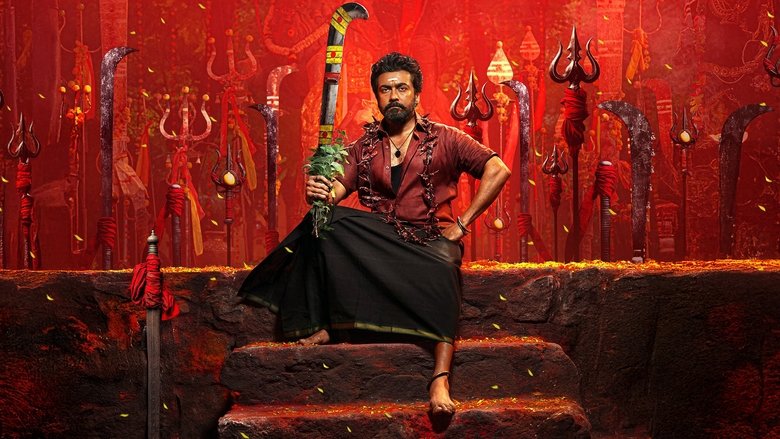
Category: Fantasy

  • The Odyssey (2026): Nolan’s Ambitious Epic Risks Sinking Under Its Own Mythic Weight

    The Odyssey (2026): Nolan’s Ambitious Epic Risks Sinking Under Its Own Mythic Weight

    Odysseus, played by Matt Damon, drives a spear into the eye of Polyphemos, and for a moment the IMAX screen feels like it might tear open. It is Nolan at his most elemental, brute force, mythic scale, and a sound design that makes the giant’s rage feel tectonic.

    The Odyssey (2026) review image

    Matt Damon: A King Without a Kingdom

    Damon’s Odysseus is a weary man first, a warrior second. He carries the Trojan War in his shoulders, not his sword arm.

    The scene where he cedes the throne to Telemachus is played as a quiet abdication, not a heroic farewell. Damon works against the myth, looking for the man beneath the legend, and it mostly lands, until the script demands he yell over a storm.
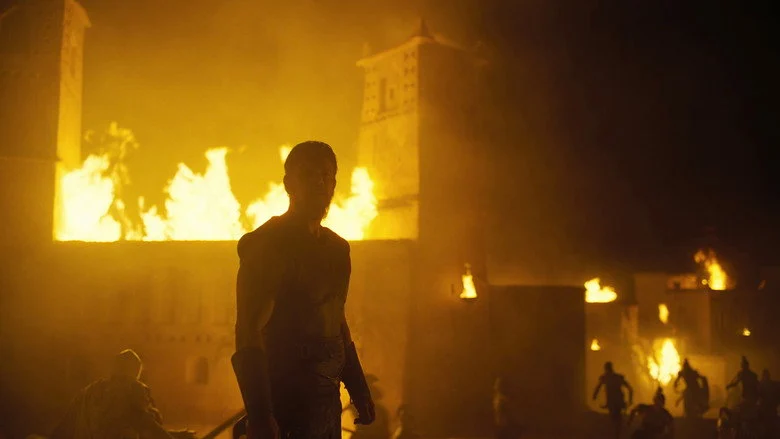
    The Odyssey - Nolan’s Ambition Exceeds His Screenplay

    Nolan’s Ambition Exceeds His Screenplay

    Christopher Nolan directs the hell out of the sirens sequence, layering sound to create a sonic trap that feels genuinely disorienting. But his screenplay is the film’s real Achilles’ heel.

    It rushes through emotional beats, Penelope is barely sketched before Odysseus leaves, and lingers on spectacle until the journey feels padded. For a 173-minute film, it is both too long and too impatient.

    The central conflict, a man fighting gods and monsters to reclaim his home, is told in broad, loud strokes. I wanted the quiet Nolan, the one who built a basement stairwell into a time machine; here, he seems satisfied with shockwaves and fire.
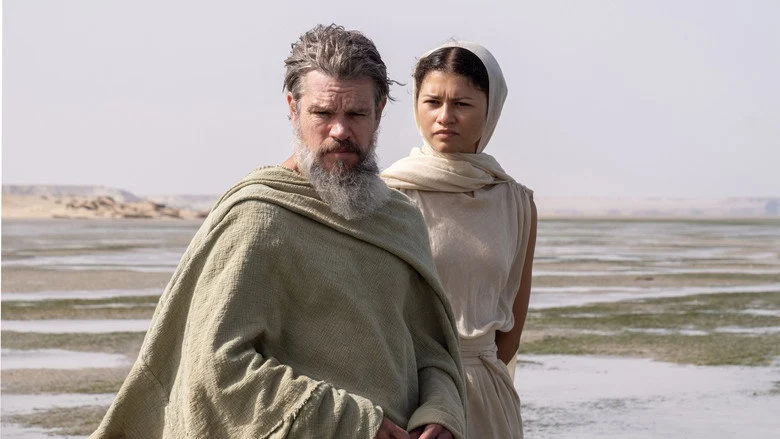
    The Odyssey - Charlize Theron’s Circe Seduces, Then Disappears

    Charlize Theron’s Circe Seduces, Then Disappears

    Theron plays Circe as a smoldering goddess with a clinical cruelty. Her scene with Odysseus is the only real dialogue exchange in the film that breathes, she offers power; he offers nothing.

    But she vanishes after that encounter, and the film never resolves her arc. It is a waste of an actress who knows how to make villainy feel intimate.

    Tom Holland’s Telemachus: A Son Searching for a Father

    Holland is remarkably restrained as Telemachus, playing the abandoned son with a wounded stillness that his Spider-Man rarely allows. When he receives Odysseus’s throne, he looks less like a prince and more like a child handed a bomb.

    Holland’s performance, small gestures, long silences, suggests a deeper film that Nolan chose not to make.

    Nolan’s Epic Action-Fantasy: Big, Loud, and Uneven

    The cyclops sequence is a masterwork of scale, Nolan films it in wide shots, letting the giant’s hand dwarf the frame. But the choreography is clunky; the fight feels like a video game quick-time event stretched to ten minutes.

    The sirens attack relies entirely on sound design, and for a moment it works: voices wrap around the audience like a net. Then it overstays, and the illusion cracks.

    Circe’s palace is Nolan’s most visually interesting set, cold marble, impossible geometries, but the confrontation is over before it starts. The genre demands spectacle, but Nolan forgets that spectacle needs a pulse, not just a budget.

    The cast is stacked with talent, Anne Hathaway, Robert Pattinson, Jon Bernthal, Mia Goth, Lupita Nyong’o, Elliot Page, Benny Safdie, Zendaya, yet most appear in scenes that feel like deleted pages from a longer script. Pattinson’s role is glimpsed, not inhabited; Safdie seems to be in a different, more anxious movie. Their casting signals studio ambition, but the film never earns their presence. For those who enjoy this kind of large-scale mythological storytelling, there are plenty of other English Action reviews worth exploring.

    What We Didn’t See: The Missing Audience

    There are no critic scores or box office figures yet for this July 2026 release. That silence is telling, it suggests a film that is still being processed, not embraced.

    The pre-release buzz was deafening, but the post-release conversation has been curiously muted. It feels like no one wants to admit that Nolan, for the first time, might have bitten off more than the myth could chew.

    Should You Sail With Odysseus?

    If you want to see Nolan wrestle with cyclops and sirens on IMAX, this is your voyage. If you want a screenplay that earns its two hours and fifty-three minutes, stay home, Penelope has waited long enough for a better film.

    The Odyssey dares greatly but delivers inconsistently, earning a generous 3 out of 5 stars for its ambition and a harsher 2.5 for its execution.

    Those who admired the tension in Ire review will find a similar rhythm here: high stakes, uneven craft, and a director chasing scale over soul.

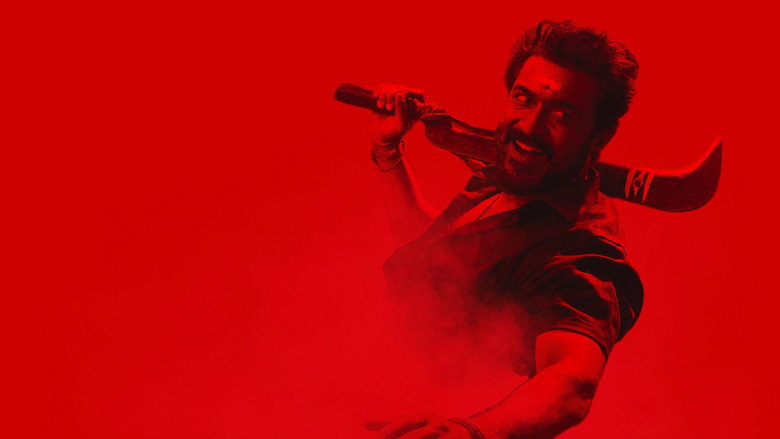
  • Karuppu (2026): RJ Balaji crafts a serious fantasy crime drama

    Karuppu (2026): RJ Balaji crafts a serious fantasy crime drama

    It is worth being precise about what Karuppu (2026) is and is not. It is a 152 minutes Tamil Fantasy, Drama, Crime film from RJ Balaji and Dream Warrior Pictures, released May 14, 2026. It is not a perfect film. It is, however, a seriously made one — which in the current Tamil release landscape counts for considerably more.

    The 7 out of 10 audience figure attached to Karuppu is consistent with a film doing something right at both the craft and entertainment level simultaneously. Films that achieve that alignment rarely see their scores erode as the audience grows — and Karuppu has not.

    Karuppu

    Structural Analysis: The Narrative of Karuppu

    Rahul Raj, Ashwin Ravichandran situates Karuppu in In a world where justice falters, a powerful guardian awakens. A superhuman… with a restraint that announces the film’s priorities early. This is not a screenplay interested in exploitation. It is interested in consequence — and RJ Balaji follows that interest throughout the 152 minutes runtime without flinching.

    The India setting of Karuppu is not pictorial — it is argumentative. Rahul Raj, Ashwin Ravichandran has written a story that means something different because of where it happens, and RJ Balaji films the crores production with the awareness that the location is doing narrative work, not just visual work.

    A more severe editor than R. Kalaivanan might have found twenty minutes in Karuppu’s final act that the film would be better without. What exists is not without merit — but the distinction between what is present and what is necessary becomes harder to sustain as the film approaches its conclusion.

    Karuppu

    The Performances That Make Karuppu Credible

    The critical question about any central performance is whether it earns the film’s trust in it. Suriya‘s portrayal of Saravanan / Karuppu in Karuppu answers that question affirmatively from the first scene and does not revise that answer once across the full 152 minutes runtime.

    The supporting cast — Swasika, Trisha Krishnan, Suriya, RJ Balaji among them — has been directed by RJ Balaji with a clarity of expectation that produces uniformly credible work. These are not performances competing for attention. They are performances understanding their function within a larger design and executing it without ego.

    Trisha Krishnan, Swasika demonstrates in Karuppu what supporting performance looks like when an actor refuses to treat secondary status as a creative limitation. The role is not the film’s largest. The work done within it is among the film’s most exacting. Suriya, Trisha, RJ, Swasika, Natarajan meets the same standard through different means.

    Karuppu

    Direction, Editing, and Visual Intelligence in Karuppu (2026)

    The directorial intelligence of Karuppu is most legible in what RJ Balaji chooses not to do with the crores from Dream Warrior Pictures. The film does not expand to fill its resources — it focuses them, and that focus produces a visual and tonal precision that the Tamil Fantasy field rarely achieves at this scale.

    The editorial work of R. Kalaivanan on Karuppu at 2 hours 32 minutes reflects a collaboration with RJ Balaji that has produced a cut of real quality across most of the film’s duration. The final act is where the editing is working hardest and achieving least — a disproportion that a more severe pass might have corrected.

    The production design of Karuppu operates at the level of the screenplay — it is making interpretive choices, not illustrative ones. Combined with the cinematography and the India location work, it produces a film whose visual surface and intellectual content are in genuine alignment.

    Karuppu

    Final Critical Assessment — Karuppu by RJ Balaji

    The commercial reception of Karuppu — 4.053 on the popularity index — confirms what the critical case for the film suggests: that RJ Balaji and Dream Warrior Pictures have made something that functions simultaneously as serious cinema and accessible entertainment. That achievement is rarer than either alone.

    1000+ audience votes and 7+ Stars. The mathematics are clear. Karuppu has produced a consistent experience across a very large and diverse audience — which is the only audience verdict that a critic should treat as meaningful evidence about the film’s actual quality.

    Karuppu does not resolve all the problems it sets itself. What it does — with 2h 32m of carefully made Tamil Drama, Fantasy, Crime cinema — is demonstrate that RJ Balaji is a filmmaker worth following and that the form itself still has critical territory worth exploring.

    The critical record continues — find every film directed by RJ Balaji that we have reviewed.

    [egp_related_silo genre=’Fantasy’ lang=’Tamil’]
  • Inkosari – Chapter 1 : Rewind (2026): Rugved Chandra’s disciplined narrative rewards patient romance fans.

    Inkosari – Chapter 1 : Rewind (2026): Rugved Chandra’s disciplined narrative rewards patient romance fans.

    Rugved Chandra has made Inkosari – Chapter 1 : Rewind (2026) with the economy of a filmmaker who knows that restraint is harder to achieve than spectacle. At 38 minutes, this Telugu Romance, Fantasy, Comedy production from ExpressoFilms arrived on March 30, 2026 and made the case that the form still has something to say.

    That 7 out of 10 on Inkosari – Chapter 1 : Rewind is the score of a film that chose its audience correctly and served them honestly. In a field where ratings are frequently manufactured by opening weekend enthusiasm, a settled score built over time carries considerably more critical weight.

    Inkosari - Chapter 1 : Rewind

    Narrative Discipline and Its Limits in Inkosari – Chapter 1 : Rewind

    The first act of Inkosari – Chapter 1 : Rewind establishes INKOSARI follows the journey of Shashank, a man haunted by the shadows… with the economy of a Rugved Chandra, Shashank Kundavaram script that knows its own purpose. There is no throat-clearing, no unnecessary scene-setting — Rugved Chandra is in the material from the first frame, and the film benefits from that directness.

    Rugved Chandra, Shashank Kundavaram’s script for Inkosari – Chapter 1 : Rewind is built around a sense of place — — that the crores investment from ExpressoFilms allows Rugved Chandra to realise properly. Films that underinvest in their settings ask their audiences to overlook the gap. Inkosari – Chapter 1 : Rewind does not ask that.

    Rugved Chandra, Shashank Kundavaram has written a conclusion for Inkosari – Chapter 1 : Rewind that reaches for more than the 38 minutes runtime can fully accommodate. Rugved Chandra executes it with care, but care cannot substitute for the structural discipline the final act lacks. The film arrives at its destination — the route is longer than necessary.

    Performance Under Scrutiny: The Cast of Inkosari – Chapter 1 : Rewind

    The central performance from Shashank Kundavaram as Shashank / Shashi is the element of Inkosari – Chapter 1 : Rewind that most resists easy summary. It is a performance of sustained intelligence — not intelligence announced, but intelligence demonstrated, scene by scene, in choices that accumulate rather than declare.

    What Meghana, Danish Bukkapatanam, Rugved Chandra, Shashank Kundavaram bring to Inkosari – Chapter 1 : Rewind is the collective quality that distinguishes a cast from a group of actors: they appear to inhabit the same world. The coherence of the ensemble in Inkosari – Chapter 1 : Rewind is not accidental — it is the result of direction that prioritised the world over the individual performance.

    The supporting contributions of in Inkosari – Chapter 1 : Rewind represent the film at its most precisely observed. Their scenes carry a weight that the screenplay describes in outline and the performance fills in completely. Shashank, Rugved, Meghana, Danish, Kaparthi operates with comparable precision in a different register — the supporting cast as a whole does not have a weak point.

    Production, Direction, and the Limits of Both in Inkosari – Chapter 1 : Rewind

    Rugved Chandra has made Inkosari – Chapter 1 : Rewind as though the crores were a tool rather than a mandate. The ExpressoFilms production funding appears to have been given with genuine creative latitude, and Rugved Chandra has used that latitude to make decisions that serve the film rather than the investment.

    The editing of Inkosari – Chapter 1 : Rewind by Rugved Chandra at 38 mins demonstrates what editorial intelligence looks like in service of a director who has made clear decisions. The rhythm is Rugved Chandra‘s — Rugved Chandra has found and sustained it, which is the editor’s proper function and the most demanding version of it.

    The technical coherence of Inkosari – Chapter 1 : Rewind across its 38m runtime reflects a production in which every department received the same creative brief and interpreted it faithfully. The result is a film that does not read as assembled but as conceived — which is the standard all serious Telugu Romance cinema should aspire to.

    Final Critical Assessment — Inkosari – Chapter 1 : Rewind by Rugved Chandra

    Inkosari – Chapter 1 : Rewind has accumulated a popularity score of 0.0256 — a figure that a critic should resist treating as either validation or irrelevance. The more useful observation is that a film of this formal ambition reaching 0.0256 suggests the Telugu Romance audience is more sophisticated than the market often assumes.

    With 1000+ responses producing 7+ Stars, Inkosari – Chapter 1 : Rewind occupies a critical position that its directorial ambition alone would not guarantee. The audience has independently arrived at the assessment that the film merits — which suggests that quality, when it is present, continues to be recognised.

    Inkosari – Chapter 1 : Rewind merits a considered recommendation. Not an unqualified one — the third act has been addressed — but a considered one, based on 38m of filmmaking that takes its audience seriously and Shashank Kundavaram‘s performance of the kind that makes a film worth revisiting.

    The critical record continues — return to our homepage for rigorous Romance film criticism.

    [egp_related_silo genre=’Romance’ lang=’Telugu’]